


Close Menu
  • Home
  • Articles
    • Attacks
      • BEC
      • Data Breach
      • DDoS
      • Evasion Attacks
      • Injection
      • Malware
      • MITM
      • Phishing
      • Ransomware
      • RCE
      • Social Engineering
      • Spoofing
      • Spyware
    • Business and Policy
      • BCP and DRP
      • GRC
      • Regulations
    • Data Protection
      • DLP
      • DRM
      • Encryption
      • IAM
    • Future, Trends and Insight
      • AI
      • Events & Community
      • Emerging Tech
      • Expert Panel
      • Interviews With Experts
      • Insights
      • Study & Research
    • Resources
      • Guides
      • Tools
      • Training & Education
    • Security
      • API
      • Apps
      • Cloud
      • Critical Infrastructure
      • Endpoint
      • Hardware
      • IoT
      • Mobile
      • Network
      • OT
      • Port Security
      • Security Architecture
      • Software Development
      • Supply Chain
      • Zero Trust
    • Threats and Vulnerabilities
      • Emerging Threats
      • Insider Threats
      • Risk Management
      • Threat Intelligence
      • Zero Day
  • News and Exclusives
    • Latest News
    • ISB Exclusive
    • Positive News
  • Who We Are
    • About Us
    • Information Security Buzz Expert Panel​
    • Write for Us
    • Media Pack
  • Contact Us
  • Newsletter
Facebook X (Twitter) LinkedIn
Information Security BuzzInformation Security Buzz
  • Home
  • Articles
    • Attacks
      • BEC
      • Data Breach
      • DDoS
      • Evasion Attacks
      • Injection
      • Malware
      • MITM
      • Phishing
      • Ransomware
      • RCE
      • Social Engineering
      • Spoofing
      • Spyware
    • Business and Policy
      • BCP and DRP
      • GRC
      • Regulations
    • Data Protection
      • DLP
      • DRM
      • Encryption
      • IAM
    • Future, Trends and Insight
      • AI
      • Events & Community
      • Emerging Tech
      • Expert Panel
      • Interviews With Experts
      • Insights
      • Study & Research
    • Resources
      • Guides
      • Tools
      • Training & Education
    • Security
      • API
      • Apps
      • Cloud
      • Critical Infrastructure
      • Endpoint
      • Hardware
      • IoT
      • Mobile
      • Network
      • OT
      • Port Security
      • Security Architecture
      • Software Development
      • Supply Chain
      • Zero Trust
    • Threats and Vulnerabilities
      • Emerging Threats
      • Insider Threats
      • Risk Management
      • Threat Intelligence
      • Zero Day
  • News and Exclusives
    • Latest News
    • ISB Exclusive
    • Positive News
  • Who We Are
    • About Us
    • Information Security Buzz Expert Panel​
    • Write for Us
    • Media Pack
  • Contact Us
  • Newsletter
Subscribe
Information Security BuzzInformation Security Buzz
Home - Articles - The Anatomy of a Banker Malware – Unraveling Marcher
Articles

The Anatomy of a Banker Malware – Unraveling Marcher

ISB Editorial StaffBy ISB Editorial StaffMay 6, 20163 Mins Read
Share LinkedIn Twitter Facebook Copy Link Email
Share
Facebook Twitter LinkedIn Email Copy Link
Quick AI Summary
ChatGPTClaudeGeminiGrokPerplexityDeepSeekCopilot

Recently, the Check Point research team had the opportunity to analyze a mobile banker malware attack from end-to-end. Our team managed to lay hands on the infiltration vector, the malware itself, and the attacker’s Command and Control (C&C) servers. This attack gave us a rare chance to understand the full flow of an attack from infiltration to theft.

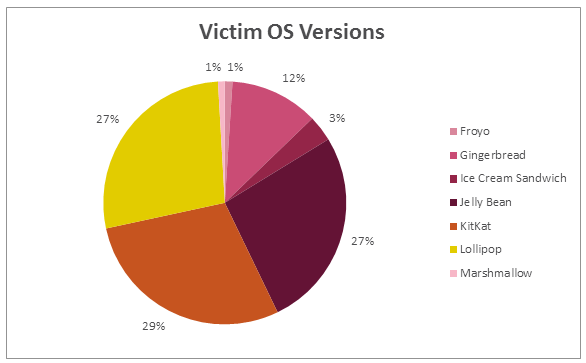
The malware we observed is the notorious Marcher banker. This malware has greatly evolved since it first appeared in 2013, targeting Russian Google Play users by stealing their credit card information. It has developed a capability to steal bank credentials as well, and was offered for rent as a Malware-as-a-Service, achieving global reach. The malware targets Android users across the whole spectrum of in-market versions, including Marshmallow.
 

Phishing for a way in

Marcher begins its attack using a phishing mail, encouraging a user to install a Flash update. If the user clicks the link, Marcher initiates a three-stepped process, deceives the user into enabling installation from unknown sources (outside Google Play) and then downloads the malicious app. The app will then request specific privileges which will enable Marcher to accomplish its malicious purpose.

One of these permissions is the ability to read SMSs. This is crucial for the malware to bypass the Two Factor Authentication (2FA) protection. This capability is becoming more common among mobile banker malware, as more banks implement 2FA.

The plot thickens – Stealing the credentials

The malware steals a list of all apps installed on a device, and if the list contains a targeted app, the malware sends the user a fake notification that a transaction in the user’s account has occurred. Once the user enters the app, Marcher displays an overlay of the login page and steals the credentials entered by the user. In the specific campaign we analyzed, Marcher targeted several Australian banks and PayPal. Other samples were reported to target a broad range of banks across various countries.

Behind the scenes – A look into the C&C

 The C&C server used by the attackers revealed some interesting details. The database includes the list of applications installed on each infected device and the notifications sent to lure the users to enter the targeted apps. Also, the attackers keep records of the victims’ identity, stolen credit card information (including CVC), stolen credentials and SMSs. We even found a rather ironic SMS from a security app, stating that the user’s device is still secure.

This is merely an example of the growing threat mobile malware poses to users. Bankers are far from being the worst tool in the hands of the attackers, though. Mobile malware has already compromised sensitive military and business related information. Enterprises should take this threat seriously and close any gaps in mobile security to avoid breaches of sensitive information. [su_box title=”About Oren Koria” style=”noise” box_color=”#336588″][short_info id=’68113′ desc=”true” all=”false”][/su_box]

ISB Editorial Staff
  • ISB Editorial Staff
    Navigating the Cyber Threat Landscape: Key Insights from Trellix ARC’s Q1 2023 Report
  • ISB Editorial Staff
    Experts’ Responses: Cyber Security Predictions 2022
  • ISB Editorial Staff
    ISB Virtual Conference: Key Cyber Security Challenges and Solutions in 2021
  • ISB Editorial Staff
    Cyber Security Predictions 2021: Experts’ Responses

The opinions expressed in this post belong to the individual contributors and do not necessarily reflect the views of Information Security Buzz.

Share. Facebook Twitter LinkedIn Email Copy Link

Related Posts

New Phishing Kit Starkiller Defeats Multi-Factor Authentication

February 23, 20264 Mins Read

ReliaQuest Uncovers Social Media Phishing Campaign Built on Trusted Tools

January 22, 20266 Mins Read

What Happens after a Phishing Email Lands in Your Inbox?

January 5, 20266 Mins Read
ISB-Bora-Side-Bar

No se ha podido establecer conexión. Error 429

 
ISB-Bora-Side-Bar
Black ISB Logo

Information Security Buzz is an independent resource that provides the experts’ comments, analysis, and opinion on the latest Cybersecurity news and topics

X (Twitter) LinkedIn Facebook RSS

Working With Us

  • About Us
  • Advertise With Us
  • Contact Us

Write For Us

  • How To Contribute

The Pages

  • Privacy Policy
  • Cookie Policy
  • AI Policy
  • Terms & Conditions
  • Copyright Notice

Information Security Buzz and all its contents are copyright © 2014-2025. All rights reserved. All third-party trademarks are recognized.

Type above and press Enter to search. Press Esc to cancel.

Manage Consent
To provide the best experiences, we use technologies like cookies to store and/or access device information. Consenting to these technologies will allow us to process data such as browsing behavior or unique IDs on this site. Not consenting or withdrawing consent, may adversely affect certain features and functions.
Functional Always active
The technical storage or access is strictly necessary for the legitimate purpose of enabling the use of a specific service explicitly requested by the subscriber or user, or for the sole purpose of carrying out the transmission of a communication over an electronic communications network.
Preferences
The technical storage or access is necessary for the legitimate purpose of storing preferences that are not requested by the subscriber or user.
Statistics
The technical storage or access that is used exclusively for statistical purposes. The technical storage or access that is used exclusively for anonymous statistical purposes. Without a subpoena, voluntary compliance on the part of your Internet Service Provider, or additional records from a third party, information stored or retrieved for this purpose alone cannot usually be used to identify you.
Marketing
The technical storage or access is required to create user profiles to send advertising, or to track the user on a website or across several websites for similar marketing purposes.
  • Manage options
  • Manage services
  • Manage {vendor_count} vendors
  • Read more about these purposes
View preferences
  • {title}
  • {title}
  • {title}