

Close Menu
  • Home
  • Articles
    • Attacks
      • BEC
      • Data Breach
      • DDoS
      • Evasion Attacks
      • Injection
      • Malware
      • MITM
      • Phishing
      • Ransomware
      • RCE
      • Social Engineering
      • Spoofing
      • Spyware
    • Business and Policy
      • BCP and DRP
      • GRC
      • Regulations
    • Data Protection
      • DLP
      • DRM
      • Encryption
      • IAM
    • Future, Trends and Insight
      • AI
      • Events & Community
      • Emerging Tech
      • Expert Panel
      • Interviews With Experts
      • Insights
      • Study & Research
    • Resources
      • Guides
      • Tools
      • Training & Education
    • Security
      • API
      • Apps
      • Cloud
      • Critical Infrastructure
      • Endpoint
      • Hardware
      • IoT
      • Mobile
      • Network
      • OT
      • Port Security
      • Security Architecture
      • Software Development
      • Supply Chain
      • Zero Trust
    • Threats and Vulnerabilities
      • Emerging Threats
      • Insider Threats
      • Risk Management
      • Threat Intelligence
      • Zero Day
  • News and Exclusives
    • Latest News
    • ISB Exclusive
    • Positive News
  • Who We Are
    • About Us
    • Information Security Buzz Expert Panel​
    • Write for Us
    • Media Pack
  • Contact Us
  • Newsletter
Facebook X (Twitter) LinkedIn
Information Security BuzzInformation Security Buzz
  • Home
  • Articles
    • Attacks
      • BEC
      • Data Breach
      • DDoS
      • Evasion Attacks
      • Injection
      • Malware
      • MITM
      • Phishing
      • Ransomware
      • RCE
      • Social Engineering
      • Spoofing
      • Spyware
    • Business and Policy
      • BCP and DRP
      • GRC
      • Regulations
    • Data Protection
      • DLP
      • DRM
      • Encryption
      • IAM
    • Future, Trends and Insight
      • AI
      • Events & Community
      • Emerging Tech
      • Expert Panel
      • Interviews With Experts
      • Insights
      • Study & Research
    • Resources
      • Guides
      • Tools
      • Training & Education
    • Security
      • API
      • Apps
      • Cloud
      • Critical Infrastructure
      • Endpoint
      • Hardware
      • IoT
      • Mobile
      • Network
      • OT
      • Port Security
      • Security Architecture
      • Software Development
      • Supply Chain
      • Zero Trust
    • Threats and Vulnerabilities
      • Emerging Threats
      • Insider Threats
      • Risk Management
      • Threat Intelligence
      • Zero Day
  • News and Exclusives
    • Latest News
    • ISB Exclusive
    • Positive News
  • Who We Are
    • About Us
    • Information Security Buzz Expert Panel​
    • Write for Us
    • Media Pack
  • Contact Us
  • Newsletter
Subscribe
Information Security BuzzInformation Security Buzz
Home - Articles - The Impending Threat Of Drones On National Security
Articles

The Impending Threat Of Drones On National Security

ISB Editorial StaffBy ISB Editorial StaffDecember 16, 2016Updated:December 4, 20244 Mins Read
Share LinkedIn Twitter Facebook Copy Link Email
The Use of Drones
Share
Facebook Twitter LinkedIn Email Copy Link
Quick AI Summary
ChatGPTClaudeGeminiGrokPerplexityDeepSeekCopilot

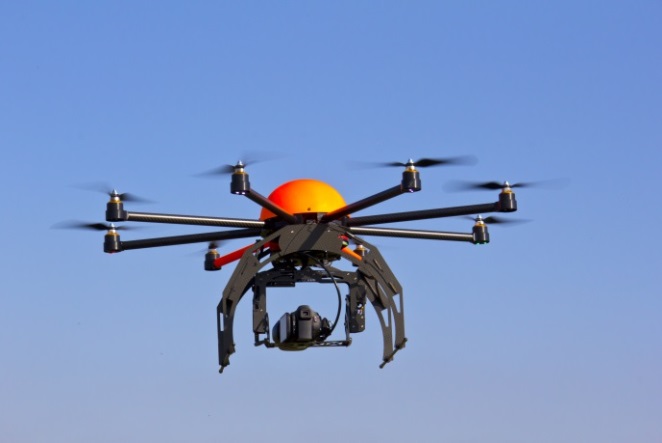
Only a few short years ago ‘drones’ were thought to be a phenomenon dreamt up in the latest sci-fi film or the latest military surveillance tech. Who would have thought drones would soon be filling the UK’s skies. Consumers can now expect faster deliveries to their doorstep than ever before, following Amazon’s announcement to be the first public company to authorise trials of autonomous flying drones in the UK. An ingenious idea that will see parcels delivered around the world faster than you can make your lunch and is likely to transform the way we shop. But, is the innovation also a new exploitable technology with the ability to raise national security threat levels like never before?

Infiltration of commercial airspace

Teal Group, an aerospace and defence consulting company, predicts global spending on the production of drones for both military and commercial use could reach $93 billion (£70 billion) in the next ten years[i]. Further more, the Association for Unmanned Vehicle Systems International (AUSVI) recently reported drones will create hundreds of thousands of jobs and bring over $82 billion (£61 billion) in revenue for the US economy in the same period[ii]. Drones are already being used in television production, as thermal imaging cameras for law enforcement to catch suspects and by utility firms to check for leaks. The introduction of drones for delivery services will mean drones are becoming more readily accepted and used.

Despite the clear benefits, drones must be embraced and feared in equal measure. Where they might look fairly innocent, what you find after a more detailed analysis is terrifying. As the versatility in configuration means they could be adapted to positively suit almost any industry and requirement, on the flip side, falling in the wrong hands, versatility could also have a negative impact.

Need for regulation

Drones are capable of delivering incendiary devices, grenades, and perhaps even worse, into uncontrolled airspace in the same way that unmanned aerial vehicles have in the past. There are currently no regulations in place to stop someone flying one of these drones into a busy city or airspace.

So, are drones the greatest global security threat of the future? Some may argue the advantages of drones outweigh the negatives. However, in my view, a number of steps need to be taken regardless to protect against hostile drones before a real life disaster occurs. Even military drones have a ‘Human in the Loop’, autonomous drones don’t. The government must implement strict and overarching regulations to help control drone use, especially autonomous drones that are guided by software and GPS location alone. This would include the standardisation of radio frequencies on which drones can operate, making it easier for security teams to intercept entering unchartered airspace. Automated drones should also have regulated flight plans, so enforcement agencies know the owner of the drone, what it’s carrying and its mission, at any given time.

Preventing malicious hacks

Putting in place stringent security measures is vital. As with any connected technology, drones are at risk of being hacked by cybercriminals, meaning software programming needs to be considered more seriously in the development phase. Quality assurance specialists can help to plug any potential loopholes vulnerable to unscrupulous hackers, limiting security and privacy risks from the outset. Although this may not completely remove all threats, it will significantly enhance the chances of drones being managed safely and for the purpose they were designed.

In summary, there is no immediate quick fix solution to the drone dilemma. With both clear and significant  positives and negatives, drones have the potential to revolutionise industry as we know it. With obvious benefits across a range of sectors, from energy, logistics, to transport, photography and even to improve our agricultural landscape, does this outweigh the national security argument?

It seems clear drones will form part of our future, with the UK Government recently stating they want to create an environment where drones can be operated safely by 2020. But there are clearly many unknowns. Without stringent regulations already in place, we can’t be certain quality assurance has been implemented throughout the development of drones for commercial use by experienced and trusted programmers. If quality assurance and strict software testing for weak spots isn’t strictly embedded from the very beginning of production, drones could become a target for hackers. What we once saw as a marvel of innovative technologies, could quickly become a tool for malicious attacks.

ISB Editorial Staff
  • ISB Editorial Staff
    Navigating the Cyber Threat Landscape: Key Insights from Trellix ARC’s Q1 2023 Report
  • ISB Editorial Staff
    Experts’ Responses: Cyber Security Predictions 2022
  • ISB Editorial Staff
    ISB Virtual Conference: Key Cyber Security Challenges and Solutions in 2021
  • ISB Editorial Staff
    Cyber Security Predictions 2021: Experts’ Responses

The opinions expressed in this post belong to the individual contributors and do not necessarily reflect the views of Information Security Buzz.

Share. Facebook Twitter LinkedIn Email Copy Link

Related Posts

Roblox Under Fire: Lawsuit Alleges Secret Data Tracking of Kids

May 13, 20254 Mins Read

Understanding Cloud Access Security Brokers (CASB)

March 28, 202410 Mins Read

Decoding Cloud Security Posture Management (CSPM)

March 28, 202411 Mins Read
ISB-Bora-Side-Bar

No se ha podido establecer conexión. Error 429

 
ISB-Bora-Side-Bar
Black ISB Logo

Information Security Buzz is an independent resource that provides the experts’ comments, analysis, and opinion on the latest Cybersecurity news and topics

X (Twitter) LinkedIn Facebook RSS

Working With Us

  • About Us
  • Advertise With Us
  • Contact Us

Write For Us

  • How To Contribute

The Pages

  • Privacy Policy
  • Cookie Policy
  • AI Policy
  • Terms & Conditions
  • Copyright Notice

Information Security Buzz and all its contents are copyright © 2014-2025. All rights reserved. All third-party trademarks are recognized.

Type above and press Enter to search. Press Esc to cancel.

Manage Consent
To provide the best experiences, we use technologies like cookies to store and/or access device information. Consenting to these technologies will allow us to process data such as browsing behavior or unique IDs on this site. Not consenting or withdrawing consent, may adversely affect certain features and functions.
Functional Always active
The technical storage or access is strictly necessary for the legitimate purpose of enabling the use of a specific service explicitly requested by the subscriber or user, or for the sole purpose of carrying out the transmission of a communication over an electronic communications network.
Preferences
The technical storage or access is necessary for the legitimate purpose of storing preferences that are not requested by the subscriber or user.
Statistics
The technical storage or access that is used exclusively for statistical purposes. The technical storage or access that is used exclusively for anonymous statistical purposes. Without a subpoena, voluntary compliance on the part of your Internet Service Provider, or additional records from a third party, information stored or retrieved for this purpose alone cannot usually be used to identify you.
Marketing
The technical storage or access is required to create user profiles to send advertising, or to track the user on a website or across several websites for similar marketing purposes.
  • Manage options
  • Manage services
  • Manage {vendor_count} vendors
  • Read more about these purposes
View preferences
  • {title}
  • {title}
  • {title}