

Close Menu
  • Home
  • Articles
    • Attacks
      • BEC
      • Data Breach
      • DDoS
      • Evasion Attacks
      • Injection
      • Malware
      • MITM
      • Phishing
      • Ransomware
      • RCE
      • Social Engineering
      • Spoofing
      • Spyware
    • Business and Policy
      • BCP and DRP
      • GRC
      • Regulations
    • Data Protection
      • DLP
      • DRM
      • Encryption
      • IAM
    • Future, Trends and Insight
      • AI
      • Events & Community
      • Emerging Tech
      • Expert Panel
      • Interviews With Experts
      • Insights
      • Study & Research
    • Resources
      • Guides
      • Tools
      • Training & Education
    • Security
      • API
      • Apps
      • Cloud
      • Critical Infrastructure
      • Endpoint
      • Hardware
      • IoT
      • Mobile
      • Network
      • OT
      • Port Security
      • Security Architecture
      • Software Development
      • Supply Chain
      • Zero Trust
    • Threats and Vulnerabilities
      • Emerging Threats
      • Insider Threats
      • Risk Management
      • Threat Intelligence
      • Zero Day
  • News and Exclusives
    • Latest News
    • ISB Exclusive
    • Positive News
  • Who We Are
    • About Us
    • Information Security Buzz Expert Panel​
    • Write for Us
    • Media Pack
  • Contact Us
  • Newsletter
Facebook X (Twitter) LinkedIn
Information Security BuzzInformation Security Buzz
  • Home
  • Articles
    • Attacks
      • BEC
      • Data Breach
      • DDoS
      • Evasion Attacks
      • Injection
      • Malware
      • MITM
      • Phishing
      • Ransomware
      • RCE
      • Social Engineering
      • Spoofing
      • Spyware
    • Business and Policy
      • BCP and DRP
      • GRC
      • Regulations
    • Data Protection
      • DLP
      • DRM
      • Encryption
      • IAM
    • Future, Trends and Insight
      • AI
      • Events & Community
      • Emerging Tech
      • Expert Panel
      • Interviews With Experts
      • Insights
      • Study & Research
    • Resources
      • Guides
      • Tools
      • Training & Education
    • Security
      • API
      • Apps
      • Cloud
      • Critical Infrastructure
      • Endpoint
      • Hardware
      • IoT
      • Mobile
      • Network
      • OT
      • Port Security
      • Security Architecture
      • Software Development
      • Supply Chain
      • Zero Trust
    • Threats and Vulnerabilities
      • Emerging Threats
      • Insider Threats
      • Risk Management
      • Threat Intelligence
      • Zero Day
  • News and Exclusives
    • Latest News
    • ISB Exclusive
    • Positive News
  • Who We Are
    • About Us
    • Information Security Buzz Expert Panel​
    • Write for Us
    • Media Pack
  • Contact Us
  • Newsletter
Subscribe
Information Security BuzzInformation Security Buzz
Home - Articles - Switcher Trojan: Android Joins The ‘Attack-The-Router’ Club
Articles

Switcher Trojan: Android Joins The ‘Attack-The-Router’ Club

ISBuzz TeamBy ISBuzz TeamJanuary 4, 20174 Mins Read
Share LinkedIn Twitter Facebook Copy Link Email
Share
Facebook Twitter LinkedIn Email Copy Link
Quick AI Summary
ChatGPTClaudeGeminiGrokPerplexityDeepSeekCopilot

Newly-discovered Trojan uses unsuspecting Android device users as tools to redirect traffic from WiFi-connected devices to websites controlled by the attackers

Kaspersky Lab experts have uncovered a remarkable evolution in Android OS malware: the Switcher Trojan. It treats unsuspecting Android device users as tools to infect Wi-Fi routers, changing the routers’ DNS settings and redirecting traffic from devices connected to the network to websites controlled by the attackers, leaving users vulnerable to phishing, malware and adware attacks and more. The attackers claim to have successfully infiltrated 1,280 wireless networks so far, mainly in China.

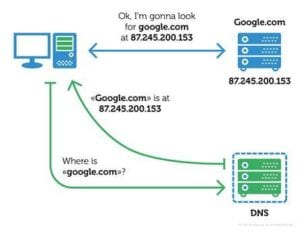
Domain Name Servers (DNS) turn a readable web address such as ‘x.com’ into the numerical IP address required for communications between computers. The ability of the Switcher Trojan to hijack this process gives the attackers almost complete control over network activity which uses the name-resolving system, such as internet traffic. The approach works because wireless routers generally reconfigure the DNS settings of all devices on the network to their own – thereby forcing everyone to use the same rogue DNS.

The infection is spread by users downloading one of two versions of the Android Trojan from a website created by the attackers. The first version is disguised as an Android client of the Chinese search engine, Baidu, and the other is a well-made fake version of a popular Chinese app for sharing information about Wi-Fi networks:  WiFi万能钥匙.

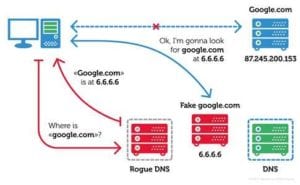
When an infected device connects to a wireless network, the Trojan attacks the router and tries to brute-force its way to the web admin interface by guessing the password, relying on a long, predefined list of password and login combinations. If the attempt is successful, the Trojan exchanges the existing DNS server for a rogue one controlled by the cybercriminals, and also a secondary DNS, to ensure ongoing stability if the rogue DNS goes down.

To illustrate, what normally happens is this:
dns

Following a successful Switcher attack, this is what happens:
rogue-dns

The attackers have built a website to promote and distribute the Trojanised Wi-Fi app to users. The web server that hosts this site doubles as the malware authors’ command-and-control (C&C) server. Internal infection statistics spotted on an open part of this website reveal the attackers’ claims to have compromised 1,280 websites – potentially exposing all the devices connected to them to further attack and infection.

“The Switcher Trojan marks a dangerous new trend in attacks on connected devices and networks. It does not attack users directly. Instead, it turns them into unwilling accomplices: physically moving sources of infection. The Trojan targets the entire network, exposing all its users, whether individuals or businesses, to a wide range of attacks – from phishing to secondary infection. A successful attack can be hard to detect and even harder to shift: the new settings can survive a router reboot, and even if the rogue DNS is disabled, the secondary DNS server is on hand to carry on. Protecting devices is as important as ever, but in a connected world we cannot afford to overlook the vulnerability of routers and Wi-Fi networks,” said Nikita Buchka, mobile security expert, Kaspersky Lab.

The company recommends that all users check their DNS settings and search for the following rogue DNS servers:

  • 200.147.153
  • 33.13.11
  • 76.249.59

If you have one of these servers in your DNS settings, contact your ISP support or alert the owner of the Wi-Fi network. Kaspersky Lab also strongly advises users to change the default login and password to the admin web interface of your router to prevent such attacks in the future.

To learn more about the Switcher Trojan, read the blogpost on Securelist.

[su_box title=”About Kaspersky Lab” style=”noise” box_color=”#336588″][short_info id=’59584′ desc=”true” all=”false”][/su_box]

ISBuzz Team
  • ISBuzz Team
    Air Canada Data Breach: BianLian Extortion Group Claims A Massive Heist Contrary To Airline’s Earlier Statement
  • ISBuzz Team
    Unprecedented DDoS Attack Rocks The Web: Tech Giants Reveal A Digital Tsunami
  • ISBuzz Team
    CISA Flags High-Severity Adobe Acrobat Reader Flaw Amid Active Exploits
  • ISBuzz Team
    Curl Security Alert: Patching A Critical Bug Averting Potential Cyber Catastrophe

The opinions expressed in this post belong to the individual contributors and do not necessarily reflect the views of Information Security Buzz.

Share. Facebook Twitter LinkedIn Email Copy Link

Related Posts

New Phishing Kit Starkiller Defeats Multi-Factor Authentication

February 23, 20264 Mins Read

ReliaQuest Uncovers Social Media Phishing Campaign Built on Trusted Tools

January 22, 20266 Mins Read

What Happens after a Phishing Email Lands in Your Inbox?

January 5, 20266 Mins Read
ISB-Bora-Side-Bar

No se ha podido establecer conexión. Error 429

 
ISB-Bora-Side-Bar
Black ISB Logo

Information Security Buzz is an independent resource that provides the experts’ comments, analysis, and opinion on the latest Cybersecurity news and topics

X (Twitter) LinkedIn Facebook RSS

Working With Us

  • About Us
  • Advertise With Us
  • Contact Us

Write For Us

  • How To Contribute

The Pages

  • Privacy Policy
  • Cookie Policy
  • AI Policy
  • Terms & Conditions
  • Copyright Notice

Information Security Buzz and all its contents are copyright © 2014-2025. All rights reserved. All third-party trademarks are recognized.

Type above and press Enter to search. Press Esc to cancel.

Manage Consent
To provide the best experiences, we use technologies like cookies to store and/or access device information. Consenting to these technologies will allow us to process data such as browsing behavior or unique IDs on this site. Not consenting or withdrawing consent, may adversely affect certain features and functions.
Functional Always active
The technical storage or access is strictly necessary for the legitimate purpose of enabling the use of a specific service explicitly requested by the subscriber or user, or for the sole purpose of carrying out the transmission of a communication over an electronic communications network.
Preferences
The technical storage or access is necessary for the legitimate purpose of storing preferences that are not requested by the subscriber or user.
Statistics
The technical storage or access that is used exclusively for statistical purposes. The technical storage or access that is used exclusively for anonymous statistical purposes. Without a subpoena, voluntary compliance on the part of your Internet Service Provider, or additional records from a third party, information stored or retrieved for this purpose alone cannot usually be used to identify you.
Marketing
The technical storage or access is required to create user profiles to send advertising, or to track the user on a website or across several websites for similar marketing purposes.
  • Manage options
  • Manage services
  • Manage {vendor_count} vendors
  • Read more about these purposes
View preferences
  • {title}
  • {title}
  • {title}