Close Menu
  • Home
  • Articles
    • Attacks
      • BEC
      • Data Breach
      • DDoS
      • Evasion Attacks
      • Injection
      • Malware
      • MITM
      • Phishing
      • Ransomware
      • RCE
      • Social Engineering
      • Spoofing
      • Spyware
    • Business and Policy
      • BCP and DRP
      • GRC
      • Regulations
    • Data Protection
      • DLP
      • DRM
      • Encryption
      • IAM
    • Future, Trends and Insight
      • AI
      • Events & Community
      • Emerging Tech
      • Expert Panel
      • Interviews With Experts
      • Insights
      • Study & Research
    • Resources
      • Guides
      • Tools
      • Training & Education
    • Security
      • API
      • Apps
      • Cloud
      • Critical Infrastructure
      • Endpoint
      • Hardware
      • IoT
      • Mobile
      • Network
      • OT
      • Port Security
      • Security Architecture
      • Software Development
      • Supply Chain
      • Zero Trust
    • Threats and Vulnerabilities
      • Emerging Threats
      • Insider Threats
      • Risk Management
      • Threat Intelligence
      • Zero Day
  • News and Exclusives
    • Latest News
    • ISB Exclusive
    • Positive News
  • Who We Are
    • About Us
    • Information Security Buzz Expert Panel​
    • Write for Us
    • Media Pack
  • Contact Us
  • Newsletter
Facebook X (Twitter) LinkedIn
Information Security BuzzInformation Security Buzz
  • Home
  • Articles
    • Attacks
      • BEC
      • Data Breach
      • DDoS
      • Evasion Attacks
      • Injection
      • Malware
      • MITM
      • Phishing
      • Ransomware
      • RCE
      • Social Engineering
      • Spoofing
      • Spyware
    • Business and Policy
      • BCP and DRP
      • GRC
      • Regulations
    • Data Protection
      • DLP
      • DRM
      • Encryption
      • IAM
    • Future, Trends and Insight
      • AI
      • Events & Community
      • Emerging Tech
      • Expert Panel
      • Interviews With Experts
      • Insights
      • Study & Research
    • Resources
      • Guides
      • Tools
      • Training & Education
    • Security
      • API
      • Apps
      • Cloud
      • Critical Infrastructure
      • Endpoint
      • Hardware
      • IoT
      • Mobile
      • Network
      • OT
      • Port Security
      • Security Architecture
      • Software Development
      • Supply Chain
      • Zero Trust
    • Threats and Vulnerabilities
      • Emerging Threats
      • Insider Threats
      • Risk Management
      • Threat Intelligence
      • Zero Day
  • News and Exclusives
    • Latest News
    • ISB Exclusive
    • Positive News
  • Who We Are
    • About Us
    • Information Security Buzz Expert Panel​
    • Write for Us
    • Media Pack
  • Contact Us
  • Newsletter
Subscribe
Information Security BuzzInformation Security Buzz
Home - Articles - Security Challenges in Next Generation 5G Mobile Networks
Articles

Security Challenges in Next Generation 5G Mobile Networks

ISB Editorial StaffBy ISB Editorial StaffApril 6, 2017Updated:July 8, 20244 Mins Read
Share LinkedIn Twitter Facebook Copy Link Email
Share
Facebook Twitter LinkedIn Email Copy Link
Quick AI Summary
ChatGPTClaudeGeminiGrokPerplexityDeepSeekCopilot

5G technology is the next step in the development of mobile communication. 5G will not only provide voice and data communication but also provide capabilities for new technologies such as Internet of Things. 5G is no longer confined to provide faster mobile services for voice and data communication but instead it will serve vertical industries, which will foster a new form of services. The new networking technologies such as such as Software Defined Network (SDN)/Network Functions Virtualisation (NFV) will further enhance the 5G capability to provide an effective platform for new services/businesses to flourish.

These new technologies also bring new threats. For example, NFV establishes virtualised networking environment dedicated to providing different network services and the security of data hosted in these virtualised environments largely depends on the degree of isolation between virtualised components. It always remains a challenge to provide a fully dependable secure NFV environment and hence next generation mobile networks should have security controls in place to address the vulnerabilities imposed by NFV environment. Similarly, SDN brings a new form of threats because of centralised software controller controlling network flows. Although these issues are not specific to 5G technology but 5G security framework should address these issues and provide a secure environment for next generation network.

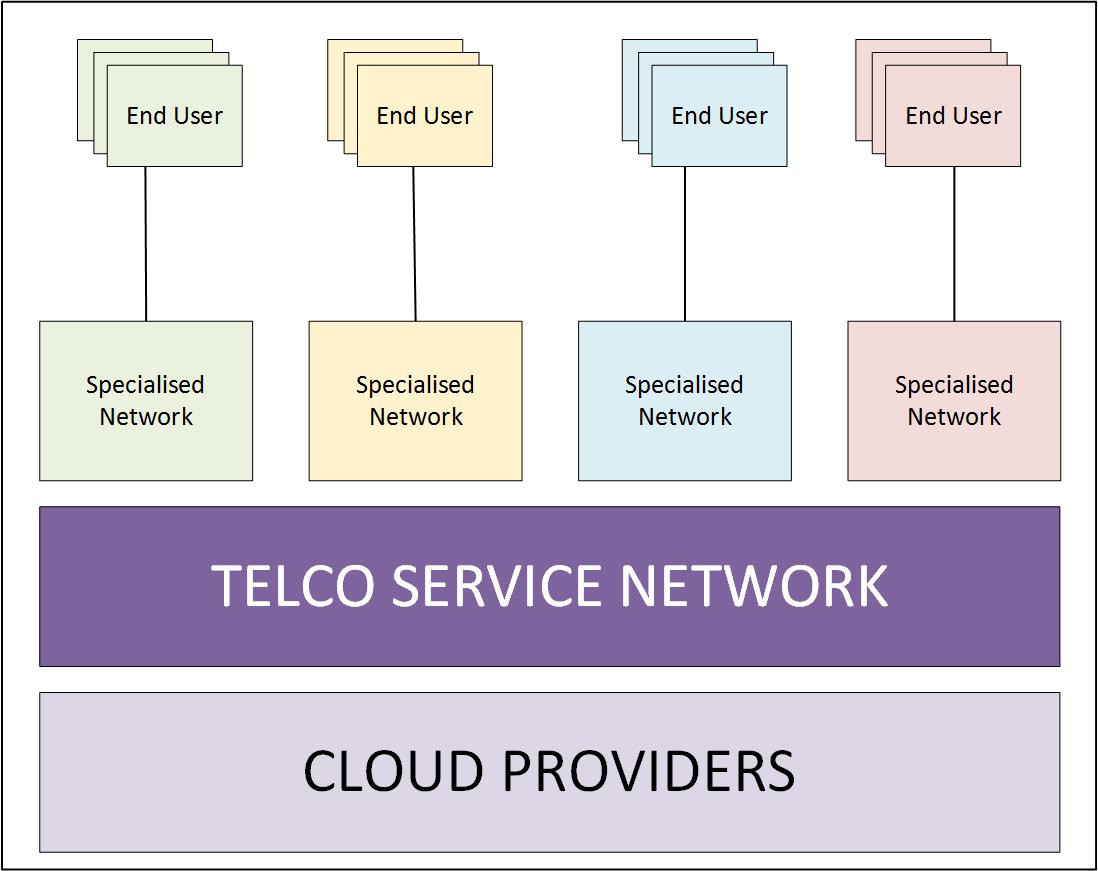
The changing ecosystem is another driver for 5G security. In contrast to LTE network which is owned by a single network operator to provide network services to its customer, 5G networks will be composed of a number of stakeholders providing specialised services as illustrated in Figure below.
5G-security

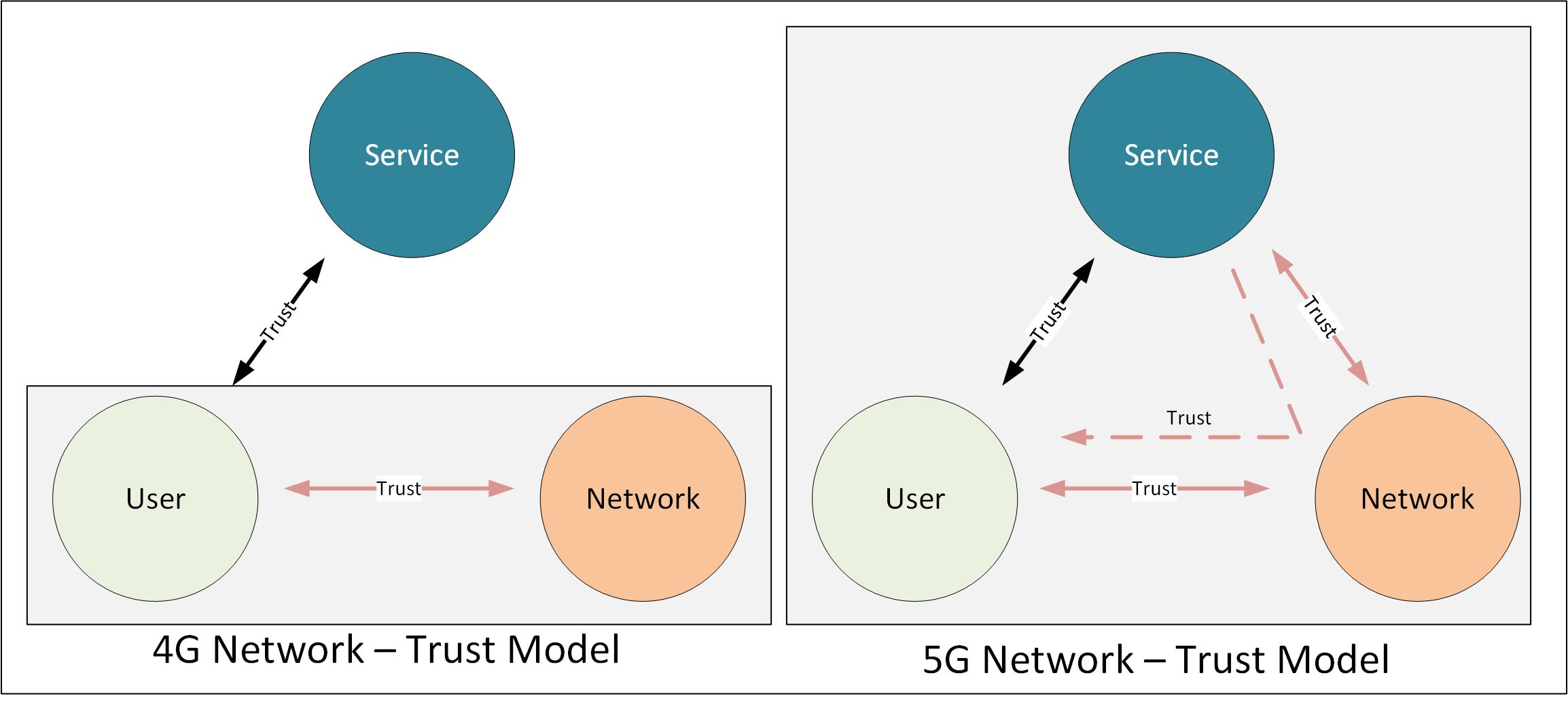
These specialised networks may provide network services cater for the specialised end users such as medical agency running a network to provide medical services for her customers. Today traditional network provides hop by hop security by provide secure communication path between the communicating parties which may not be efficient in 5G environment which requires end to end security to serve these new forms of specialised networks. These new specialised networks will result in new trust model for 5G networks with an additional element of services compared to traditional 4G trust model shown below [1].
5G-security-trust-model

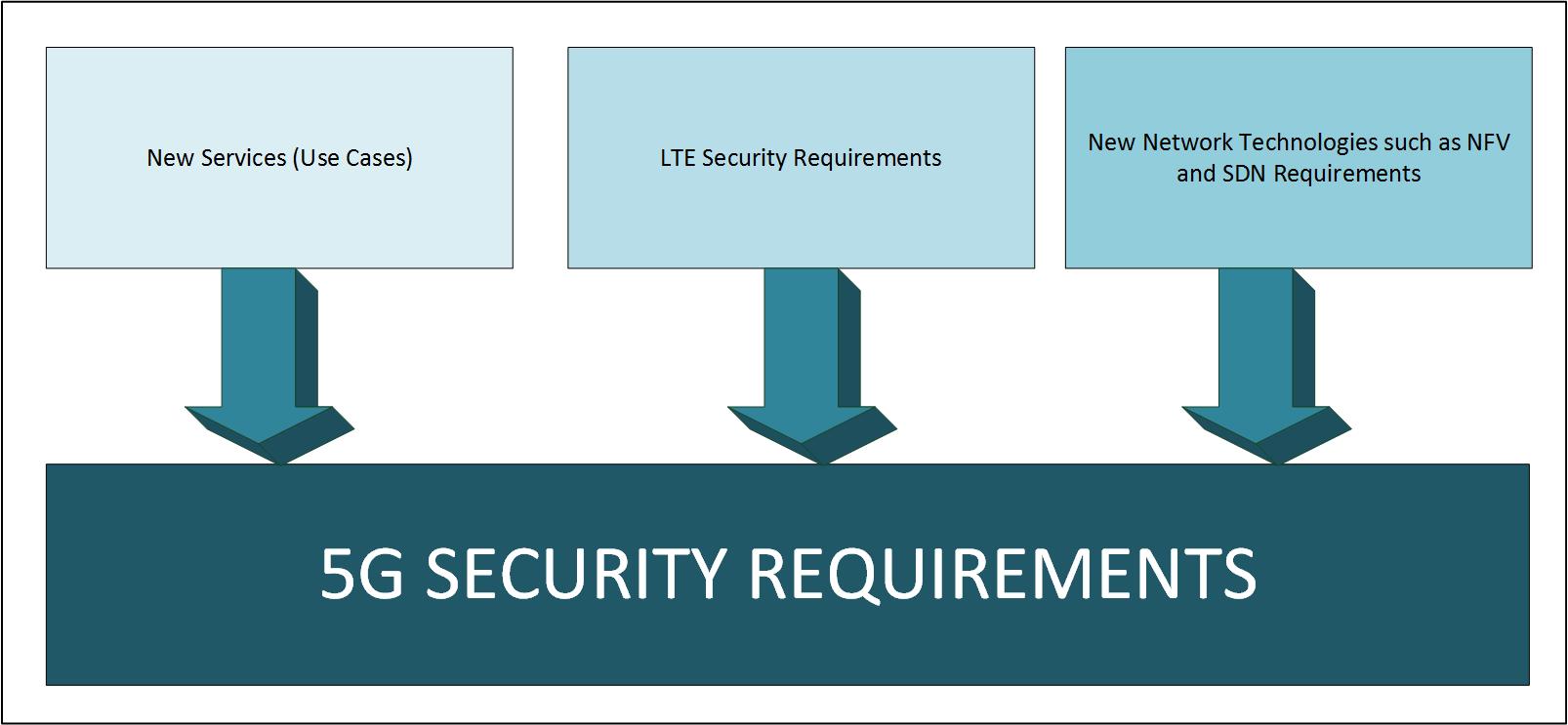
The Next Generation Mobile Network (NGMN) alliance highlights the following security requirements in 5G Whitepaper:

  • Strong Subscriber Authentication
  • Must provide the security mechanism for protecting diverse range of information.
  • Bearer-independent (e.g., higher layer) security (end to end security)
  • Secure network design
  • Resilience and High Availability to provide 99.999% network availability
  • Reliability

5G-security-requirements

5G Security Architect

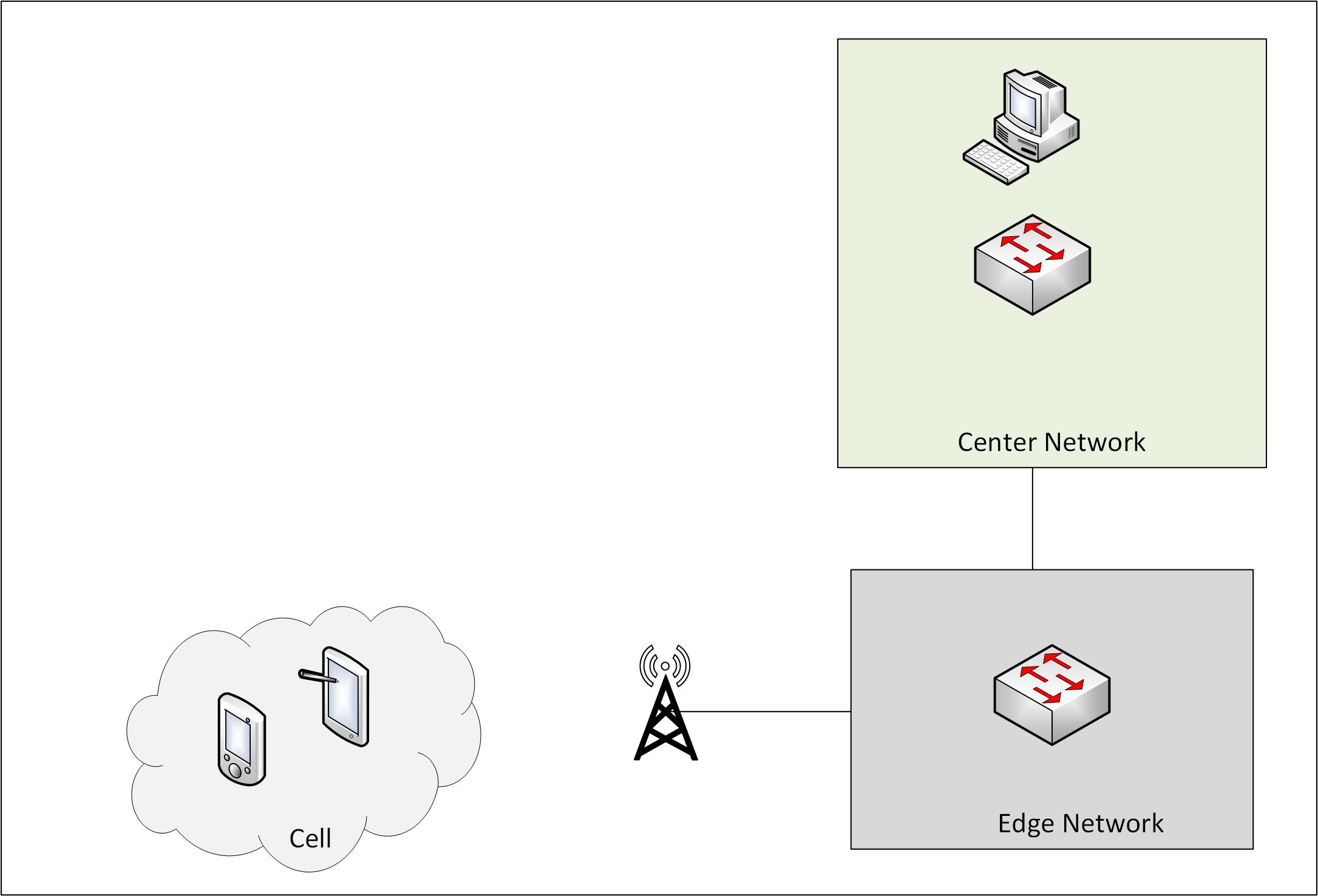
The 5G network is still in early stage but the overall 5G mobile network is assumed to consist of number of clouds running network functionality as shown in Figure below [2].
5G-security-architect

The components of security in 5G network are as follows:

  • Security Between Mobile Devices and the Network

The first and foremost security requirements in this component is to identify the subscriber which may be mobile devices, sensors and other devices using 5G networks. The Universal Subscriber Identity Module (USIM) application running on SIM card may still be use in 5G network to identify the mobile devices. But other identification methods can be used to identify new services such as IoT devices. The confidentiality of the data is also an important security requirement which can be achieved by using existing security protocols such as IPSec or TLS or there is need to design new crypto algorithms as per specialised network.

  • Telco Clouds

As discussed earlier, more network virtualization will be adopted in the Telco clouds and the security architecture must address the issues related to virtualisation such as to achieve high degree of isolation in shared virtualised environment. The availability of the network is also an important factor when designing such network and also network should have security controls in place to defend against both internal and external threats.

The most attractive targets for future attackers in the 5G networks will be:

  • End user devices
  • Access Networks
  • Telco Core Networks

The possible threats and attack vectors should be evaluated for these components in order to design countermeasures to increase the security posture of the 5G network.

[1]

[2]

[su_box title=”About Dr. Muhammad Malik” style=”noise” box_color=”#336588″][short_info id=’100137′ desc=”true” all=”false”][/su_box]

ISB Editorial Staff
  • ISB Editorial Staff
    Navigating the Cyber Threat Landscape: Key Insights from Trellix ARC’s Q1 2023 Report
  • ISB Editorial Staff
    Experts’ Responses: Cyber Security Predictions 2022
  • ISB Editorial Staff
    ISB Virtual Conference: Key Cyber Security Challenges and Solutions in 2021
  • ISB Editorial Staff
    Cyber Security Predictions 2021: Experts’ Responses

The opinions expressed in this post belong to the individual contributors and do not necessarily reflect the views of Information Security Buzz.

Share. Facebook Twitter LinkedIn Email Copy Link

Related Posts

The Real Cost of Inconsistent Third-Party Access

December 18, 20255 Mins Read

What Happens When Devices Cross Borders? The Role of Geofencing in Global IT

August 7, 20256 Mins Read

The Evolving Importance of Identity Governance in FinTech

July 10, 20258 Mins Read
ISB-Bora-Side-Bar

No se ha podido establecer conexión. Error 429

 
ISB-Bora-Side-Bar
Black ISB Logo

Information Security Buzz is an independent resource that provides the experts’ comments, analysis, and opinion on the latest Cybersecurity news and topics

X (Twitter) LinkedIn Facebook RSS

Working With Us

  • About Us
  • Advertise With Us
  • Contact Us

Write For Us

  • How To Contribute

The Pages

  • Privacy Policy
  • Cookie Policy
  • AI Policy
  • Terms & Conditions
  • Copyright Notice

Information Security Buzz and all its contents are copyright © 2014-2025. All rights reserved. All third-party trademarks are recognized.

Type above and press Enter to search. Press Esc to cancel.

Manage Consent
To provide the best experiences, we use technologies like cookies to store and/or access device information. Consenting to these technologies will allow us to process data such as browsing behavior or unique IDs on this site. Not consenting or withdrawing consent, may adversely affect certain features and functions.
Functional Always active
The technical storage or access is strictly necessary for the legitimate purpose of enabling the use of a specific service explicitly requested by the subscriber or user, or for the sole purpose of carrying out the transmission of a communication over an electronic communications network.
Preferences
The technical storage or access is necessary for the legitimate purpose of storing preferences that are not requested by the subscriber or user.
Statistics
The technical storage or access that is used exclusively for statistical purposes. The technical storage or access that is used exclusively for anonymous statistical purposes. Without a subpoena, voluntary compliance on the part of your Internet Service Provider, or additional records from a third party, information stored or retrieved for this purpose alone cannot usually be used to identify you.
Marketing
The technical storage or access is required to create user profiles to send advertising, or to track the user on a website or across several websites for similar marketing purposes.
  • Manage options
  • Manage services
  • Manage {vendor_count} vendors
  • Read more about these purposes
View preferences
  • {title}
  • {title}
  • {title}