


Close Menu
  • Home
  • Articles
    • Attacks
      • BEC
      • Data Breach
      • DDoS
      • Evasion Attacks
      • Injection
      • Malware
      • MITM
      • Phishing
      • Ransomware
      • RCE
      • Social Engineering
      • Spoofing
      • Spyware
    • Business and Policy
      • BCP and DRP
      • GRC
      • Regulations
    • Data Protection
      • DLP
      • DRM
      • Encryption
      • IAM
    • Future, Trends and Insight
      • AI
      • Events & Community
      • Emerging Tech
      • Expert Panel
      • Interviews With Experts
      • Insights
      • Study & Research
    • Resources
      • Guides
      • Tools
      • Training & Education
    • Security
      • API
      • Apps
      • Cloud
      • Critical Infrastructure
      • Endpoint
      • Hardware
      • IoT
      • Mobile
      • Network
      • OT
      • Port Security
      • Security Architecture
      • Software Development
      • Supply Chain
      • Zero Trust
    • Threats and Vulnerabilities
      • Emerging Threats
      • Insider Threats
      • Risk Management
      • Threat Intelligence
      • Zero Day
  • News and Exclusives
    • Latest News
    • ISB Exclusive
    • Positive News
  • Who We Are
    • About Us
    • Information Security Buzz Expert Panel​
    • Write for Us
    • Media Pack
  • Contact Us
  • Newsletter
Facebook X (Twitter) LinkedIn
Information Security BuzzInformation Security Buzz
  • Home
  • Articles
    • Attacks
      • BEC
      • Data Breach
      • DDoS
      • Evasion Attacks
      • Injection
      • Malware
      • MITM
      • Phishing
      • Ransomware
      • RCE
      • Social Engineering
      • Spoofing
      • Spyware
    • Business and Policy
      • BCP and DRP
      • GRC
      • Regulations
    • Data Protection
      • DLP
      • DRM
      • Encryption
      • IAM
    • Future, Trends and Insight
      • AI
      • Events & Community
      • Emerging Tech
      • Expert Panel
      • Interviews With Experts
      • Insights
      • Study & Research
    • Resources
      • Guides
      • Tools
      • Training & Education
    • Security
      • API
      • Apps
      • Cloud
      • Critical Infrastructure
      • Endpoint
      • Hardware
      • IoT
      • Mobile
      • Network
      • OT
      • Port Security
      • Security Architecture
      • Software Development
      • Supply Chain
      • Zero Trust
    • Threats and Vulnerabilities
      • Emerging Threats
      • Insider Threats
      • Risk Management
      • Threat Intelligence
      • Zero Day
  • News and Exclusives
    • Latest News
    • ISB Exclusive
    • Positive News
  • Who We Are
    • About Us
    • Information Security Buzz Expert Panel​
    • Write for Us
    • Media Pack
  • Contact Us
  • Newsletter
Subscribe
Information Security BuzzInformation Security Buzz
Home - Articles - Hackers Behavior Before and During the 2015 Copa America
Articles

Hackers Behavior Before and During the 2015 Copa America

ISBuzz TeamBy ISBuzz TeamJune 29, 2015Updated:July 4, 20245 Mins Read
Share LinkedIn Twitter Facebook Copy Link Email
Copa America
Share
Facebook Twitter LinkedIn Email Copy Link
Quick AI Summary
ChatGPTClaudeGeminiGrokPerplexityDeepSeekCopilot

Intro

Cytegic DyTA intelligence platform gathers, processes and analyses hundreds of thousands of intelligence feeds on a month basis, to allow a quick and understandable cyber-trend analysis. DyTA enables cyber-intelligence analysts and CISOs to understand and analyze the threat level of each attacker and attack method relevant to their organization, according to their geopolitical region, industry sector and corporate assets. The following report represents the most interesting and active cyber-trends that DyTA analyzed before and during the Copa America 2015 in Chile. As a background we analyzed the main trends that occurred during the 2014 World Cup which took place in Brazil during June to July 2014.

Executive Summary

Interesting trends that rose from our analysis: – In South and Central America, prior to the Copa America, there is a rise in the activity level of financial hackers (as compared to the previous months), and according to DyTA’s forecast, this trend is likely to continue in the coming weeks. – The main attack methods used by hackers in South and Central America were Denial of Service, Malware and Terminal Malware (which includes POS and ATM attacks), similarly to the period surrounding the 2014 World Cup in Brazil. – Chile, the hostess of the Copa America, is the fourth in cyber activity in South America, and had a rise in cyber activity a month before the beginning of the tournament. – Mexico, as a participant in the Copa America, had the largest quantity of cyber-attacks prior to the tournament. – The most targeted assets on the attackers’ scope, both in Central and South America, as we saw in the World Cup, are Payment Cards, and Financial Transactions. – Government was the most targeted sector, followed by banking and finance and retail prior to Copa America, similarly to the period surrounding the 2014 World Cup.

Top trends

  • South America Threat Landscape

When comparing the two tournaments, in the same timeframe, it is notable that there is more activeness of hackers in general before and in the start of the Copa America, particularly financial hackers (62.2% of all the attacks), just like in the World Cup tournament a year before. According to DyTA’s forecast, it appears that financial hackers are likely to continue being the most active attackers in the coming weeks.
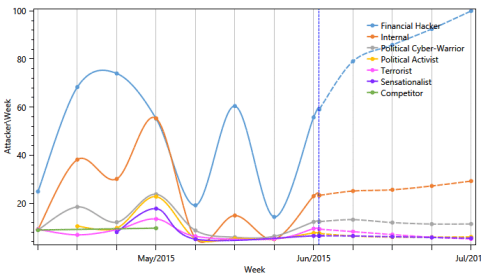
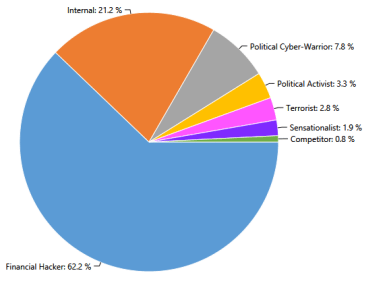
Image 1

Image 2

When looking from the perspective of TTPs, it is clear to see that the main methods used were Denial of Service (41.7%) and Malware (22.7%). It is noticeable that there is a rise during the start of the Copa America, similarly to the World Cup. In addition, we can see that similar to the World Cup, in the Copa America, Terminal Malware, which includes POS and ATM attacks, experienced a significant rise. On the other hand, unlike the World Cup, the Copa America shows a low percentage of Phishing attacks.
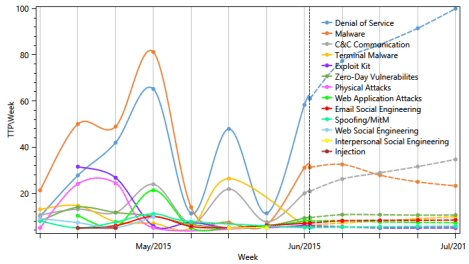
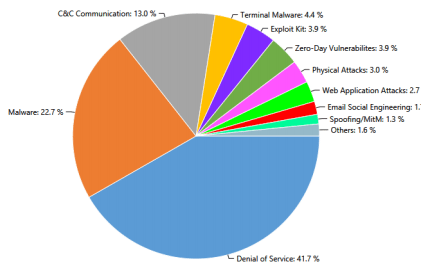
Image 3

Image 4

Another interesting trend showed that the host of the tournament – Chile, is the fourth in cyber activity in South America, and had a rise in cyber activity a month before the beginning of the tournament, in comparison to the last six months (beginning of 2015).
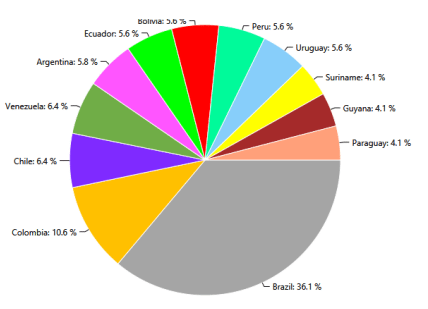
Image 5

Image 6

  • Central America Threat Landscape

It is interesting to see that Central America is also affected by the tournament. The most active attacker is the financial hacker, the same as in South America. Again, according to the forecast, its activity level will continue to rise in the near future.
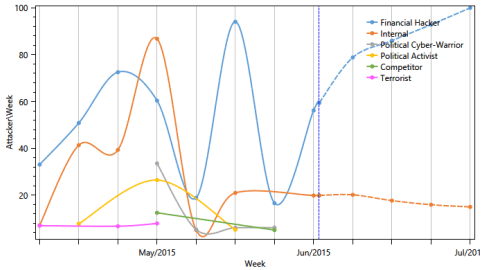
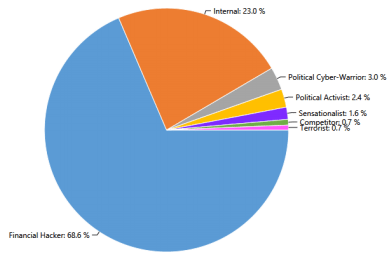
Image 7

Image 8

In addition, when looking from the perspective of TTPs it is clear that the main methods are Malware, Terminal Malware attacks (ATM and POS) and DDos, just like in South America and during the World Cup.
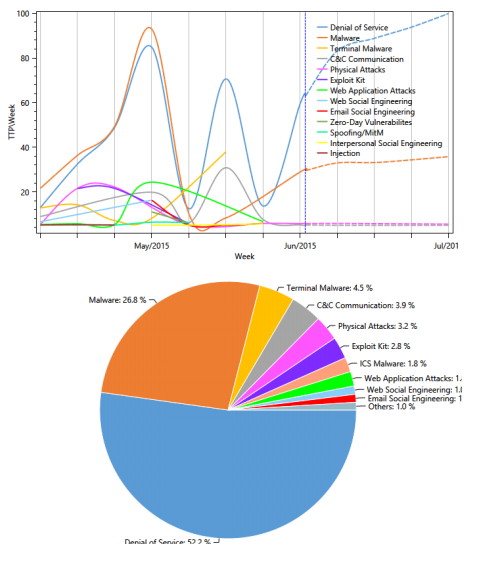
Image 9

An important fact, is that Mexico as a participant and not hostess seems to have the largest quantity of attacks before and during the Copa America, and also a rise before the beginning in comparison to the last six months (beginning of 2015).
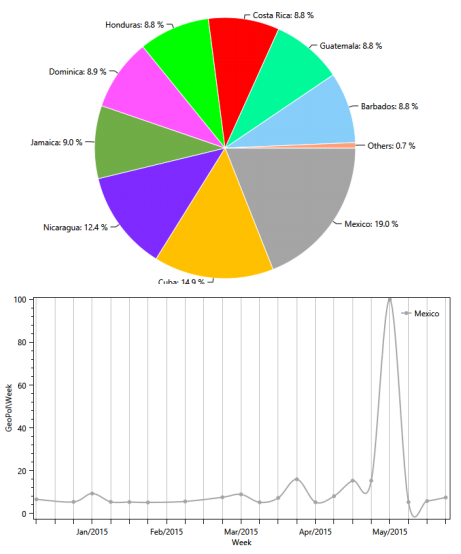
 Image 10

  • Most Targeted Assets

The most targeted assets on the attackers’ scope both in Central and South America, as we saw in the World Cup, are Payment Cards, Personal Identifiable Information (Client Data) and “straight-forward” financial assets such as Monetary Value (bank accounts, Bitcoin, among others) and Financial Transactions.
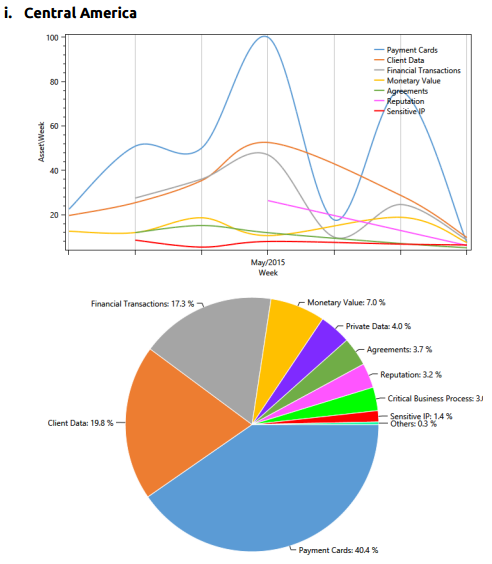
 Image 11

Image 12

  • Threat Level by Industry

As mentioned above, in the World Cup many of the attacks were done by Hacktivists who targeted government sites. We can see both in Central and South America that in the Copa America the situation is the same. Government was the most targeted sector, followed by banking and finance and retail. This coincides with our assessments regarding the effect large sporting events have on the government and the financial sector of the hosting nation.
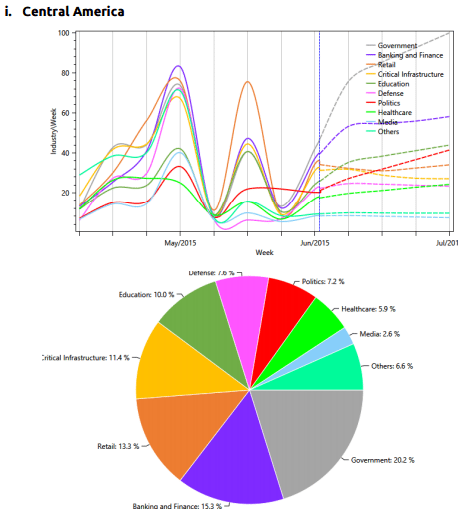
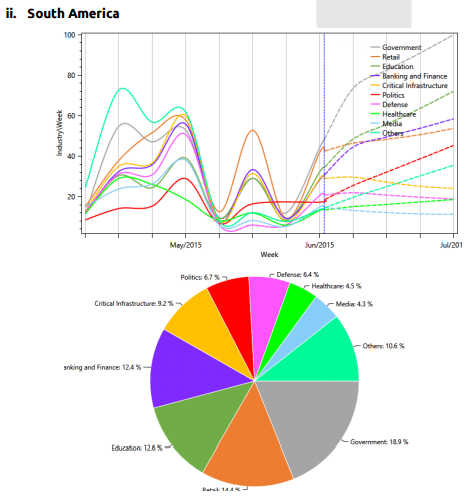
 Image 13

Image 14

[su_box title=”About Cytegic” style=”noise” box_color=”#336588″]

Cy-te-gic /pronounced: sʌɪ-ˈtē-jik/ adjective: A plan of action or strategy designed to achieve a long-term and overall successful Cyber Security Posture Optimization – “That firm made a wise Cytegic decision”.

Cytegic develops a full suite of cyber management and decision-support products that enable to monitor, measure and manage organizational cyber-security resources.

Cytegic helps organization to identify threat trends, assess organizational readiness, and optimize resource allocation to mitigate risk for business assets.[/su_box]

ISBuzz Team
  • ISBuzz Team
    Air Canada Data Breach: BianLian Extortion Group Claims A Massive Heist Contrary To Airline’s Earlier Statement
  • ISBuzz Team
    Unprecedented DDoS Attack Rocks The Web: Tech Giants Reveal A Digital Tsunami
  • ISBuzz Team
    CISA Flags High-Severity Adobe Acrobat Reader Flaw Amid Active Exploits
  • ISBuzz Team
    Curl Security Alert: Patching A Critical Bug Averting Potential Cyber Catastrophe

The opinions expressed in this post belong to the individual contributors and do not necessarily reflect the views of Information Security Buzz.

Share. Facebook Twitter LinkedIn Email Copy Link

Related Posts

Exploited Faster, Patched Slower: Verizon DBIR 2026 Shows Security Teams Losing Ground

May 20, 20265 Mins Read

Security’s Blind Spot: The Threats Hiding in “Low-Severity” Alerts

May 6, 20265 Mins Read

Why OSINT deserves the same status as other intelligence disciplines

March 17, 20266 Mins Read
ISB-Bora-Side-Bar

No se ha podido establecer conexión. Error 429

 
ISB-Bora-Side-Bar
Black ISB Logo

Information Security Buzz is an independent resource that provides the experts’ comments, analysis, and opinion on the latest Cybersecurity news and topics

X (Twitter) LinkedIn Facebook RSS

Working With Us

  • About Us
  • Advertise With Us
  • Contact Us

Write For Us

  • How To Contribute

The Pages

  • Privacy Policy
  • Cookie Policy
  • AI Policy
  • Terms & Conditions
  • Copyright Notice

Information Security Buzz and all its contents are copyright © 2014-2025. All rights reserved. All third-party trademarks are recognized.

Type above and press Enter to search. Press Esc to cancel.

Manage Consent
To provide the best experiences, we use technologies like cookies to store and/or access device information. Consenting to these technologies will allow us to process data such as browsing behavior or unique IDs on this site. Not consenting or withdrawing consent, may adversely affect certain features and functions.
Functional Always active
The technical storage or access is strictly necessary for the legitimate purpose of enabling the use of a specific service explicitly requested by the subscriber or user, or for the sole purpose of carrying out the transmission of a communication over an electronic communications network.
Preferences
The technical storage or access is necessary for the legitimate purpose of storing preferences that are not requested by the subscriber or user.
Statistics
The technical storage or access that is used exclusively for statistical purposes. The technical storage or access that is used exclusively for anonymous statistical purposes. Without a subpoena, voluntary compliance on the part of your Internet Service Provider, or additional records from a third party, information stored or retrieved for this purpose alone cannot usually be used to identify you.
Marketing
The technical storage or access is required to create user profiles to send advertising, or to track the user on a website or across several websites for similar marketing purposes.
  • Manage options
  • Manage services
  • Manage {vendor_count} vendors
  • Read more about these purposes
View preferences
  • {title}
  • {title}
  • {title}