


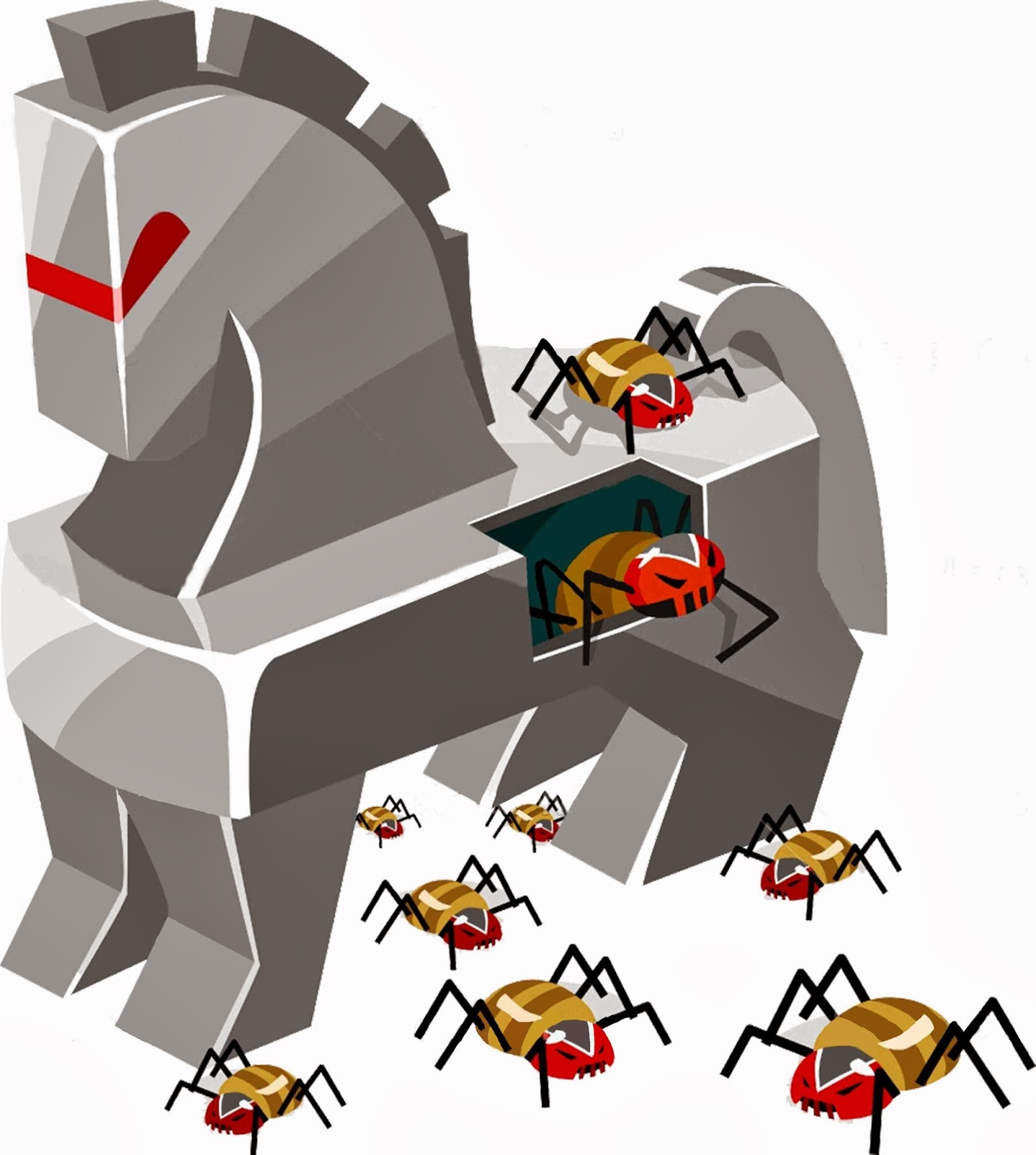
Kaspersky Lab experts have detected Triada, a new Trojan targeting Android devices that can be compared to Window-based malware in terms of its complexity. It is stealthy, modular, persistent and written by very professional cybercriminals. Devices running the 4.4.4. and earlier versions of the Android OS are at the greatest risk.
According to the recent Kaspersky Lab research on Mobile Virusology, nearly half of the top 20 Trojans in 2015 were malicious programs with the ability to gain super-user access rights. Super-user privileges give cybercriminals the rights to install applications on the phone without the user’s knowledge.
This type of malware propagates through applications that users download/install from untrusted sources. These apps can sometimes be found in the official Google Play app store, masquerading as a game or entertainment application. They can also be installed during an update of existing popular applications and are occasionally pre-installed on the mobile device. Those at greatest risk include devices running 4.4.4. and earlier versions of the Android OS.
There are eleven known mobile Trojan families that use root privileges. Three of them – Ztorg, Gorpo and Leech – act in cooperation with each other. Devices infected with these Trojans usually organise themselves into a network, creating a sort of advertising botnet that threat actors can use to install different kinds of adware. But that’s not all…
Shortly after rooting on the device, the above-mentioned Trojans download and install a backdoor. This then downloads and activates two modules that have the ability to download, install and launch applications.
The application loader and its installation modules refer to different types of Trojans, but all of them have been added to our antivirus databases under a common name – Triada.
Getting into the parental Android process
A distinguishing feature of this malware is the use of Zygote – the parent of the application process on an Android device – that contains system libraries and frameworks used by every application installed on the device. In other words, it’s a demon whose purpose is to launch Android applications. This is a standard app process that works for every newly installed application. It means that as soon as the Trojan gets into the system, it becomes part of the app process and will be pre-installed into any application launching on the device and can even change the logic of the application’s operations.
This is the first time technology like this has been seen in the wild. Prior to this, a Trojan using Zygote was only known of as a proof-of-concept.
The stealth capabilities of this malware are very advanced. After getting into the user’s device Triada implements in nearly every working process and continues to exist in the short-term memory. This makes it almost impossible to detect and delete using antimalware solutions. Triada operates silently, meaning that all malicious activities are hidden, both from the user and from other applications.
The complexity of the Triada Trojan’s functionality proves the fact that very professional cybercriminals, with a deep understanding of the targeted mobile platform, are behind the creation of this malware.
Triada’s business model
The Triada Trojan can modify outgoing SMS messages sent by other applications. This is now a major functionality of the malware. When a user is making in-app purchases via SMS for Android games, fraudsters are likely to modify the outgoing SMS so that they receive the money instead of the game developers.
“The Triada of Ztrog, Gorpo and Leech marks a new stage in the evolution of Android-based threats. They are the first widespread malware with the potential to escalate their privileges on most devices. The majority of users attacked by the Trojans were located in Russia, India and Ukraine, as well as APAC countries. It is hard to underestimate the threat of a malicious application gaining root access to a device. Their main threat, as the example of Triada shows, is in the fact that they provide access to the device for much more advanced and dangerous malicious applications. They also have a well-thought-out architecture developed by cybercriminals who have a deep knowledge of the target mobile platform,” said Nikita Buchka, Junior Malware Analyst, Kaspersky Lab.
As it is nearly impossible to uninstall this malware from a device, users face two options to get rid of it. The first is to “root” their device and delete the malicious applications manually. The second option is to jailbreak the Android system on the device.
Kaspersky Lab products detect Triada Trojan components as: Trojan-Downloader.AndroidOS.Triada.a; Trojan-SMS.AndroidOS.Triada.a; Trojan-Banker.AndroidOS.Triada.a; Backdoor.AndroidOS.Triada.
[su_box title=”About Kaspersky Lab” style=”noise” box_color=”#336588″] Kaspersky Lab is one of the world’s fastest-growing cybersecurity companies and the largest that is privately-owned. The company is ranked among the world’s top four vendors of security solutions for endpoint users (IDC, 2014). Since 1997 Kaspersky Lab has been an innovator in cybersecurity and provides effective digital security solutions and threat intelligence for large enterprises, SMBs and consumers. Kaspersky Lab is an international company, operating in almost 200 countries and territories across the globe, providing protection for over 400 million users worldwide.[/su_box]

The opinions expressed in this post belong to the individual contributors and do not necessarily reflect the views of Information Security Buzz.