


Close Menu
  • Home
  • Articles
    • Attacks
      • BEC
      • Data Breach
      • DDoS
      • Evasion Attacks
      • Injection
      • Malware
      • MITM
      • Phishing
      • Ransomware
      • RCE
      • Social Engineering
      • Spoofing
      • Spyware
    • Business and Policy
      • BCP and DRP
      • GRC
      • Regulations
    • Data Protection
      • DLP
      • DRM
      • Encryption
      • IAM
    • Future, Trends and Insight
      • AI
      • Events & Community
      • Emerging Tech
      • Expert Panel
      • Interviews With Experts
      • Insights
      • Study & Research
    • Resources
      • Guides
      • Tools
      • Training & Education
    • Security
      • API
      • Apps
      • Cloud
      • Critical Infrastructure
      • Endpoint
      • Hardware
      • IoT
      • Mobile
      • Network
      • OT
      • Port Security
      • Security Architecture
      • Software Development
      • Supply Chain
      • Zero Trust
    • Threats and Vulnerabilities
      • Emerging Threats
      • Insider Threats
      • Risk Management
      • Threat Intelligence
      • Zero Day
  • News and Exclusives
    • Latest News
    • ISB Exclusive
    • Positive News
  • Who We Are
    • About Us
    • Information Security Buzz Expert Panel​
    • Write for Us
    • Media Pack
  • Contact Us
  • Newsletter
Facebook X (Twitter) LinkedIn
Information Security BuzzInformation Security Buzz
  • Home
  • Articles
    • Attacks
      • BEC
      • Data Breach
      • DDoS
      • Evasion Attacks
      • Injection
      • Malware
      • MITM
      • Phishing
      • Ransomware
      • RCE
      • Social Engineering
      • Spoofing
      • Spyware
    • Business and Policy
      • BCP and DRP
      • GRC
      • Regulations
    • Data Protection
      • DLP
      • DRM
      • Encryption
      • IAM
    • Future, Trends and Insight
      • AI
      • Events & Community
      • Emerging Tech
      • Expert Panel
      • Interviews With Experts
      • Insights
      • Study & Research
    • Resources
      • Guides
      • Tools
      • Training & Education
    • Security
      • API
      • Apps
      • Cloud
      • Critical Infrastructure
      • Endpoint
      • Hardware
      • IoT
      • Mobile
      • Network
      • OT
      • Port Security
      • Security Architecture
      • Software Development
      • Supply Chain
      • Zero Trust
    • Threats and Vulnerabilities
      • Emerging Threats
      • Insider Threats
      • Risk Management
      • Threat Intelligence
      • Zero Day
  • News and Exclusives
    • Latest News
    • ISB Exclusive
    • Positive News
  • Who We Are
    • About Us
    • Information Security Buzz Expert Panel​
    • Write for Us
    • Media Pack
  • Contact Us
  • Newsletter
Subscribe
Information Security BuzzInformation Security Buzz
Home - Articles - AWS Penetration Testing: All You Need To Know
Articles

AWS Penetration Testing: All You Need To Know

Kanishk TagadeBy Kanishk TagadeSeptember 8, 2021Updated:July 4, 20245 Mins Read
Share LinkedIn Twitter Facebook Copy Link Email
Smart Home Hubs
Share
Facebook Twitter LinkedIn Email Copy Link
Quick AI Summary
ChatGPTClaudeGeminiGrokPerplexityDeepSeekCopilot

Since its introduction in 2006, AWS has been the king of the cloud market. AWS owns 33.8% of the global market share and this number is greater than any of its competitors by a long shot. Its success is due to its reliability and high scalability. Indeed, you can say AWS outperforms its competitors.

Unfortunately, since it is a popular cloud computing platform, it also is a popular target of cyberattacks. Therefore, it is crucial to take preventive measures against it. But how?

AWS penetration testing is the answer. A penetration test identifies all the vulnerabilities on your AWS instance. However, the procedure for this is different from the traditional pentest. After conducting the pentest, you can debug the AWS instance and take other measures to enhance security.

AWS Penetration Testing vs Traditional Penetration Testing

AWS penetration testing is different from traditional pentesting. This is because AWS has a very different architecture with an elastic computing platform that allows easy scaling and deployment.

AWS offers security through three fundamental pillars; it’s architecture, proactive monitoring, and compliance with AWS security standards.  A large part of the AWS cloud is based on an elastic computing platform. This means each instance has sufficient capacity to handle any spike in traffic without affecting the performance of the server.  The AWS cloud is scalable in nature, moreover, AWS servers are quick to deploy when compared to traditional servers.

Types of AWS Penetration Testing
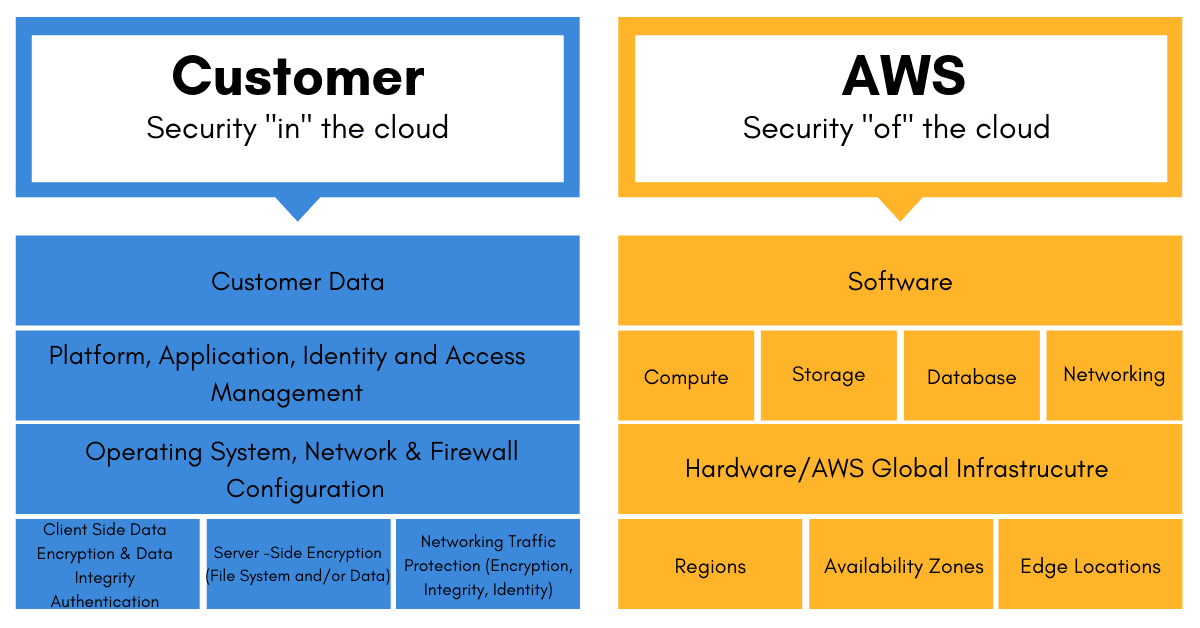
Types of AWS penetration testing

Source: Cloud Management Insider

1. Security of the cloud

Here’s some good news, this is the part you don’t have to worry about. Security of the cloud is the cloud service provider’s responsibility, in this case, Amazon’s responsibility. This largely includes the security of the server. They also deal with zero-day attack prevention and flaws in logic.

2. Security in the cloud

This is where you and your team come in. You are in charge of overseeing the security of the AWS assets you use. You also have to ensure the safety of any web application or software your company deploys.

How to Perform AWS Penetration Testing?

While conducting a penetration test, there are 3 main areas that you need to focus on. They are:

  • The internal infrastructure of the cloud
  • Web application/software that you deploy
  • AWS config review

An AWS pentest can be divided into 4 phases. These phases are:

1. Review Policies For AWS Penetration Testing

The AWS Security Credentials Guidelines are a great place to start. You need to review them before the AWS pentest begins. AWS has a set of security standards that you must follow. You have to ensure accounts, AWS Config, and AWS services are configured in accordance with these guidelines. AWS can also provide you with AWS security best practices. They regularly update their AWS Security Center.

2. AWS Pentest Planning

A plan is crucial for any pentest to succeed. Therefore, AWS penetration testing demands one as well. AWS pentesting has its own AWS security assessment methodologies that you must conform to. AWS documentation provides AWS pentest planning templates which are available here.

3. AWS Penetration Testing Execution

For AWS Pentesting, the methodology involves scanning the AWS environment, assessing permissions, and configuring permissions. To use a metaphor, AWS pentesting is like a game of chess. AWS customers must understand the various strategies that hackers use to attack AWS products and services. You have to defend against these attacks in AWS pentesting so you can have your AWS instance up and running smoothly.

4. AWS Penetration Testing Reporting

You should consider this as the final move in AWS penetration testing. AWS has a well-documented AWS security assessment report format that you must use in AWS pentesting.

Benefits of AWS Penetration Testing

Some of the benefits you gain after conducting  AWS penetration tests are as follows:

  • It assists in increasing compliance with international standards like GDPR, PCI-DSS, ISO-27017, etc.
  • A pentest helps strengthen security and prevents security breaches.
  • It increases customer trust and confidence in your company.
  • Pentests save you from paying hefty fines and compensations in case of a cyber attack.

Challenges of AWS Penetration Testing

AWS penetration testing is not an easy task. There are some challenges that you may encounter during AWS pentest. These are discussed below:

  • Penetration testing requires expert knowledge of AWS infrastructure.
  • AWS penetration testing cost might be very high for your organization.
  • AWS penetration tests take time to complete, sometimes up to a month or more.
  • Penetration tests might not always guarantee that your AWS environment is safe.
  • AWS is constantly updating its services and flaws in those services may not be detected during the test.

Final Thoughts

It is crucial for any business utilizing the Amazon Web Services platform to have their system regularly inspected for vulnerabilities, as these are not always obvious and could lead to serious security breaches. The benefits of this type of pentesting include increased protection against cyberattacks, knowledge about how your defenses work in practice, and more confidence that you’re doing everything possible to keep data safe from external threats. 

Remember, don’t wait until something bad happens before you start thinking about security. Your data is valuable, take care of it now!

Kanishk Tagade

Kanishk Tagade is a Marketing Manager at Astra Security. Having a hawk-eyed view on the cybersecurity threat landscape, market-shifts, and hacktivism activities, Kanishk is a community member of the Nasscom and corporate contributor at many technology magazines and security awareness platforms. Editor-in-Chief at "QuickCyber.news", his work is published in more than 50+ news platforms. He is also a social micro-influencer for the latest cybersecurity defense mechanisms, Digital Transformation, Machine Learning, AI and IoT products.

  • Kanishk Tagade
    Types Of Data Security Compliance And Why They’re Important
  • Kanishk Tagade
    Penetration Testing In Azure: How It Works, Steps To Follow, And Tools
  • Kanishk Tagade
    Components of An Effective SaaS Security Audit

The opinions expressed in this post belong to the individual contributors and do not necessarily reflect the views of Information Security Buzz.

Share. Facebook Twitter LinkedIn Email Copy Link

Related Posts

Roundcube RCE Vulnerability Disclosed Early Amid Active Exploitation

June 10, 20255 Mins Read

Roblox Under Fire: Lawsuit Alleges Secret Data Tracking of Kids

May 13, 20254 Mins Read

Fake Indian Government Portal Used to Spread Cross-Platform Malware in Suspected APT36 Campaign

May 13, 20253 Mins Read
ISB-Bora-Side-Bar

No se ha podido establecer conexión. Error 429

 
ISB-Bora-Side-Bar
Black ISB Logo

Information Security Buzz is an independent resource that provides the experts’ comments, analysis, and opinion on the latest Cybersecurity news and topics

X (Twitter) LinkedIn Facebook RSS

Working With Us

  • About Us
  • Advertise With Us
  • Contact Us

Write For Us

  • How To Contribute

The Pages

  • Privacy Policy
  • Cookie Policy
  • AI Policy
  • Terms & Conditions
  • Copyright Notice

Information Security Buzz and all its contents are copyright © 2014-2025. All rights reserved. All third-party trademarks are recognized.

Type above and press Enter to search. Press Esc to cancel.

Manage Consent
To provide the best experiences, we use technologies like cookies to store and/or access device information. Consenting to these technologies will allow us to process data such as browsing behavior or unique IDs on this site. Not consenting or withdrawing consent, may adversely affect certain features and functions.
Functional Always active
The technical storage or access is strictly necessary for the legitimate purpose of enabling the use of a specific service explicitly requested by the subscriber or user, or for the sole purpose of carrying out the transmission of a communication over an electronic communications network.
Preferences
The technical storage or access is necessary for the legitimate purpose of storing preferences that are not requested by the subscriber or user.
Statistics
The technical storage or access that is used exclusively for statistical purposes. The technical storage or access that is used exclusively for anonymous statistical purposes. Without a subpoena, voluntary compliance on the part of your Internet Service Provider, or additional records from a third party, information stored or retrieved for this purpose alone cannot usually be used to identify you.
Marketing
The technical storage or access is required to create user profiles to send advertising, or to track the user on a website or across several websites for similar marketing purposes.
  • Manage options
  • Manage services
  • Manage {vendor_count} vendors
  • Read more about these purposes
View preferences
  • {title}
  • {title}
  • {title}