


Close Menu
  • Home
  • Articles
    • Attacks
      • BEC
      • Data Breach
      • DDoS
      • Evasion Attacks
      • Injection
      • Malware
      • MITM
      • Phishing
      • Ransomware
      • RCE
      • Social Engineering
      • Spoofing
      • Spyware
    • Business and Policy
      • BCP and DRP
      • GRC
      • Regulations
    • Data Protection
      • DLP
      • DRM
      • Encryption
      • IAM
    • Future, Trends and Insight
      • AI
      • Events & Community
      • Emerging Tech
      • Expert Panel
      • Interviews With Experts
      • Insights
      • Study & Research
    • Resources
      • Guides
      • Tools
      • Training & Education
    • Security
      • API
      • Apps
      • Cloud
      • Critical Infrastructure
      • Endpoint
      • Hardware
      • IoT
      • Mobile
      • Network
      • OT
      • Port Security
      • Security Architecture
      • Software Development
      • Supply Chain
      • Zero Trust
    • Threats and Vulnerabilities
      • Emerging Threats
      • Insider Threats
      • Risk Management
      • Threat Intelligence
      • Zero Day
  • News and Exclusives
    • Latest News
    • ISB Exclusive
    • Positive News
  • Who We Are
    • About Us
    • Information Security Buzz Expert Panel​
    • Write for Us
    • Media Pack
  • Contact Us
  • Newsletter
Facebook X (Twitter) LinkedIn
Information Security BuzzInformation Security Buzz
  • Home
  • Articles
    • Attacks
      • BEC
      • Data Breach
      • DDoS
      • Evasion Attacks
      • Injection
      • Malware
      • MITM
      • Phishing
      • Ransomware
      • RCE
      • Social Engineering
      • Spoofing
      • Spyware
    • Business and Policy
      • BCP and DRP
      • GRC
      • Regulations
    • Data Protection
      • DLP
      • DRM
      • Encryption
      • IAM
    • Future, Trends and Insight
      • AI
      • Events & Community
      • Emerging Tech
      • Expert Panel
      • Interviews With Experts
      • Insights
      • Study & Research
    • Resources
      • Guides
      • Tools
      • Training & Education
    • Security
      • API
      • Apps
      • Cloud
      • Critical Infrastructure
      • Endpoint
      • Hardware
      • IoT
      • Mobile
      • Network
      • OT
      • Port Security
      • Security Architecture
      • Software Development
      • Supply Chain
      • Zero Trust
    • Threats and Vulnerabilities
      • Emerging Threats
      • Insider Threats
      • Risk Management
      • Threat Intelligence
      • Zero Day
  • News and Exclusives
    • Latest News
    • ISB Exclusive
    • Positive News
  • Who We Are
    • About Us
    • Information Security Buzz Expert Panel​
    • Write for Us
    • Media Pack
  • Contact Us
  • Newsletter
Subscribe
Information Security BuzzInformation Security Buzz
Home - Articles - Sector Specificity: The AHA and its Recommendations on the NIST Cybersecurity Framework
Articles

Sector Specificity: The AHA and its Recommendations on the NIST Cybersecurity Framework

ISBuzz TeamBy ISBuzz TeamDecember 19, 2013Updated:April 30, 20253 Mins Read
Share LinkedIn Twitter Facebook Copy Link Email
NIST
Share
Facebook Twitter LinkedIn Email Copy Link
Quick AI Summary
ChatGPTClaudeGeminiGrokPerplexityDeepSeekCopilot

The American Hospital Association (AHA) has offered a number of recommendations to help improve the preliminary cybersecurity framework developed by the National Institute of Standards and Technology (NIST).

The framework, which can be found here, was published back in February of 2013.  It is voluntary in nature and aims to provide both private- and public-sector organizations with a common language and shared understanding of the cybersecurity threat landscape.  The framework does this by advancing five key cyber capabilities:  identify, protect, detect, respond, and recover.

The AHA’s recommendations are as follows.  First, it suggests that the NIST consider how different sectors have to negotiate variable implementation mechanisms in order to adopt the new cybersecurity standards.  Second, the AHA then asks the federal government to appreciate how much time it would take for it to comply with the new framework.  And finally, it requests that an effort be made to bridge the new framework with both the Health Insurance Portability and Accountability Act (HIPAA) and the Health Information Technology for Economic and Clinical Health Act (HITECH), which protect patients’ personal information using electronic records.
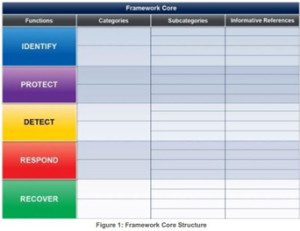
NISTTaken together, these recommendations present a challenge to NIST’s framework in that they question whether different sectors can reasonably be expected to operate according to the same cybersecurity standards.

But this is not the only problem associated with NIST.  Some cyber experts criticize the framework for failing to address, among other things, how businesses can work to reduce cybersecurity risks.  Too much emphasis is put on response, according to these individuals, and not enough on prevention.

Others believe that the significant costs of adopting the framework, which would require companies to draft a new cyber policy, establish procedures to strengthen the five cyber capabilities mentioned above, and encourage senior management to constantly work on a cybersecurity strategy, potentially deter businesses who might otherwise want to incorporate NIST’s standards into their company policy.

Finally, and perhaps most worrisome, companies are still confused about exactly what constitutes adoption of the framework.  This is a significant problem, especially for a voluntary framework which will struggle to enforce compliance in any event.

Ultimately, what AHA’s recommendations mean is that NIST’s framework may be well-intentioned, but it still has a ways to go before organizations can realistically hope to adopt it into their day-to-day functions.

In addition to the AHA, various other IT professionals and organizations have offered up comments so far.  These will be incorporated into a final draft, which is slated to be released in February 2014.

Dave BissonName: David Bisson

Twitter Handle: @DMBisson

Area of Expertise:

David specializes in cyber security as it relates to U.S. national security and to American military and strategic culture.

Professional Biography:

David is currently a senior at Bard College, where he is studying Political Studies and writing his senior thesis on cyberwar and cross-domain escalation.  He also works at the Hannah Arendt Center for Politics and Humanities at Bard College as an Outreach intern.  Post-graduation, David would like to leverage his extensive journalism experience as well as his interest in computer coding and social media to pursue a career in cyber security, both its practice and policy.

ISBuzz Team
  • ISBuzz Team
    Air Canada Data Breach: BianLian Extortion Group Claims A Massive Heist Contrary To Airline’s Earlier Statement
  • ISBuzz Team
    Unprecedented DDoS Attack Rocks The Web: Tech Giants Reveal A Digital Tsunami
  • ISBuzz Team
    CISA Flags High-Severity Adobe Acrobat Reader Flaw Amid Active Exploits
  • ISBuzz Team
    Curl Security Alert: Patching A Critical Bug Averting Potential Cyber Catastrophe

The opinions expressed in this post belong to the individual contributors and do not necessarily reflect the views of Information Security Buzz.

Share. Facebook Twitter LinkedIn Email Copy Link

Related Posts

Roblox Under Fire: Lawsuit Alleges Secret Data Tracking of Kids

May 13, 20254 Mins Read

Understanding Cloud Access Security Brokers (CASB)

March 28, 202410 Mins Read

Decoding Cloud Security Posture Management (CSPM)

March 28, 202411 Mins Read
ISB-Bora-Side-Bar

No se ha podido establecer conexión. Error 429

 
ISB-Bora-Side-Bar
Black ISB Logo

Information Security Buzz is an independent resource that provides the experts’ comments, analysis, and opinion on the latest Cybersecurity news and topics

X (Twitter) LinkedIn Facebook RSS

Working With Us

  • About Us
  • Advertise With Us
  • Contact Us

Write For Us

  • How To Contribute

The Pages

  • Privacy Policy
  • Cookie Policy
  • AI Policy
  • Terms & Conditions
  • Copyright Notice

Information Security Buzz and all its contents are copyright © 2014-2025. All rights reserved. All third-party trademarks are recognized.

Type above and press Enter to search. Press Esc to cancel.

Manage Consent
To provide the best experiences, we use technologies like cookies to store and/or access device information. Consenting to these technologies will allow us to process data such as browsing behavior or unique IDs on this site. Not consenting or withdrawing consent, may adversely affect certain features and functions.
Functional Always active
The technical storage or access is strictly necessary for the legitimate purpose of enabling the use of a specific service explicitly requested by the subscriber or user, or for the sole purpose of carrying out the transmission of a communication over an electronic communications network.
Preferences
The technical storage or access is necessary for the legitimate purpose of storing preferences that are not requested by the subscriber or user.
Statistics
The technical storage or access that is used exclusively for statistical purposes. The technical storage or access that is used exclusively for anonymous statistical purposes. Without a subpoena, voluntary compliance on the part of your Internet Service Provider, or additional records from a third party, information stored or retrieved for this purpose alone cannot usually be used to identify you.
Marketing
The technical storage or access is required to create user profiles to send advertising, or to track the user on a website or across several websites for similar marketing purposes.
  • Manage options
  • Manage services
  • Manage {vendor_count} vendors
  • Read more about these purposes
View preferences
  • {title}
  • {title}
  • {title}