

Close Menu
  • Home
  • Articles
    • Attacks
      • BEC
      • Data Breach
      • DDoS
      • Evasion Attacks
      • Injection
      • Malware
      • MITM
      • Phishing
      • Ransomware
      • RCE
      • Social Engineering
      • Spoofing
      • Spyware
    • Business and Policy
      • BCP and DRP
      • GRC
      • Regulations
    • Data Protection
      • DLP
      • DRM
      • Encryption
      • IAM
    • Future, Trends and Insight
      • AI
      • Events & Community
      • Emerging Tech
      • Expert Panel
      • Interviews With Experts
      • Insights
      • Study & Research
    • Resources
      • Guides
      • Tools
      • Training & Education
    • Security
      • API
      • Apps
      • Cloud
      • Critical Infrastructure
      • Endpoint
      • Hardware
      • IoT
      • Mobile
      • Network
      • OT
      • Port Security
      • Security Architecture
      • Software Development
      • Supply Chain
      • Zero Trust
    • Threats and Vulnerabilities
      • Emerging Threats
      • Insider Threats
      • Risk Management
      • Threat Intelligence
      • Zero Day
  • News and Exclusives
    • Latest News
    • ISB Exclusive
    • Positive News
  • Who We Are
    • About Us
    • Information Security Buzz Expert Panel​
    • Write for Us
    • Media Pack
  • Contact Us
  • Newsletter
Facebook X (Twitter) LinkedIn
Information Security BuzzInformation Security Buzz
  • Home
  • Articles
    • Attacks
      • BEC
      • Data Breach
      • DDoS
      • Evasion Attacks
      • Injection
      • Malware
      • MITM
      • Phishing
      • Ransomware
      • RCE
      • Social Engineering
      • Spoofing
      • Spyware
    • Business and Policy
      • BCP and DRP
      • GRC
      • Regulations
    • Data Protection
      • DLP
      • DRM
      • Encryption
      • IAM
    • Future, Trends and Insight
      • AI
      • Events & Community
      • Emerging Tech
      • Expert Panel
      • Interviews With Experts
      • Insights
      • Study & Research
    • Resources
      • Guides
      • Tools
      • Training & Education
    • Security
      • API
      • Apps
      • Cloud
      • Critical Infrastructure
      • Endpoint
      • Hardware
      • IoT
      • Mobile
      • Network
      • OT
      • Port Security
      • Security Architecture
      • Software Development
      • Supply Chain
      • Zero Trust
    • Threats and Vulnerabilities
      • Emerging Threats
      • Insider Threats
      • Risk Management
      • Threat Intelligence
      • Zero Day
  • News and Exclusives
    • Latest News
    • ISB Exclusive
    • Positive News
  • Who We Are
    • About Us
    • Information Security Buzz Expert Panel​
    • Write for Us
    • Media Pack
  • Contact Us
  • Newsletter
Subscribe
Information Security BuzzInformation Security Buzz
Home - News & Analysis - Automated Defense: Reimaging Cybersecurity Via Anthropology
News & Analysis

Automated Defense: Reimaging Cybersecurity Via Anthropology

ISBuzz TeamBy ISBuzz TeamJanuary 8, 2014Updated:April 30, 20253 Mins Read
Share LinkedIn Twitter Facebook Copy Link Email
defense
Share
Facebook Twitter LinkedIn Email Copy Link
Quick AI Summary
ChatGPTClaudeGeminiGrokPerplexityDeepSeekCopilot

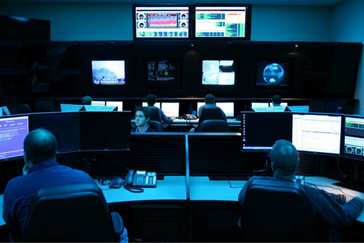
MANHATTAN, KS—Cybersecurity and anthropology researchers at Kansas State University are teaming up in an effort to develop automated tools that will make computer network defense more efficient.

According to a press release issued by the university, Xinming “Simon” Ou, associate professor of computing and information sciences, and Mike Wesch, associate professor of anthropology, recently received a $700,000 grant from the National Science Foundation to research cyber security analysts’ “tacit knowledge”— the unspoken language cyber professionals use to perform their duties at security operation centers (SOCs).

A professional analyst usually takes five or six minutes to find the Internet Protocol (IP) address and physical location of a computer that has been compromised by an attack.  But this task, when compared to the more daunting objective of figuring out how a computer system has been infiltrated and what data might have been compromised, is repetitive and falls short of engaging the full spectrum of an analyst’s skills and expertise.

To remedy this state of affairs, among others, anthropology researchers at KSU have been assigned to observe professional analysts who work at two companies’ SOCs.  It is the hope of Ou and Wesch that these ethnographies will yield insights into cyber analysts’ “tacit knowledge”, which tool developers can then use to generate algorithms that will automate the more repetitive duties of cyber security.

This is not the first attempt to develop a cybersecurity algorithm.  For example, in May of last year, it was announced that researchers at North Carolina State University had developed an algorithm that helps protect computer systems in the event of an attack.

Even so, Ou and Wesch may be the first researchers who have aspired to create an algorithm that relates to cyber security analysts’ day-to-day duties.

Ou is no stranger to computer and information security.  Among other things, he has received numerous grants and awards for his research, which includes an article investigating the effectiveness of moving-target defense (MTD).

MTD is a new concept of network defense.  The idea is to dynamically change computer programs’ properties using automation tools.  If a network alters its configuration frequently enough, it is hoped that analysts can better protect computer systems from certain traditionally static cyber attacks, such as probing.

Ou’s work with MTD, not to mention his and Wesch’s efforts to translate professionals’ “tacit knowledge” into analytical tools, reveals an important prediction about cyber security:  automation tools are the way of the future.

The cyber threat landscape has diversified and expanded in recent years.  It is therefore imperative that cyber security analysts acquire tools that allow them to direct their energies to the more time-consuming and cognitively “human” aspects of their profession.

In this sense, Ou and Wesch’s work stand to revolutionize cyber security—how analysts are trained, what duties they perform, and overall how the field actually works on a regular basis.

Dave BissonDavid Bisson | @DMBisson

Bio: David is currently a senior at Bard College, where he is studying Political Studies and writing his senior thesis on cyberwar and cross-domain escalation.  He also works at the Hannah Arendt Center for Politics and Humanities at Bard College as an Outreach intern.  Post-graduation, David would like to leverage his extensive journalism experience as well as his interest in computer coding and social media to pursue a career in cyber security, both its practice and policy.

ISBuzz Team
  • ISBuzz Team
    Air Canada Data Breach: BianLian Extortion Group Claims A Massive Heist Contrary To Airline’s Earlier Statement
  • ISBuzz Team
    Unprecedented DDoS Attack Rocks The Web: Tech Giants Reveal A Digital Tsunami
  • ISBuzz Team
    CISA Flags High-Severity Adobe Acrobat Reader Flaw Amid Active Exploits
  • ISBuzz Team
    Curl Security Alert: Patching A Critical Bug Averting Potential Cyber Catastrophe

The opinions expressed in this post belong to the individual contributors and do not necessarily reflect the views of Information Security Buzz.

Share. Facebook Twitter LinkedIn Email Copy Link

Related Posts

The missing link in cyber resilience: Bridging the identity visibility gap

June 4, 20266 Mins Read

Dutch police, NCSC take down major botnet

June 4, 20264 Mins Read

Palo Alto warns of active exploitation of GlobalProtect authentication bypass flaw

June 2, 20263 Mins Read
ISB-Bora-Side-Bar

No se ha podido establecer conexión. Error 429

 
ISB-Bora-Side-Bar
Black ISB Logo

Information Security Buzz is an independent resource that provides the experts’ comments, analysis, and opinion on the latest Cybersecurity news and topics

X (Twitter) LinkedIn Facebook RSS

Working With Us

  • About Us
  • Advertise With Us
  • Contact Us

Write For Us

  • How To Contribute

The Pages

  • Privacy Policy
  • Cookie Policy
  • AI Policy
  • Terms & Conditions
  • Copyright Notice

Information Security Buzz and all its contents are copyright © 2014-2025. All rights reserved. All third-party trademarks are recognized.

Type above and press Enter to search. Press Esc to cancel.

Manage Consent
To provide the best experiences, we use technologies like cookies to store and/or access device information. Consenting to these technologies will allow us to process data such as browsing behavior or unique IDs on this site. Not consenting or withdrawing consent, may adversely affect certain features and functions.
Functional Always active
The technical storage or access is strictly necessary for the legitimate purpose of enabling the use of a specific service explicitly requested by the subscriber or user, or for the sole purpose of carrying out the transmission of a communication over an electronic communications network.
Preferences
The technical storage or access is necessary for the legitimate purpose of storing preferences that are not requested by the subscriber or user.
Statistics
The technical storage or access that is used exclusively for statistical purposes. The technical storage or access that is used exclusively for anonymous statistical purposes. Without a subpoena, voluntary compliance on the part of your Internet Service Provider, or additional records from a third party, information stored or retrieved for this purpose alone cannot usually be used to identify you.
Marketing
The technical storage or access is required to create user profiles to send advertising, or to track the user on a website or across several websites for similar marketing purposes.
  • Manage options
  • Manage services
  • Manage {vendor_count} vendors
  • Read more about these purposes
View preferences
  • {title}
  • {title}
  • {title}