

Close Menu
  • Home
  • Articles
    • Attacks
      • BEC
      • Data Breach
      • DDoS
      • Evasion Attacks
      • Injection
      • Malware
      • MITM
      • Phishing
      • Ransomware
      • RCE
      • Social Engineering
      • Spoofing
      • Spyware
    • Business and Policy
      • BCP and DRP
      • GRC
      • Regulations
    • Data Protection
      • DLP
      • DRM
      • Encryption
      • IAM
    • Future, Trends and Insight
      • AI
      • Events & Community
      • Emerging Tech
      • Expert Panel
      • Interviews With Experts
      • Insights
      • Study & Research
    • Resources
      • Guides
      • Tools
      • Training & Education
    • Security
      • API
      • Apps
      • Cloud
      • Critical Infrastructure
      • Endpoint
      • Hardware
      • IoT
      • Mobile
      • Network
      • OT
      • Port Security
      • Security Architecture
      • Software Development
      • Supply Chain
      • Zero Trust
    • Threats and Vulnerabilities
      • Emerging Threats
      • Insider Threats
      • Risk Management
      • Threat Intelligence
      • Zero Day
  • News and Exclusives
    • Latest News
    • ISB Exclusive
    • Positive News
  • Who We Are
    • About Us
    • Information Security Buzz Expert Panel​
    • Write for Us
    • Media Pack
  • Contact Us
  • Newsletter
Facebook X (Twitter) LinkedIn
Information Security BuzzInformation Security Buzz
  • Home
  • Articles
    • Attacks
      • BEC
      • Data Breach
      • DDoS
      • Evasion Attacks
      • Injection
      • Malware
      • MITM
      • Phishing
      • Ransomware
      • RCE
      • Social Engineering
      • Spoofing
      • Spyware
    • Business and Policy
      • BCP and DRP
      • GRC
      • Regulations
    • Data Protection
      • DLP
      • DRM
      • Encryption
      • IAM
    • Future, Trends and Insight
      • AI
      • Events & Community
      • Emerging Tech
      • Expert Panel
      • Interviews With Experts
      • Insights
      • Study & Research
    • Resources
      • Guides
      • Tools
      • Training & Education
    • Security
      • API
      • Apps
      • Cloud
      • Critical Infrastructure
      • Endpoint
      • Hardware
      • IoT
      • Mobile
      • Network
      • OT
      • Port Security
      • Security Architecture
      • Software Development
      • Supply Chain
      • Zero Trust
    • Threats and Vulnerabilities
      • Emerging Threats
      • Insider Threats
      • Risk Management
      • Threat Intelligence
      • Zero Day
  • News and Exclusives
    • Latest News
    • ISB Exclusive
    • Positive News
  • Who We Are
    • About Us
    • Information Security Buzz Expert Panel​
    • Write for Us
    • Media Pack
  • Contact Us
  • Newsletter
Subscribe
Information Security BuzzInformation Security Buzz
Home - Articles - The Black Friday Heist: Financial Phishing Increases During Holiday Season
Articles

The Black Friday Heist: Financial Phishing Increases During Holiday Season

ISBuzz TeamBy ISBuzz TeamNovember 22, 20164 Mins Read
Share LinkedIn Twitter Facebook Copy Link Email
security
security
Share
Facebook Twitter LinkedIn Email Copy Link
Quick AI Summary
ChatGPTClaudeGeminiGrokPerplexityDeepSeekCopilot

The number of financial phishing attacks is expected to rise during the Holiday season, which starts unofficially on so-called Black Friday, and continues through Cyber Monday and Christmas. Retrospective research by Kaspersky Lab specialists shows that, over the last few years, the holiday period was marked by an increase in phishing and other types of attacks, which suggests that the pattern will be repeated this year.

A peak season for sales is obviously also a peak hunting season for criminals. In fact, some £5 billion of transactions are predicted over that period – five times higher than 2015. Retailers offer lots of hard-to-resist deals as people plan on spending money on gifts for family, friends and themselves. Therefore, while e-commerce customers are making wishes for the upcoming sales, retailers are preparing their stores for a massive rise in the number of visitors. Financial infrastructure owners – banks and payment systems — are similarly getting ready for a huge increase in the number and value of transactions. However, cybercriminals are preparing too, as suggested in research from previous years.

As Kaspersky Lab threat statistics shows, in 2014 and 2015 the proportion of phishing pages that hunt financial data (credit cards details) detected by the company during Q4 (which covers the holiday period) was around nine per cent higher than the average for the year. In particular, the result for financial phishing in all of 2014 was 28.73 per cent, while the result for Q4 was 38.49 per cent. In 2015, 34.33 per cent of all phishing attacks were financial phishing, while in Q4, that type of phishing was responsible for 43.38 per cent of all attacks.

Holidays influence the type of financial targets that criminal’s target. Both in 2014 and 2015, Kaspersky Lab researchers witnessed a significant (several per cent) increase in phishing attacks against payment systems and online stores. Attacks against banks also grew, but at a lower rate.

When trying to steal payment data, criminals use different schemes. For example, they may create a fake payment page of a known payment system, copy legitimate online retailer sites, or even create legitimate looking fake shops with incredibly attractive offerings.
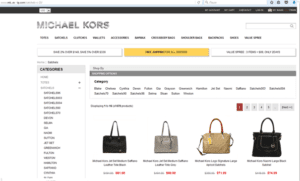
micheal

And of course, criminals exploit the Black Friday theme itself. While doing research into the threat landscape, in October 2016, Kaspersky Lab researchers spotted a Black-Friday themed phony internet shop offering products at attractive prices. This suggested that weeks before the actual start of the holiday sales even began, the criminals were already preparing
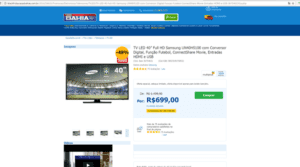
bahia

“In 2014, we conducted research into how the phishing threat landscape behaves in the holiday period. We discovered that the number of attacks against particular targets – payment systems and famous retail networks — increased during the Black Friday and Cyber Monday period. In 2015, the situation repeated itself, and this makes us think that in 2016 it will happen again. We urge users to be as cautious as possible when shopping online this season,” said Andrey Kostin, senior web content analyst at Kaspersky Lab.

In order to avoid becoming a victim of holiday phishing scams during the upcoming Black Friday, Cyber Monday and Christmas periods, Kaspersky Lab experts advise the following measures:

  • Do not click on any links received from unknown people or on suspicious links sent by your friends on social networking sites or via e-mail. They can be malicious; created to download malware to your device or to lead you to phishing webpages aimed at harvesting user credentials.
  • Do not enter your credit card details on unfamiliar or suspicious sites, to avoid passing them into cybercriminals’ hands. If these websites are offering advantageous deals that look too good to be true, they most likely belong to criminals.
  • Always double-check the webpage is genuine before entering any of your credentials or confidential information (at least take a look at the URL). Fake websites may look just like the real ones.
  • Install a security solution on your device, with built-in technologies designed to prevent financial fraud. For example, Safe Money technology in Kaspersky Lab’s solutions creates a secure environment for financial transactions on all levels.

Phishing is one of the most widespread cyber-threats that users may encounter during holidays, but it is not the only one. Read more about other types of threats to customers, retailers and banks that are likely to emerge in the coming holiday period in Kaspersky Lab Holiday cyber-threats Review on Securelist.

Read more about measures that customers can implement in order to protect themselves, on the Kaspersky Daily blog.

Read more about what can businesses do in order to protect themselves from cyber-threats during holiday season on Kaspersky Business Blog.

[su_box title=”About Kaspersky Lab” style=”noise” box_color=”#336588″][short_info id=’59584′ desc=”true” all=”false”][/su_box]

ISBuzz Team
  • ISBuzz Team
    Air Canada Data Breach: BianLian Extortion Group Claims A Massive Heist Contrary To Airline’s Earlier Statement
  • ISBuzz Team
    Unprecedented DDoS Attack Rocks The Web: Tech Giants Reveal A Digital Tsunami
  • ISBuzz Team
    CISA Flags High-Severity Adobe Acrobat Reader Flaw Amid Active Exploits
  • ISBuzz Team
    Curl Security Alert: Patching A Critical Bug Averting Potential Cyber Catastrophe

The opinions expressed in this post belong to the individual contributors and do not necessarily reflect the views of Information Security Buzz.

Share. Facebook Twitter LinkedIn Email Copy Link

Related Posts

New Phishing Kit Starkiller Defeats Multi-Factor Authentication

February 23, 20264 Mins Read

ReliaQuest Uncovers Social Media Phishing Campaign Built on Trusted Tools

January 22, 20266 Mins Read

What Happens after a Phishing Email Lands in Your Inbox?

January 5, 20266 Mins Read
ISB-Bora-Side-Bar

No se ha podido establecer conexión. Error 429

 
ISB-Bora-Side-Bar
Black ISB Logo

Information Security Buzz is an independent resource that provides the experts’ comments, analysis, and opinion on the latest Cybersecurity news and topics

X (Twitter) LinkedIn Facebook RSS

Working With Us

  • About Us
  • Advertise With Us
  • Contact Us

Write For Us

  • How To Contribute

The Pages

  • Privacy Policy
  • Cookie Policy
  • AI Policy
  • Terms & Conditions
  • Copyright Notice

Information Security Buzz and all its contents are copyright © 2014-2025. All rights reserved. All third-party trademarks are recognized.

Type above and press Enter to search. Press Esc to cancel.

Manage Consent
To provide the best experiences, we use technologies like cookies to store and/or access device information. Consenting to these technologies will allow us to process data such as browsing behavior or unique IDs on this site. Not consenting or withdrawing consent, may adversely affect certain features and functions.
Functional Always active
The technical storage or access is strictly necessary for the legitimate purpose of enabling the use of a specific service explicitly requested by the subscriber or user, or for the sole purpose of carrying out the transmission of a communication over an electronic communications network.
Preferences
The technical storage or access is necessary for the legitimate purpose of storing preferences that are not requested by the subscriber or user.
Statistics
The technical storage or access that is used exclusively for statistical purposes. The technical storage or access that is used exclusively for anonymous statistical purposes. Without a subpoena, voluntary compliance on the part of your Internet Service Provider, or additional records from a third party, information stored or retrieved for this purpose alone cannot usually be used to identify you.
Marketing
The technical storage or access is required to create user profiles to send advertising, or to track the user on a website or across several websites for similar marketing purposes.
  • Manage options
  • Manage services
  • Manage {vendor_count} vendors
  • Read more about these purposes
View preferences
  • {title}
  • {title}
  • {title}