


Close Menu
  • Home
  • Articles
    • Attacks
      • BEC
      • Data Breach
      • DDoS
      • Evasion Attacks
      • Injection
      • Malware
      • MITM
      • Phishing
      • Ransomware
      • RCE
      • Social Engineering
      • Spoofing
      • Spyware
    • Business and Policy
      • BCP and DRP
      • GRC
      • Regulations
    • Data Protection
      • DLP
      • DRM
      • Encryption
      • IAM
    • Future, Trends and Insight
      • AI
      • Events & Community
      • Emerging Tech
      • Expert Panel
      • Interviews With Experts
      • Insights
      • Study & Research
    • Resources
      • Guides
      • Tools
      • Training & Education
    • Security
      • API
      • Apps
      • Cloud
      • Critical Infrastructure
      • Endpoint
      • Hardware
      • IoT
      • Mobile
      • Network
      • OT
      • Port Security
      • Security Architecture
      • Software Development
      • Supply Chain
      • Zero Trust
    • Threats and Vulnerabilities
      • Emerging Threats
      • Insider Threats
      • Risk Management
      • Threat Intelligence
      • Zero Day
  • News and Exclusives
    • Latest News
    • ISB Exclusive
    • Positive News
  • Who We Are
    • About Us
    • Information Security Buzz Expert Panel​
    • Write for Us
    • Media Pack
  • Contact Us
  • Newsletter
Facebook X (Twitter) LinkedIn
Information Security BuzzInformation Security Buzz
  • Home
  • Articles
    • Attacks
      • BEC
      • Data Breach
      • DDoS
      • Evasion Attacks
      • Injection
      • Malware
      • MITM
      • Phishing
      • Ransomware
      • RCE
      • Social Engineering
      • Spoofing
      • Spyware
    • Business and Policy
      • BCP and DRP
      • GRC
      • Regulations
    • Data Protection
      • DLP
      • DRM
      • Encryption
      • IAM
    • Future, Trends and Insight
      • AI
      • Events & Community
      • Emerging Tech
      • Expert Panel
      • Interviews With Experts
      • Insights
      • Study & Research
    • Resources
      • Guides
      • Tools
      • Training & Education
    • Security
      • API
      • Apps
      • Cloud
      • Critical Infrastructure
      • Endpoint
      • Hardware
      • IoT
      • Mobile
      • Network
      • OT
      • Port Security
      • Security Architecture
      • Software Development
      • Supply Chain
      • Zero Trust
    • Threats and Vulnerabilities
      • Emerging Threats
      • Insider Threats
      • Risk Management
      • Threat Intelligence
      • Zero Day
  • News and Exclusives
    • Latest News
    • ISB Exclusive
    • Positive News
  • Who We Are
    • About Us
    • Information Security Buzz Expert Panel​
    • Write for Us
    • Media Pack
  • Contact Us
  • Newsletter
Subscribe
Information Security BuzzInformation Security Buzz
Home - News & Analysis - Authentication Trends: How Do You Compare?
News & Analysis

Authentication Trends: How Do You Compare?

ISBuzz TeamBy ISBuzz TeamOctober 24, 2013Updated:July 3, 20243 Mins Read
Share LinkedIn Twitter Facebook Copy Link Email
GlobalSign Logo
Share
Facebook Twitter LinkedIn Email Copy Link
Quick AI Summary
ChatGPTClaudeGeminiGrokPerplexityDeepSeekCopilot

GlobalSign recently hosted a webinar discussing how to make access to sensitive data more secure. They surveyed attendees on the topic of multi-factor authentication, the level of security their organisation currently uses, as well as information surrounding their infrastructure setup. Their answers provided valuable insight into how today’s enterprises react to the current security threat landscape. Below is a summary of the findings.

Risky Single-factor Authentication Still Proves Popular

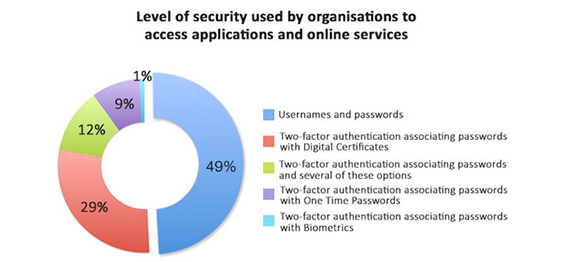
49% of participants only used username and passwords to access their organisation’s applications and online services. This result is somewhat of a concern given the vulnerability of the process. This also proved to be costly for the organisation and a burden for IT departments. Two-factor authentication (commonly provided through “something you have” and “something you know”) is definitely becoming the primary replacement.
Authentication


Digital Identities are On The Rise

From the 51% of respondents already using two-factor authentication, the use of Digital Certificates was the most preferred option. Other methods have their own advantages, e.g. for Biometrics, “who you are” can’t be left or forgotten like a token, and one-time passwords are not vulnerable to replay attacks. Digital Certificates, however, prove to be the simplest and most cost effective method to secure enterprise infrastructures and are highly scalable and maintainable with the right certificate management platform.

Organisations Authenticate to Internal Networks and VPNs as standard

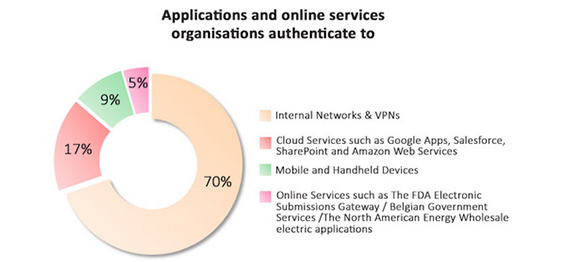
Unsurprisingly, results showed that 70% of organisations authenticated to Internal Networks and VPNs, no doubt driven by the growing adoption of BYOD and Cloud solutions which each alter the effectiveness of traditional methods in securing information assets.
 

 Authentication

Depsite the Costs, Organisations prefer to Be in Charge

The most important question here is: Which infrastructure to choose when implementing a security solution?

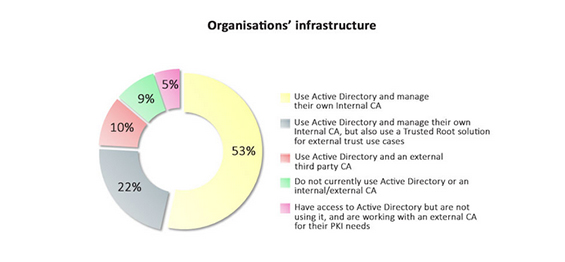
GlobalSign has formerly referred to the fact that internal PKI solutions can be expensive, complex and risky and that poor key management can lead to costly outages. Nonetheless, internal CAs seem to take a lot of space in the marketplace, with 75% of respondents managing their own CAs, 22% of which also use a Trusted Root solution for external trust use cases. During the webinar, Amar Singh disagreed with this as best practice and recommended using an expert third-party CA. “From an organisational point of view and a security point of view, Internal CAs are not the way to go”. Indeed, using a third-party SaaS CA for PKI implementation proposes many benefits, enabling internal IT departments to focus on their core competencies, whilst reducing risk and maintaining flexibility.
Authentication

So is it better to be managing your own CA, paying extra and putting added pressures and burdens on internal IT and PKI specialists, or choose an external solution with experts who keep up to date more easily with the current threat landscape? It seems clear to GlobalSign at least, that external solutions are the way to go.

Topics covered included:

– Two-factor authentication methods
– Digital Certificates – The benefits and how they work
– Securing access to internal networks, cloud services and mobile device

You can view the webinar here.

ISBuzz Team
  • ISBuzz Team
    Air Canada Data Breach: BianLian Extortion Group Claims A Massive Heist Contrary To Airline’s Earlier Statement
  • ISBuzz Team
    Unprecedented DDoS Attack Rocks The Web: Tech Giants Reveal A Digital Tsunami
  • ISBuzz Team
    CISA Flags High-Severity Adobe Acrobat Reader Flaw Amid Active Exploits
  • ISBuzz Team
    Curl Security Alert: Patching A Critical Bug Averting Potential Cyber Catastrophe

The opinions expressed in this post belong to the individual contributors and do not necessarily reflect the views of Information Security Buzz.

Share. Facebook Twitter LinkedIn Email Copy Link

Related Posts

The Real Cost of Inconsistent Third-Party Access

December 18, 20255 Mins Read

What Happens When Devices Cross Borders? The Role of Geofencing in Global IT

August 7, 20256 Mins Read

The Evolving Importance of Identity Governance in FinTech

July 10, 20258 Mins Read
ISB-Bora-Side-Bar

No se ha podido establecer conexión. Error 429

 
ISB-Bora-Side-Bar
Black ISB Logo

Information Security Buzz is an independent resource that provides the experts’ comments, analysis, and opinion on the latest Cybersecurity news and topics

X (Twitter) LinkedIn Facebook RSS

Working With Us

  • About Us
  • Advertise With Us
  • Contact Us

Write For Us

  • How To Contribute

The Pages

  • Privacy Policy
  • Cookie Policy
  • AI Policy
  • Terms & Conditions
  • Copyright Notice

Information Security Buzz and all its contents are copyright © 2014-2025. All rights reserved. All third-party trademarks are recognized.

Type above and press Enter to search. Press Esc to cancel.

Manage Consent
To provide the best experiences, we use technologies like cookies to store and/or access device information. Consenting to these technologies will allow us to process data such as browsing behavior or unique IDs on this site. Not consenting or withdrawing consent, may adversely affect certain features and functions.
Functional Always active
The technical storage or access is strictly necessary for the legitimate purpose of enabling the use of a specific service explicitly requested by the subscriber or user, or for the sole purpose of carrying out the transmission of a communication over an electronic communications network.
Preferences
The technical storage or access is necessary for the legitimate purpose of storing preferences that are not requested by the subscriber or user.
Statistics
The technical storage or access that is used exclusively for statistical purposes. The technical storage or access that is used exclusively for anonymous statistical purposes. Without a subpoena, voluntary compliance on the part of your Internet Service Provider, or additional records from a third party, information stored or retrieved for this purpose alone cannot usually be used to identify you.
Marketing
The technical storage or access is required to create user profiles to send advertising, or to track the user on a website or across several websites for similar marketing purposes.
  • Manage options
  • Manage services
  • Manage {vendor_count} vendors
  • Read more about these purposes
View preferences
  • {title}
  • {title}
  • {title}