


Close Menu
  • Home
  • Articles
    • Attacks
      • BEC
      • Data Breach
      • DDoS
      • Evasion Attacks
      • Injection
      • Malware
      • MITM
      • Phishing
      • Ransomware
      • RCE
      • Social Engineering
      • Spoofing
      • Spyware
    • Business and Policy
      • BCP and DRP
      • GRC
      • Regulations
    • Data Protection
      • DLP
      • DRM
      • Encryption
      • IAM
    • Future, Trends and Insight
      • AI
      • Events & Community
      • Emerging Tech
      • Expert Panel
      • Interviews With Experts
      • Insights
      • Study & Research
    • Resources
      • Guides
      • Tools
      • Training & Education
    • Security
      • API
      • Apps
      • Cloud
      • Critical Infrastructure
      • Endpoint
      • Hardware
      • IoT
      • Mobile
      • Network
      • OT
      • Port Security
      • Security Architecture
      • Software Development
      • Supply Chain
      • Zero Trust
    • Threats and Vulnerabilities
      • Emerging Threats
      • Insider Threats
      • Risk Management
      • Threat Intelligence
      • Zero Day
  • News and Exclusives
    • Latest News
    • ISB Exclusive
    • Positive News
  • Who We Are
    • About Us
    • Information Security Buzz Expert Panel​
    • Write for Us
    • Media Pack
  • Contact Us
  • Newsletter
Facebook X (Twitter) LinkedIn
Information Security BuzzInformation Security Buzz
  • Home
  • Articles
    • Attacks
      • BEC
      • Data Breach
      • DDoS
      • Evasion Attacks
      • Injection
      • Malware
      • MITM
      • Phishing
      • Ransomware
      • RCE
      • Social Engineering
      • Spoofing
      • Spyware
    • Business and Policy
      • BCP and DRP
      • GRC
      • Regulations
    • Data Protection
      • DLP
      • DRM
      • Encryption
      • IAM
    • Future, Trends and Insight
      • AI
      • Events & Community
      • Emerging Tech
      • Expert Panel
      • Interviews With Experts
      • Insights
      • Study & Research
    • Resources
      • Guides
      • Tools
      • Training & Education
    • Security
      • API
      • Apps
      • Cloud
      • Critical Infrastructure
      • Endpoint
      • Hardware
      • IoT
      • Mobile
      • Network
      • OT
      • Port Security
      • Security Architecture
      • Software Development
      • Supply Chain
      • Zero Trust
    • Threats and Vulnerabilities
      • Emerging Threats
      • Insider Threats
      • Risk Management
      • Threat Intelligence
      • Zero Day
  • News and Exclusives
    • Latest News
    • ISB Exclusive
    • Positive News
  • Who We Are
    • About Us
    • Information Security Buzz Expert Panel​
    • Write for Us
    • Media Pack
  • Contact Us
  • Newsletter
Subscribe
Information Security BuzzInformation Security Buzz
Home - Articles - Countering WannaCry And Petya With Blockchain Technology
Articles

Countering WannaCry And Petya With Blockchain Technology

ISBuzz TeamBy ISBuzz TeamJune 30, 20174 Mins Read
Share LinkedIn Twitter Facebook Copy Link Email
Share
Facebook Twitter LinkedIn Email Copy Link
Quick AI Summary
ChatGPTClaudeGeminiGrokPerplexityDeepSeekCopilot

We’re only halfway through 2017, but the world has already seen at least 2 global ransomware attacks. According to a report by Kaspersky, ransomware attacks have increased by 11.4% in the past 12 months, to almost 2.6 million worldwide. The complete extent of each attack remains unknown yet, but cybercriminals have succeeded in locking out organizations as well as individuals from their systems and data. In the case of the more recent Petya ransomware attack, people are unable to retrieve their data even after making ransom payouts.

Disabling access to sensitive data on computers and mobile devices not only causes inconvenience to end users, but can disrupt essential business processes and operations of enterprises, both large and small. Individuals, businesses, government agencies, educational institutions – ransomware affects everyone.

Both Petya and WannaCry exploit the EternalBlue vulnerability in Microsoft Windows to infect their victims’ systems. The zero-day exploit, purportedly created by the NSA, is one of the tools leaked online in April by hacker group Shadow Brokers. Hackers tweaked the tool to add a few more features to evade detection, spread and replicate rapidly, and infect more systems, before unleashing them across the world.

Growing ransomware and other cyberthreats make it challenging for organizations to undertake and expand their digital transformation efforts. While automation through IT increases overall efficiency, it also leaves organizations more vulnerable to cyberattacks. Existing cybersecurity solutions cannot keep up with the increasing complexity and sophistication of cybercriminals and latest cyberthreats, which makes matters worse for enterprises.

Strong firewalls, antivirus solutions, regular updating and patching of enterprise software and systems offer temporary relief for organizations, but if not undertaken regularly, create more vulnerabilities in the corporate network they are supposed to protect. It is time for businesses to refresh their cybersecurity perspectives and look for ways to protect their critical assets not just from current threats, but also tomorrow’s cyberthreats.

Blockchain could be the answer for future-proofing enterprises’ cybersecurity measures. Both Petya and WannaCry ransomware attacks exploited an old, unpatched vulnerability in Microsoft Windows. Legacy hardware in the enterprise, inadequate IT policies, infrequent patching of software can leave corporate networks vulnerable to attacks, despite heavy investment in the latest cybersecurity solutions available in the market.

A blockchain-enabled cybersecurity solution, on the other hand, offers enterprises a way to protect even their legacy and outdated IT systems. The decentralized nature of the distributed ledger technology prevents enterprises from having a single point of failure from where an infection can enter the network and lock down critical infrastructure.
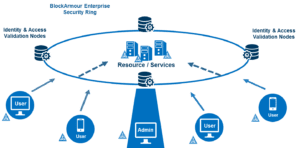
Creating a virtual ring fence, or a Blockchain-Defined Perimeter (BDP) around an organization’s most critical infrastructure using blockchain and TLS technology renders enterprise systems invisible to hackers. What cybercriminals cannot see, they cannot attack –  keeping data and assets safe from ransomware attacks. In addition, a blockchain-based cybersecurity solution also encrypts the data stored and transferred within the network, and can be used to implement stronger and more secure identity and access management.

A BDP solution will allow organizations to enforce tighter access controls and prevent mishandling of data by unauthorized users. When access to sensitive data gets controlled more effectively, the threat of ransomware correspondingly becomes more controlled and manageable. Cybercriminals targeting enterprises can no longer gain unauthorized access into a blockchain-enhanced infrastructure within the enterprise networks. Moreover, encryption of the data ensures additional security, rendering any data, if accessed, unusable.

Data stored in a blockchain undergoes sequential hashing to generate a unique fingerprint. Any transaction of data taking place within a blockchain causes the creation of another block which gets added to the chain to ensure data integrity. Data stored in the blockchain is immutable – any attempt to access or alter data stored in a blockchain is indelibly recorded, empowering enterprises to protect their data from the risk of insider threats well.

Blockchain is one of the key reasons for cryptocurrencies like Bitcoin to become a popular and trusted way to transact worldwide. While most blockchain applications are currently focused in the fintech space, newer use cases are emerging outside this space to explore the use of blockchain. Cybersecurity is one such important area for exploring the use of blockchain technology.

It is time we look towards this technology to solve the rising challenges of cybersecurity across industries worldwide.

[su_box title=”About Floyd DCosta” style=”noise” box_color=”#336588″][short_info id=’102714′ desc=”true” all=”false”][/su_box]

ISBuzz Team
  • ISBuzz Team
    Air Canada Data Breach: BianLian Extortion Group Claims A Massive Heist Contrary To Airline’s Earlier Statement
  • ISBuzz Team
    Unprecedented DDoS Attack Rocks The Web: Tech Giants Reveal A Digital Tsunami
  • ISBuzz Team
    CISA Flags High-Severity Adobe Acrobat Reader Flaw Amid Active Exploits
  • ISBuzz Team
    Curl Security Alert: Patching A Critical Bug Averting Potential Cyber Catastrophe

The opinions expressed in this post belong to the individual contributors and do not necessarily reflect the views of Information Security Buzz.

Share. Facebook Twitter LinkedIn Email Copy Link

Related Posts

Visual data is the blind spot in enterprise security: that’s about to change

May 4, 20267 Mins Read

Making stolen data worthless: why security must start with the data

March 30, 20265 Mins Read

Meta’s Smart Glasses Privacy Scandal Expands After Sama Credentials Found on the Dark Web

March 10, 20264 Mins Read
ISB-Bora-Side-Bar

No se ha podido establecer conexión. Error 429

 
ISB-Bora-Side-Bar
Black ISB Logo

Information Security Buzz is an independent resource that provides the experts’ comments, analysis, and opinion on the latest Cybersecurity news and topics

X (Twitter) LinkedIn Facebook RSS

Working With Us

  • About Us
  • Advertise With Us
  • Contact Us

Write For Us

  • How To Contribute

The Pages

  • Privacy Policy
  • Cookie Policy
  • AI Policy
  • Terms & Conditions
  • Copyright Notice

Information Security Buzz and all its contents are copyright © 2014-2025. All rights reserved. All third-party trademarks are recognized.

Type above and press Enter to search. Press Esc to cancel.

Manage Consent
To provide the best experiences, we use technologies like cookies to store and/or access device information. Consenting to these technologies will allow us to process data such as browsing behavior or unique IDs on this site. Not consenting or withdrawing consent, may adversely affect certain features and functions.
Functional Always active
The technical storage or access is strictly necessary for the legitimate purpose of enabling the use of a specific service explicitly requested by the subscriber or user, or for the sole purpose of carrying out the transmission of a communication over an electronic communications network.
Preferences
The technical storage or access is necessary for the legitimate purpose of storing preferences that are not requested by the subscriber or user.
Statistics
The technical storage or access that is used exclusively for statistical purposes. The technical storage or access that is used exclusively for anonymous statistical purposes. Without a subpoena, voluntary compliance on the part of your Internet Service Provider, or additional records from a third party, information stored or retrieved for this purpose alone cannot usually be used to identify you.
Marketing
The technical storage or access is required to create user profiles to send advertising, or to track the user on a website or across several websites for similar marketing purposes.
  • Manage options
  • Manage services
  • Manage {vendor_count} vendors
  • Read more about these purposes
View preferences
  • {title}
  • {title}
  • {title}