


Close Menu
  • Home
  • Articles
    • Attacks
      • BEC
      • Data Breach
      • DDoS
      • Evasion Attacks
      • Injection
      • Malware
      • MITM
      • Phishing
      • Ransomware
      • RCE
      • Social Engineering
      • Spoofing
      • Spyware
    • Business and Policy
      • BCP and DRP
      • GRC
      • Regulations
    • Data Protection
      • DLP
      • DRM
      • Encryption
      • IAM
    • Future, Trends and Insight
      • AI
      • Events & Community
      • Emerging Tech
      • Expert Panel
      • Interviews With Experts
      • Insights
      • Study & Research
    • Resources
      • Guides
      • Tools
      • Training & Education
    • Security
      • API
      • Apps
      • Cloud
      • Critical Infrastructure
      • Endpoint
      • Hardware
      • IoT
      • Mobile
      • Network
      • OT
      • Port Security
      • Security Architecture
      • Software Development
      • Supply Chain
      • Zero Trust
    • Threats and Vulnerabilities
      • Emerging Threats
      • Insider Threats
      • Risk Management
      • Threat Intelligence
      • Zero Day
  • News and Exclusives
    • Latest News
    • ISB Exclusive
    • Positive News
  • Who We Are
    • About Us
    • Information Security Buzz Expert Panel​
    • Write for Us
    • Media Pack
  • Contact Us
  • Newsletter
Facebook X (Twitter) LinkedIn
Information Security BuzzInformation Security Buzz
  • Home
  • Articles
    • Attacks
      • BEC
      • Data Breach
      • DDoS
      • Evasion Attacks
      • Injection
      • Malware
      • MITM
      • Phishing
      • Ransomware
      • RCE
      • Social Engineering
      • Spoofing
      • Spyware
    • Business and Policy
      • BCP and DRP
      • GRC
      • Regulations
    • Data Protection
      • DLP
      • DRM
      • Encryption
      • IAM
    • Future, Trends and Insight
      • AI
      • Events & Community
      • Emerging Tech
      • Expert Panel
      • Interviews With Experts
      • Insights
      • Study & Research
    • Resources
      • Guides
      • Tools
      • Training & Education
    • Security
      • API
      • Apps
      • Cloud
      • Critical Infrastructure
      • Endpoint
      • Hardware
      • IoT
      • Mobile
      • Network
      • OT
      • Port Security
      • Security Architecture
      • Software Development
      • Supply Chain
      • Zero Trust
    • Threats and Vulnerabilities
      • Emerging Threats
      • Insider Threats
      • Risk Management
      • Threat Intelligence
      • Zero Day
  • News and Exclusives
    • Latest News
    • ISB Exclusive
    • Positive News
  • Who We Are
    • About Us
    • Information Security Buzz Expert Panel​
    • Write for Us
    • Media Pack
  • Contact Us
  • Newsletter
Subscribe
Information Security BuzzInformation Security Buzz
Home - Study & Research - Don’t Pay For What Is For Free: Malicious Adobe Flash Player App Found On Google Play
Study & Research

Don’t Pay For What Is For Free: Malicious Adobe Flash Player App Found On Google Play

ISBuzz TeamBy ISBuzz TeamApril 7, 20174 Mins Read
Share LinkedIn Twitter Facebook Copy Link Email
Share
Facebook Twitter LinkedIn Email Copy Link
Quick AI Summary
ChatGPTClaudeGeminiGrokPerplexityDeepSeekCopilot

Based on ESET’s notice, Google has removed another malicious app from its official Android app store. It had received 100,000-500,000 downloads since November 2016.

Unlike typical downloaders, ransomware and similar nasty stuff, this app – named F11 – did not contain any harmful code. Instead, it relied purely on social engineering, tricking users into paying €18 ($19) for Adobe Flash Player.

Yes, Flash Player for Android, which has always been available for free and which was discontinued back in 2012, amid wide criticism of its security vulnerabilities.

Flash Player

“Factually, this is a scam,” explains Lukáš Štefanko, ESET malware researcher who led the investigation.

“Legally, the crooks behind this operation tried to avoid the scam label. However, because of how they implemented their trick, it’s safe to call it a scam.”

How the scam works

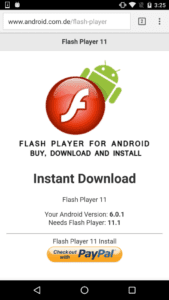
Once downloaded (the app’s takedown from Google Play hasn’t disrupted the scam itself), the app displays a tutorial with detailed instructions on how to download Flash Player. On that page, the user is directed to PayPal to pay €18 to buy Flash Player.
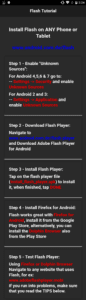
Flash Tutorial

Flash Player 11

“The authors of this scam have gone a long way to make it appear as a legitimate business,” highlights Štefanko. “For example, the app was listed in the educational section of the Play store. However, the shopping basket at PayPal reveals the true nature of the operation: the item in it is called Flash Player 11.”

This is exactly where the operation turns from an aggressive practice of providing users with overpriced and unnecessary advice to a pure scam of selling an item without having any right to do so. Only Adobe, the maker of Flash Player and owner of all rights associated with it, could officially sell it (if they haven’t made it available for free).

After the payment is made, the scam once again pretends to provide “something” in exchange for the victim’s money. Along with a link to a Flash Player installation tutorial – which is a set of several obvious tips – victims are prompted to install Firefox or Dolphin browser. These browsers support Flash Player by default as they contain the plugin for playing Flash content.

“At the end of the whole operation, victims end up being able to play Flash content on their devices,” explains Štefanko. “However, it’s thanks to either browser the user chooses to install. In another words, the user did not install what they had paid for. And – by the way – both Firefox and Dolphin are free.

How to stay safe

ESET Mobile Security detects the malicious F11 app as Android/FakeFlash.F and prevents it from getting installed.

Aside from advice to avoid suspicious apps, in this particular case it must be noted that it’s a bad idea to have Flash Player installed on an Android device. Because of its countless vulnerabilities, Flash has proven to compromise any device’s security.

Those who want to have Flash installed at any cost on their mobile device should follow the recommendations by Adobe security experts requested by WeLiveSecurity:

Adobe strongly advises that users only install and update the Flash Player via one of the following means:

  • By downloading it from the Adobe Flash Player Download Center at https://get.adobe.com/flashplayer/
  • By updating it only via the update mechanism within a genuine installation of the Adobe Flash Player that was installed via the Adobe Flash Player Download Center
  • By installing/updating genuine versions the Adobe Flash Player installed with Google Chrome for Windows, Macintosh, Linux and Chrome OS, and/or Adobe Flash Player installed with Microsoft Edge and Internet Explorer 11 for Windows 10 and 8.1

How to get your money back

Those who have fallen victim to the scam and made the “purchase” via PayPal have a full 180 days to open a dispute in the PayPal’s Resolution Center. We at WeLiveSecurity made the payment, will seek the refund and will raise legal action with the goal of taking down the whole scheme and bring those behind it to justice.

[su_box title=”About ESET®” style=”noise” box_color=”#336588″][short_info id=’60260′ desc=”true” all=”false”][/su_box]

ISBuzz Team
  • ISBuzz Team
    Air Canada Data Breach: BianLian Extortion Group Claims A Massive Heist Contrary To Airline’s Earlier Statement
  • ISBuzz Team
    Unprecedented DDoS Attack Rocks The Web: Tech Giants Reveal A Digital Tsunami
  • ISBuzz Team
    CISA Flags High-Severity Adobe Acrobat Reader Flaw Amid Active Exploits
  • ISBuzz Team
    Curl Security Alert: Patching A Critical Bug Averting Potential Cyber Catastrophe

The opinions expressed in this post belong to the individual contributors and do not necessarily reflect the views of Information Security Buzz.

Share. Facebook Twitter LinkedIn Email Copy Link

Related Posts

Thousands of UK Government Devices Lost or Stolen, Raising Cybersecurity Fears

June 24, 20254 Mins Read

Roundcube RCE Vulnerability Disclosed Early Amid Active Exploitation

June 10, 20255 Mins Read

Fake Indian Government Portal Used to Spread Cross-Platform Malware in Suspected APT36 Campaign

May 13, 20253 Mins Read
ISB-Bora-Side-Bar

No se ha podido establecer conexión. Error 429

 
ISB-Bora-Side-Bar
Black ISB Logo

Information Security Buzz is an independent resource that provides the experts’ comments, analysis, and opinion on the latest Cybersecurity news and topics

X (Twitter) LinkedIn Facebook RSS

Working With Us

  • About Us
  • Advertise With Us
  • Contact Us

Write For Us

  • How To Contribute

The Pages

  • Privacy Policy
  • Cookie Policy
  • AI Policy
  • Terms & Conditions
  • Copyright Notice

Information Security Buzz and all its contents are copyright © 2014-2025. All rights reserved. All third-party trademarks are recognized.

Type above and press Enter to search. Press Esc to cancel.

Manage Consent
To provide the best experiences, we use technologies like cookies to store and/or access device information. Consenting to these technologies will allow us to process data such as browsing behavior or unique IDs on this site. Not consenting or withdrawing consent, may adversely affect certain features and functions.
Functional Always active
The technical storage or access is strictly necessary for the legitimate purpose of enabling the use of a specific service explicitly requested by the subscriber or user, or for the sole purpose of carrying out the transmission of a communication over an electronic communications network.
Preferences
The technical storage or access is necessary for the legitimate purpose of storing preferences that are not requested by the subscriber or user.
Statistics
The technical storage or access that is used exclusively for statistical purposes. The technical storage or access that is used exclusively for anonymous statistical purposes. Without a subpoena, voluntary compliance on the part of your Internet Service Provider, or additional records from a third party, information stored or retrieved for this purpose alone cannot usually be used to identify you.
Marketing
The technical storage or access is required to create user profiles to send advertising, or to track the user on a website or across several websites for similar marketing purposes.
  • Manage options
  • Manage services
  • Manage {vendor_count} vendors
  • Read more about these purposes
View preferences
  • {title}
  • {title}
  • {title}