


Close Menu
  • Home
  • Articles
    • Attacks
      • BEC
      • Data Breach
      • DDoS
      • Evasion Attacks
      • Injection
      • Malware
      • MITM
      • Phishing
      • Ransomware
      • RCE
      • Social Engineering
      • Spoofing
      • Spyware
    • Business and Policy
      • BCP and DRP
      • GRC
      • Regulations
    • Data Protection
      • DLP
      • DRM
      • Encryption
      • IAM
    • Future, Trends and Insight
      • AI
      • Events & Community
      • Emerging Tech
      • Expert Panel
      • Interviews With Experts
      • Insights
      • Study & Research
    • Resources
      • Guides
      • Tools
      • Training & Education
    • Security
      • API
      • Apps
      • Cloud
      • Critical Infrastructure
      • Endpoint
      • Hardware
      • IoT
      • Mobile
      • Network
      • OT
      • Port Security
      • Security Architecture
      • Software Development
      • Supply Chain
      • Zero Trust
    • Threats and Vulnerabilities
      • Emerging Threats
      • Insider Threats
      • Risk Management
      • Threat Intelligence
      • Zero Day
  • News and Exclusives
    • Latest News
    • ISB Exclusive
    • Positive News
  • Who We Are
    • About Us
    • Information Security Buzz Expert Panel​
    • Write for Us
    • Media Pack
  • Contact Us
  • Newsletter
Facebook X (Twitter) LinkedIn
Information Security BuzzInformation Security Buzz
  • Home
  • Articles
    • Attacks
      • BEC
      • Data Breach
      • DDoS
      • Evasion Attacks
      • Injection
      • Malware
      • MITM
      • Phishing
      • Ransomware
      • RCE
      • Social Engineering
      • Spoofing
      • Spyware
    • Business and Policy
      • BCP and DRP
      • GRC
      • Regulations
    • Data Protection
      • DLP
      • DRM
      • Encryption
      • IAM
    • Future, Trends and Insight
      • AI
      • Events & Community
      • Emerging Tech
      • Expert Panel
      • Interviews With Experts
      • Insights
      • Study & Research
    • Resources
      • Guides
      • Tools
      • Training & Education
    • Security
      • API
      • Apps
      • Cloud
      • Critical Infrastructure
      • Endpoint
      • Hardware
      • IoT
      • Mobile
      • Network
      • OT
      • Port Security
      • Security Architecture
      • Software Development
      • Supply Chain
      • Zero Trust
    • Threats and Vulnerabilities
      • Emerging Threats
      • Insider Threats
      • Risk Management
      • Threat Intelligence
      • Zero Day
  • News and Exclusives
    • Latest News
    • ISB Exclusive
    • Positive News
  • Who We Are
    • About Us
    • Information Security Buzz Expert Panel​
    • Write for Us
    • Media Pack
  • Contact Us
  • Newsletter
Subscribe
Information Security BuzzInformation Security Buzz
Home - Study & Research - Hackers Cybersquat On Hundreds Of UK Bank Domains To Spoof And Exploit Users
Study & Research

Hackers Cybersquat On Hundreds Of UK Bank Domains To Spoof And Exploit Users

ISBuzz TeamBy ISBuzz TeamMay 5, 2017Updated:May 8, 20253 Mins Read
Share LinkedIn Twitter Facebook Copy Link Email
Share
Facebook Twitter LinkedIn Email Copy Link
Quick AI Summary
ChatGPTClaudeGeminiGrokPerplexityDeepSeekCopilot

DomainTools identifies over 300 websites tricking web users into thinking they’re clicking on to UK high street bank websites

London, UK, – DomainTools, the leader in domain name and DNS-based cyber threat intelligence, today released research regarding the plethora of cybersquatters and how they target  popular UK banks. DomainTools found 324 registered domains using the trademarked names of five of the UK’s top high street banks. Domains masquerading as legitimate UK bank websites are often used by hackers to trick customers into handing over personal details or login information.

Cybersquatting (also known as domain squatting) is the act of registering a domain name with the purpose of getting monetary benefit from a trademark that belongs to someone else. These domains are often used in phishing email campaigns and various other kinds of scams including pay per click ads (often for competitors’ services), for-profit survey sites and affiliate program abuse, or more nefarious content like ransomware and drive-by download campaigns.

The DomainTools research team analysed domains mimicking Barclays, HSBC, Natwest, Lloyd’s and Standard Chartered using its PhishEye tool. PhishEye allows users to search for existing and new domains that spoof legitimate brand, product, organization, or other names. In total, there were 324 domains identified as high risk that contained the banks’ brand names. Some examples include:

  • natwesti[.]com
  • natwestbusinessbanking[.]uk
  • lloydstbs[.]com
  • hsbcgrp[.]com
  • bhsbc[.]com
  • barclaysbank-plc[.]uk
  • wealthbarclays[.]uk
  • standardchartered-bank[.]com
  • standardcharteredbanks[.]com
  • standardcharterd[.]com
  • xtandardchartered[.]com

Kyle Wilhoit, senior security researcher at DomainTools said, “Imitation has long been thought to be the sincerest form of flattery, but not when it comes to domains. While domain squatters of the past were mostly trying to profit from the domain itself, these days they’re often sophisticated cybercriminals using the spoofed domain names for more malicious endeavours.”

He explained how there are patterns to be found in these types of domains – “Many will simply add a letter to a brand name, such as Domaintoools.com, while others will add letters or an entire word such as ‘login’ to either side of a brand name. Users should remember to carefully inspect every domain they are clicking on or entering in their browser. Also, ensure you are watching redirects when you are going from site to site.”

“Brands can and should start monitoring for fraudulent domain name registrations and defensively register their own typo variants. It is better to lock down typo domains than to leave them available to someone else and at an average of £12 per year per domain, this is a relatively cheap insurance policy.” Wilhoit concluded.

DomainTools offers top tips for consumers to avoid falling foul of a spoof website:

  • Check for extra added letters in the domain, such as Yahooo[.]com
  • Check for dashes in the domain name, such as Domain-tools[.]com
  • Look out for ‘rn’ disguised as an ‘m’, such as com versus modern.com
  • Check for reversed letters, such as Domiantools[.]com
  • A plural or singular form of the domain, such as Domaintool[.]com

The full research is available on the Domain Tools blog: http://blog.domaintools.com/2017/05/up-to-your-gills-in-phishing-attacks-this-research-may-help

Notes to editor:

  • The brand domains were monitored from the 27th– 31st March 2017
  • DomainTools generates risk scores according to a proprietary algorithm that assigns a “guilt by association” score to the domain based on a number of factors. Like friends, domains tend to cluster with similarly good or bad domains and such patterns are highly predictive of whether a new domain is going to be good or bad.
  • The full results are available upon request
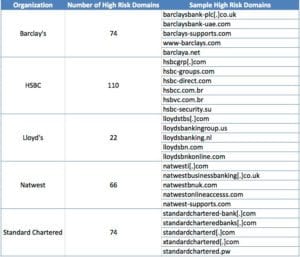
Figure 1

[su_box title=”About DomainTools” style=”noise” box_color=”#336588″][short_info id=’61027′ desc=”true” all=”false”][/su_box]

ISBuzz Team
  • ISBuzz Team
    Air Canada Data Breach: BianLian Extortion Group Claims A Massive Heist Contrary To Airline’s Earlier Statement
  • ISBuzz Team
    Unprecedented DDoS Attack Rocks The Web: Tech Giants Reveal A Digital Tsunami
  • ISBuzz Team
    CISA Flags High-Severity Adobe Acrobat Reader Flaw Amid Active Exploits
  • ISBuzz Team
    Curl Security Alert: Patching A Critical Bug Averting Potential Cyber Catastrophe

The opinions expressed in this post belong to the individual contributors and do not necessarily reflect the views of Information Security Buzz.

Share. Facebook Twitter LinkedIn Email Copy Link

Related Posts

Exploited Faster, Patched Slower: Verizon DBIR 2026 Shows Security Teams Losing Ground

May 20, 20265 Mins Read

Foxconn confirms cyberattack following Nitrogen ransomware claims

May 14, 20263 Mins Read

Security’s Blind Spot: The Threats Hiding in “Low-Severity” Alerts

May 6, 20265 Mins Read
ISB-Bora-Side-Bar

No se ha podido establecer conexión. Error 429

 
ISB-Bora-Side-Bar
Black ISB Logo

Information Security Buzz is an independent resource that provides the experts’ comments, analysis, and opinion on the latest Cybersecurity news and topics

X (Twitter) LinkedIn Facebook RSS

Working With Us

  • About Us
  • Advertise With Us
  • Contact Us

Write For Us

  • How To Contribute

The Pages

  • Privacy Policy
  • Cookie Policy
  • AI Policy
  • Terms & Conditions
  • Copyright Notice

Information Security Buzz and all its contents are copyright © 2014-2025. All rights reserved. All third-party trademarks are recognized.

Type above and press Enter to search. Press Esc to cancel.

Manage Consent
To provide the best experiences, we use technologies like cookies to store and/or access device information. Consenting to these technologies will allow us to process data such as browsing behavior or unique IDs on this site. Not consenting or withdrawing consent, may adversely affect certain features and functions.
Functional Always active
The technical storage or access is strictly necessary for the legitimate purpose of enabling the use of a specific service explicitly requested by the subscriber or user, or for the sole purpose of carrying out the transmission of a communication over an electronic communications network.
Preferences
The technical storage or access is necessary for the legitimate purpose of storing preferences that are not requested by the subscriber or user.
Statistics
The technical storage or access that is used exclusively for statistical purposes. The technical storage or access that is used exclusively for anonymous statistical purposes. Without a subpoena, voluntary compliance on the part of your Internet Service Provider, or additional records from a third party, information stored or retrieved for this purpose alone cannot usually be used to identify you.
Marketing
The technical storage or access is required to create user profiles to send advertising, or to track the user on a website or across several websites for similar marketing purposes.
  • Manage options
  • Manage services
  • Manage {vendor_count} vendors
  • Read more about these purposes
View preferences
  • {title}
  • {title}
  • {title}