


Close Menu
  • Home
  • Articles
    • Attacks
      • BEC
      • Data Breach
      • DDoS
      • Evasion Attacks
      • Injection
      • Malware
      • MITM
      • Phishing
      • Ransomware
      • RCE
      • Social Engineering
      • Spoofing
      • Spyware
    • Business and Policy
      • BCP and DRP
      • GRC
      • Regulations
    • Data Protection
      • DLP
      • DRM
      • Encryption
      • IAM
    • Future, Trends and Insight
      • AI
      • Events & Community
      • Emerging Tech
      • Expert Panel
      • Interviews With Experts
      • Insights
      • Study & Research
    • Resources
      • Guides
      • Tools
      • Training & Education
    • Security
      • API
      • Apps
      • Cloud
      • Critical Infrastructure
      • Endpoint
      • Hardware
      • IoT
      • Mobile
      • Network
      • OT
      • Port Security
      • Security Architecture
      • Software Development
      • Supply Chain
      • Zero Trust
    • Threats and Vulnerabilities
      • Emerging Threats
      • Insider Threats
      • Risk Management
      • Threat Intelligence
      • Zero Day
  • News and Exclusives
    • Latest News
    • ISB Exclusive
    • Positive News
  • Who We Are
    • About Us
    • Information Security Buzz Expert Panel​
    • Write for Us
    • Media Pack
  • Contact Us
  • Newsletter
Facebook X (Twitter) LinkedIn
Information Security BuzzInformation Security Buzz
  • Home
  • Articles
    • Attacks
      • BEC
      • Data Breach
      • DDoS
      • Evasion Attacks
      • Injection
      • Malware
      • MITM
      • Phishing
      • Ransomware
      • RCE
      • Social Engineering
      • Spoofing
      • Spyware
    • Business and Policy
      • BCP and DRP
      • GRC
      • Regulations
    • Data Protection
      • DLP
      • DRM
      • Encryption
      • IAM
    • Future, Trends and Insight
      • AI
      • Events & Community
      • Emerging Tech
      • Expert Panel
      • Interviews With Experts
      • Insights
      • Study & Research
    • Resources
      • Guides
      • Tools
      • Training & Education
    • Security
      • API
      • Apps
      • Cloud
      • Critical Infrastructure
      • Endpoint
      • Hardware
      • IoT
      • Mobile
      • Network
      • OT
      • Port Security
      • Security Architecture
      • Software Development
      • Supply Chain
      • Zero Trust
    • Threats and Vulnerabilities
      • Emerging Threats
      • Insider Threats
      • Risk Management
      • Threat Intelligence
      • Zero Day
  • News and Exclusives
    • Latest News
    • ISB Exclusive
    • Positive News
  • Who We Are
    • About Us
    • Information Security Buzz Expert Panel​
    • Write for Us
    • Media Pack
  • Contact Us
  • Newsletter
Subscribe
Information Security BuzzInformation Security Buzz
Home - Articles - Karmen Ransomware Variant Introduced By Russian Hacker
Articles

Karmen Ransomware Variant Introduced By Russian Hacker

ISBuzz TeamBy ISBuzz TeamApril 19, 2017Updated:July 8, 20243 Mins Read
Share LinkedIn Twitter Facebook Copy Link Email
Share
Facebook Twitter LinkedIn Email Copy Link
Quick AI Summary
ChatGPTClaudeGeminiGrokPerplexityDeepSeekCopilot

Intended Audience:

  • CISO / CIO / Security Directors
  • Threat Intelligence Analysts

Technical Content: Low

Summary

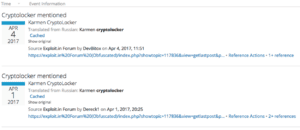
 On March 4, 2017, a member of the underground forum Exploit with the username “Dereck1” mentioned a new ransomware variant called “Karmen.” Further investigation revealed that “DevBitox,” a Russian-speaking cyber criminal, was the seller behind the Karmen malware on underground forums in March 2017. However, the first cases of infections with Karmen were reported as early as December of 2016 by victims in Germany and the United States.
cryptolocker

Source: https://app.recordedfuture.com/live/sc/2lbNf7AT41J4

Above are results from a query for mentions of “Karmen” by DevBitox or Dereck1 on Dark Web / Special Access sources in Recorded Future.
Kermen

Source: https://app.recordedfuture.com/live/sc/49iWV693EbDg

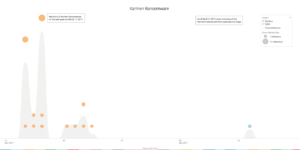
 Above are mentions of the Karmen malware on the web over time.

 Background

 Karmen malware is  “ransomware as a service” (RaaS) derived from “Hidden Tear,” an open source ransomware project, available for purchase by anyone. As is typical for ransomware infections, Karmen encrypts files on the infected machine using the strong AES-256 encryption protocol, making them inaccessible to the user and may trigger a ransom note or instructions demanding that the user pay a large sum of money to obtain the decryption key from the attacker. A notable feature of Karmen is that it automatically deletes the decryptor if a sandbox environment or analysis software is detected on the victim’s computer.
 Files encrypted

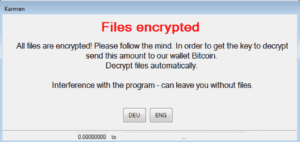
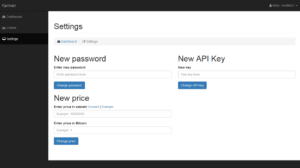
When a user’s computer is infected with Karmen, they’ll see the above message, warning them not to interfere with the malware. Below are screenshots of the affiliate’s page seen by purchasers of the Karmen RaaS.
Setting

The Karmen interface allows users to change the malware’s settings using a control panel that requires minimal technical knowledge.

Setting

The “Clients” page tracks computers infected with the virus.
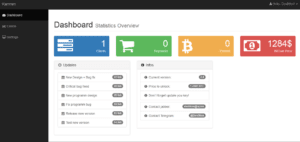
Dashboard

The dashboard gives the user an overview of relevant information including the number of clients they have, how much money they’ve earned, and updates to the Karmen software.

Description of Karmen Malware provided by DevBitox

– Multi-threaded

– Multi-language

– Supports .NET 4.0 and newer versions

– Encryption algorithm: AES-256

– Adaptive admin panel

– Encrypts all discs and files

– Separate BTC wallet for each victim

– Small size

– Automatic deletion of loader

– Automatic deletion of malware (after payment was received)

– Minimal connection with control server

– Robust control panel

– Almost FUD (1/35)

– Automatic file decryption after received payment

– T2W compatible

– File extensions remain the same

– Detection of Anti-debugger/analyzers/VM/SandBox

– Automatic deletion of decryptor if sandbox environment or an analyzing software is detected on victim’s computer

– Light version – Obfuscation and autoloader only

– Full version – Detection of analyzing software

Notes:

– Application .NET dependent

– Support Infrastructure: PHP 5.6, MySQL, “file()” function must be activated on the server

– Rebuild – Free (up to three copies)

– Updates – Free

Price $175

Known Indicators:

 File name: joise.exe

File name: n_karmen.exe

File name: build.exe

File MD5: 9c8fc334a1dc660609f30c077431b547

File MD5: 56b66af869248749b2f445be8f9f4a9d

File MD5: 521983cb92cc0b424e58aff11ae9380b

SHA1: dc875c083c5f70e74dc47373a4ce0df6ccd8ae88

SHA1: f79f6d4dd6058f58b384390f0932f1e4f4d0fecf

SHA1: 2a3477ea2d09c855591b3d16cfff8733935db50b

Video presentation of Karmen Ransomware operation, provided by DevBitox.

The seller has admitted he was only involved with web development and control panel design; the malware is utilizing the open source encryption project “Hidden Tear” and was created by an unknown associate operating out of Germany.

As of this writing, twenty copies of Karmen malware were sold by DevBitox, while only five copies remain available to potential buyers.
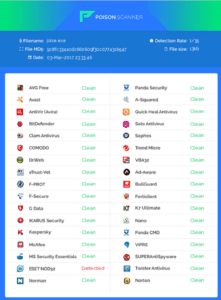
Poison

Antivirus scanning results provided by DevBitox.

ISBuzz Team
  • ISBuzz Team
    Air Canada Data Breach: BianLian Extortion Group Claims A Massive Heist Contrary To Airline’s Earlier Statement
  • ISBuzz Team
    Unprecedented DDoS Attack Rocks The Web: Tech Giants Reveal A Digital Tsunami
  • ISBuzz Team
    CISA Flags High-Severity Adobe Acrobat Reader Flaw Amid Active Exploits
  • ISBuzz Team
    Curl Security Alert: Patching A Critical Bug Averting Potential Cyber Catastrophe

The opinions expressed in this post belong to the individual contributors and do not necessarily reflect the views of Information Security Buzz.

Share. Facebook Twitter LinkedIn Email Copy Link

Related Posts

Exploited Faster, Patched Slower: Verizon DBIR 2026 Shows Security Teams Losing Ground

May 20, 20265 Mins Read

Foxconn confirms cyberattack following Nitrogen ransomware claims

May 14, 20263 Mins Read

Security’s Blind Spot: The Threats Hiding in “Low-Severity” Alerts

May 6, 20265 Mins Read
ISB-Bora-Side-Bar

No se ha podido establecer conexión. Error 429

 
ISB-Bora-Side-Bar
Black ISB Logo

Information Security Buzz is an independent resource that provides the experts’ comments, analysis, and opinion on the latest Cybersecurity news and topics

X (Twitter) LinkedIn Facebook RSS

Working With Us

  • About Us
  • Advertise With Us
  • Contact Us

Write For Us

  • How To Contribute

The Pages

  • Privacy Policy
  • Cookie Policy
  • AI Policy
  • Terms & Conditions
  • Copyright Notice

Information Security Buzz and all its contents are copyright © 2014-2025. All rights reserved. All third-party trademarks are recognized.

Type above and press Enter to search. Press Esc to cancel.

Manage Consent
To provide the best experiences, we use technologies like cookies to store and/or access device information. Consenting to these technologies will allow us to process data such as browsing behavior or unique IDs on this site. Not consenting or withdrawing consent, may adversely affect certain features and functions.
Functional Always active
The technical storage or access is strictly necessary for the legitimate purpose of enabling the use of a specific service explicitly requested by the subscriber or user, or for the sole purpose of carrying out the transmission of a communication over an electronic communications network.
Preferences
The technical storage or access is necessary for the legitimate purpose of storing preferences that are not requested by the subscriber or user.
Statistics
The technical storage or access that is used exclusively for statistical purposes. The technical storage or access that is used exclusively for anonymous statistical purposes. Without a subpoena, voluntary compliance on the part of your Internet Service Provider, or additional records from a third party, information stored or retrieved for this purpose alone cannot usually be used to identify you.
Marketing
The technical storage or access is required to create user profiles to send advertising, or to track the user on a website or across several websites for similar marketing purposes.
  • Manage options
  • Manage services
  • Manage {vendor_count} vendors
  • Read more about these purposes
View preferences
  • {title}
  • {title}
  • {title}