

Close Menu
  • Home
  • Articles
    • Attacks
      • BEC
      • Data Breach
      • DDoS
      • Evasion Attacks
      • Injection
      • Malware
      • MITM
      • Phishing
      • Ransomware
      • RCE
      • Social Engineering
      • Spoofing
      • Spyware
    • Business and Policy
      • BCP and DRP
      • GRC
      • Regulations
    • Data Protection
      • DLP
      • DRM
      • Encryption
      • IAM
    • Future, Trends and Insight
      • AI
      • Events & Community
      • Emerging Tech
      • Expert Panel
      • Interviews With Experts
      • Insights
      • Study & Research
    • Resources
      • Guides
      • Tools
      • Training & Education
    • Security
      • API
      • Apps
      • Cloud
      • Critical Infrastructure
      • Endpoint
      • Hardware
      • IoT
      • Mobile
      • Network
      • OT
      • Port Security
      • Security Architecture
      • Software Development
      • Supply Chain
      • Zero Trust
    • Threats and Vulnerabilities
      • Emerging Threats
      • Insider Threats
      • Risk Management
      • Threat Intelligence
      • Zero Day
  • News and Exclusives
    • Latest News
    • ISB Exclusive
    • Positive News
  • Who We Are
    • About Us
    • Information Security Buzz Expert Panel​
    • Write for Us
    • Media Pack
  • Contact Us
  • Newsletter
Facebook X (Twitter) LinkedIn
Information Security BuzzInformation Security Buzz
  • Home
  • Articles
    • Attacks
      • BEC
      • Data Breach
      • DDoS
      • Evasion Attacks
      • Injection
      • Malware
      • MITM
      • Phishing
      • Ransomware
      • RCE
      • Social Engineering
      • Spoofing
      • Spyware
    • Business and Policy
      • BCP and DRP
      • GRC
      • Regulations
    • Data Protection
      • DLP
      • DRM
      • Encryption
      • IAM
    • Future, Trends and Insight
      • AI
      • Events & Community
      • Emerging Tech
      • Expert Panel
      • Interviews With Experts
      • Insights
      • Study & Research
    • Resources
      • Guides
      • Tools
      • Training & Education
    • Security
      • API
      • Apps
      • Cloud
      • Critical Infrastructure
      • Endpoint
      • Hardware
      • IoT
      • Mobile
      • Network
      • OT
      • Port Security
      • Security Architecture
      • Software Development
      • Supply Chain
      • Zero Trust
    • Threats and Vulnerabilities
      • Emerging Threats
      • Insider Threats
      • Risk Management
      • Threat Intelligence
      • Zero Day
  • News and Exclusives
    • Latest News
    • ISB Exclusive
    • Positive News
  • Who We Are
    • About Us
    • Information Security Buzz Expert Panel​
    • Write for Us
    • Media Pack
  • Contact Us
  • Newsletter
Subscribe
Information Security BuzzInformation Security Buzz
Home - Study & Research - Ransom Driven DDoS Attacks To Hit Three Quarters Of European Businesses In The Next Year
Study & Research

Ransom Driven DDoS Attacks To Hit Three Quarters Of European Businesses In The Next Year

ISBuzz TeamBy ISBuzz TeamJuly 8, 2016Updated:December 4, 20244 Mins Read
Share LinkedIn Twitter Facebook Copy Link Email
Share
Facebook Twitter LinkedIn Email Copy Link
Quick AI Summary
ChatGPTClaudeGeminiGrokPerplexityDeepSeekCopilot

IT security industry calls for Internet Service Providers to take a larger role in protecting customers

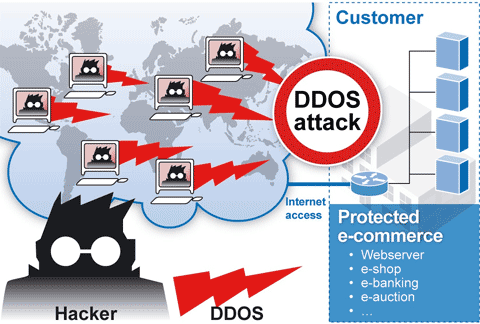
Over three quarters of IT security professionals (80%) believe that their organisation will be threatened with a DDoS ransom attack during the next 12 months, according to a new research report from Corero Network Security (LSE: CNS), a leading provider of First Line of Defence® security solutions against DDoS attacks.

The research, which polled over 100 security professionals at the Infosecurity Europe conference in London, highlights the growing threat of cyber extortion attempts targeting UK businesses. Last month, (May 2016), the City of London Police  warned of a new wave of ransom driven DDoS attacks orchestrated by Lizard Squad, in which UK businesses were told that they would be targeted by a DDoS attack if they refused to pay five bitcoins, equivalent to just over £1,500. Corero’s Security Operations Centre also recorded a sharp increase in hackers targeting their customers with such demands at the end of 2015.

Even more concerning was the finding that almost half of the security professionals who took part in the survey (43%) thought that it was possible that their organization might pay such a ransom demand.

Dave Larson, COO at Corero Network Security, comments: “Extortion is one of the oldest tricks in the criminal’s book, and one of the easiest ways for today’s hackers to turn a profit.  When your website is taken offline, it can cost businesses over £5,000 a minute in lost revenue, so it’s understandable why some choose to pay the ransom. But this is a dangerous game, because just a few willing participants encourage these threats to spread like wildfire. Rather than trying to negotiate with criminals, the only way to beat these attacks is to have a robust, real-time DDoS mitigation system in place, which can defend against attacks and prevent downtime.

“Like old cousins, ransom demands and DDoS are always being used together in inventive new ways to extract money from victims. For example, low-level, sub-saturating DDoS attacks are usually used as a precursor to ransomware attacks.  Because they are so short – typically less than five minutes in duration – they are usually not detected by security teams and allow hackers to find pathways and test for vulnerabilities within a network which can later be exploited through other techniques.”

The role of Internet Service Providers

As DDoS attacks become increasingly sophisticated, many organizations are looking further upstream to their Internet Service Provider to protect them against DDoS threats. The majority of those surveyed (59%) worry that their ISP does not provide enough protection against DDoS attacks, and almost a quarter (24%) of respondents believes that their ISP is to blame if a DDoS attack affects their business.

Furthermore, over half of those surveyed (53%) believe that ISPs are hiding behind net neutrality laws – the concept of treating all online traffic equally – as a way to dodge their responsibilities in terms of protecting their customers from cyber attacks, such as DDoS.

Dave Larson continues, “A telecom company’s role has traditionally been to direct traffic from one destination to another , without passing judgment about the content. Net neutrality, in which carriers treat all data the same, was prized above all else. But the tide of opinion is changing and many customers now want their telcos to deliver not a decaying mélange of Internet traffic and increasingly sophisticated attack vectors, but a ‘clean pipe’ of good traffic, where the threats have been proactively removed. Providers now have a golden opportunity to offer their customers DDoS protection-as-a-service, and open up valuable new revenue streams in the process – or risk losing their customers.”

Almost 60% of those surveyed (58%) said that would leave their service provider because of poor service, and over a fifth (21%) would leave if they did not offer adequate protection against DDoS attacks.

[su_box title=”About Corero Network Security” style=”noise” box_color=”#336588″][short_info id=’82408′ desc=”true” all=”false”][/su_box]

ISBuzz Team
  • ISBuzz Team
    Air Canada Data Breach: BianLian Extortion Group Claims A Massive Heist Contrary To Airline’s Earlier Statement
  • ISBuzz Team
    Unprecedented DDoS Attack Rocks The Web: Tech Giants Reveal A Digital Tsunami
  • ISBuzz Team
    CISA Flags High-Severity Adobe Acrobat Reader Flaw Amid Active Exploits
  • ISBuzz Team
    Curl Security Alert: Patching A Critical Bug Averting Potential Cyber Catastrophe

The opinions expressed in this post belong to the individual contributors and do not necessarily reflect the views of Information Security Buzz.

Share. Facebook Twitter LinkedIn Email Copy Link

Related Posts

Foxconn confirms cyberattack following Nitrogen ransomware claims

May 14, 20263 Mins Read

Lazarus Group Turns to Medusa Ransomware in Escalating Global Extortion Campaign

February 26, 20263 Mins Read

The Cyberattack That Exposed the Fragility of Digital Heritage

February 11, 20268 Mins Read
ISB-Bora-Side-Bar

No se ha podido establecer conexión. Error 429

 
ISB-Bora-Side-Bar
Black ISB Logo

Information Security Buzz is an independent resource that provides the experts’ comments, analysis, and opinion on the latest Cybersecurity news and topics

X (Twitter) LinkedIn Facebook RSS

Working With Us

  • About Us
  • Advertise With Us
  • Contact Us

Write For Us

  • How To Contribute

The Pages

  • Privacy Policy
  • Cookie Policy
  • AI Policy
  • Terms & Conditions
  • Copyright Notice

Information Security Buzz and all its contents are copyright © 2014-2025. All rights reserved. All third-party trademarks are recognized.

Type above and press Enter to search. Press Esc to cancel.

Manage Consent
To provide the best experiences, we use technologies like cookies to store and/or access device information. Consenting to these technologies will allow us to process data such as browsing behavior or unique IDs on this site. Not consenting or withdrawing consent, may adversely affect certain features and functions.
Functional Always active
The technical storage or access is strictly necessary for the legitimate purpose of enabling the use of a specific service explicitly requested by the subscriber or user, or for the sole purpose of carrying out the transmission of a communication over an electronic communications network.
Preferences
The technical storage or access is necessary for the legitimate purpose of storing preferences that are not requested by the subscriber or user.
Statistics
The technical storage or access that is used exclusively for statistical purposes. The technical storage or access that is used exclusively for anonymous statistical purposes. Without a subpoena, voluntary compliance on the part of your Internet Service Provider, or additional records from a third party, information stored or retrieved for this purpose alone cannot usually be used to identify you.
Marketing
The technical storage or access is required to create user profiles to send advertising, or to track the user on a website or across several websites for similar marketing purposes.
  • Manage options
  • Manage services
  • Manage {vendor_count} vendors
  • Read more about these purposes
View preferences
  • {title}
  • {title}
  • {title}