

Close Menu
  • Home
  • Articles
    • Attacks
      • BEC
      • Data Breach
      • DDoS
      • Evasion Attacks
      • Injection
      • Malware
      • MITM
      • Phishing
      • Ransomware
      • RCE
      • Social Engineering
      • Spoofing
      • Spyware
    • Business and Policy
      • BCP and DRP
      • GRC
      • Regulations
    • Data Protection
      • DLP
      • DRM
      • Encryption
      • IAM
    • Future, Trends and Insight
      • AI
      • Events & Community
      • Emerging Tech
      • Expert Panel
      • Interviews With Experts
      • Insights
      • Study & Research
    • Resources
      • Guides
      • Tools
      • Training & Education
    • Security
      • API
      • Apps
      • Cloud
      • Critical Infrastructure
      • Endpoint
      • Hardware
      • IoT
      • Mobile
      • Network
      • OT
      • Port Security
      • Security Architecture
      • Software Development
      • Supply Chain
      • Zero Trust
    • Threats and Vulnerabilities
      • Emerging Threats
      • Insider Threats
      • Risk Management
      • Threat Intelligence
      • Zero Day
  • News and Exclusives
    • Latest News
    • ISB Exclusive
    • Positive News
  • Who We Are
    • About Us
    • Information Security Buzz Expert Panel​
    • Write for Us
    • Media Pack
  • Contact Us
  • Newsletter
Facebook X (Twitter) LinkedIn
Information Security BuzzInformation Security Buzz
  • Home
  • Articles
    • Attacks
      • BEC
      • Data Breach
      • DDoS
      • Evasion Attacks
      • Injection
      • Malware
      • MITM
      • Phishing
      • Ransomware
      • RCE
      • Social Engineering
      • Spoofing
      • Spyware
    • Business and Policy
      • BCP and DRP
      • GRC
      • Regulations
    • Data Protection
      • DLP
      • DRM
      • Encryption
      • IAM
    • Future, Trends and Insight
      • AI
      • Events & Community
      • Emerging Tech
      • Expert Panel
      • Interviews With Experts
      • Insights
      • Study & Research
    • Resources
      • Guides
      • Tools
      • Training & Education
    • Security
      • API
      • Apps
      • Cloud
      • Critical Infrastructure
      • Endpoint
      • Hardware
      • IoT
      • Mobile
      • Network
      • OT
      • Port Security
      • Security Architecture
      • Software Development
      • Supply Chain
      • Zero Trust
    • Threats and Vulnerabilities
      • Emerging Threats
      • Insider Threats
      • Risk Management
      • Threat Intelligence
      • Zero Day
  • News and Exclusives
    • Latest News
    • ISB Exclusive
    • Positive News
  • Who We Are
    • About Us
    • Information Security Buzz Expert Panel​
    • Write for Us
    • Media Pack
  • Contact Us
  • Newsletter
Subscribe
Information Security BuzzInformation Security Buzz
Home - News & Analysis - This Site may Harm your Computer
News & Analysis

This Site may Harm your Computer

ISBuzz TeamBy ISBuzz TeamDecember 24, 20153 Mins Read
Share LinkedIn Twitter Facebook Copy Link Email
This Site may Harm your Computer
Share
Facebook Twitter LinkedIn Email Copy Link
Quick AI Summary
ChatGPTClaudeGeminiGrokPerplexityDeepSeekCopilot

HELP: My website is vulnerable and Google mentioned it to all users!

[su_note note_color=”#ffffcc” text_color=”#00000″]HTTPCS :

What should I do to remove the message “This site may harm your computer!” from my web app?

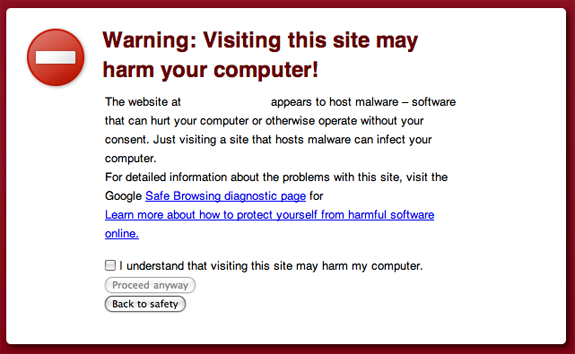
One of the biggest fear of any business man, marketing director or e-shopping company is to find this deterrent message on its web application… However it exists logical reasons to explain the presence of this warning, but also solutions to remove it more or less quickly.

This alert appears when your site or your web application represent a danger for the Internet user. The reasons to explain why Google warn its users are numerous, such as virus and malware propagation risks.

Most of the time, by watching this « Warning » the user immediately leaves the affected site and will no longer attempt to reconnect. Indeed, even if it is possible it remains very rare that the user ignore this message in order to pursue the browsing.

The very low security level of the web application often leads to hacking, to virus propagation but also data theft or leakage…All of them induce to serious consequences and important losses, at both economical and e-reputation levels, also because of the deeply affected SEO.

It is even possible to check the website historic HERE.

If you are a victim, you have two options to face this situation efficiently:

  • Audit manually your web application:

  1. Begin to analyze your logs in order to identify the attack scenarios to proceed to the vulnerability correction.
  2. Implement a complete analyze of your server (set up applications, server ‘users, rights management, network…)
  3. Audit and clean up the source code of your site. After a cyber-attack, it is common to detect obfuscated malicious code.
  4. Change your passwords
  5. Update the whole applications of your server.

After having proceed to this steps, connect on: HERE

Then, follow the recommendations to re-inter the referencing white list.

These different steps and their orders has to be rigorously respected, some of them requires technical competencies and might be time consuming.

For people who wish to speed up this process to find back a normal situation, it is highly recommended to select an automated method.

  • Audit your site with an automated tool:

  1. Use automated tools such as HTTPCS Vulnerability Scanner to test the reliability and the tightness of your system. It will enable you to secure your site or your web application but also detecting the back doors.
  2. Schedule daily scan with HTTPCS and get pro-actively the adapted correctives.

Owing to the reliability of your report (zero false positive guarantee), you will be able to correct very quickly all of your security flaws. Thus, the warning will disappear on 24/48 hours and your site will be automatically added to the white list.[/su_note]

[su_box title=”About HTTPCS” style=”noise” box_color=”#336588″]HTTPCSHTTPCS is a software as a service solution that does not require any installation or machine configuration. The HTTPCS solution contributes to the protection of websites against pirates and information leakage and theft. HTTPCS helps site owners to comply vigorously with the norms and regulations and also to guarantee the credibility of their enterprise and the trust of their clients and users.[/su_box]

ISBuzz Team
  • ISBuzz Team
    Air Canada Data Breach: BianLian Extortion Group Claims A Massive Heist Contrary To Airline’s Earlier Statement
  • ISBuzz Team
    Unprecedented DDoS Attack Rocks The Web: Tech Giants Reveal A Digital Tsunami
  • ISBuzz Team
    CISA Flags High-Severity Adobe Acrobat Reader Flaw Amid Active Exploits
  • ISBuzz Team
    Curl Security Alert: Patching A Critical Bug Averting Potential Cyber Catastrophe

The opinions expressed in this post belong to the individual contributors and do not necessarily reflect the views of Information Security Buzz.

Share. Facebook Twitter LinkedIn Email Copy Link

Related Posts

Roundcube RCE Vulnerability Disclosed Early Amid Active Exploitation

June 10, 20255 Mins Read

Fake Indian Government Portal Used to Spread Cross-Platform Malware in Suspected APT36 Campaign

May 13, 20253 Mins Read

New Federal Alert Warns U.S. Businesses of Medusa Ransomware Surge

March 13, 20254 Mins Read
ISB-Bora-Side-Bar

 
ISB-Bora-Side-Bar
Black ISB Logo

Information Security Buzz is an independent resource that provides the experts’ comments, analysis, and opinion on the latest Cybersecurity news and topics

X (Twitter) LinkedIn Facebook RSS

Working With Us

  • About Us
  • Advertise With Us
  • Contact Us

Write For Us

  • How To Contribute

The Pages

  • Privacy Policy
  • Cookie Policy
  • AI Policy
  • Terms & Conditions
  • Copyright Notice

Information Security Buzz and all its contents are copyright © 2014-2025. All rights reserved. All third-party trademarks are recognized.

Type above and press Enter to search. Press Esc to cancel.

Manage Consent
To provide the best experiences, we use technologies like cookies to store and/or access device information. Consenting to these technologies will allow us to process data such as browsing behavior or unique IDs on this site. Not consenting or withdrawing consent, may adversely affect certain features and functions.
Functional Always active
The technical storage or access is strictly necessary for the legitimate purpose of enabling the use of a specific service explicitly requested by the subscriber or user, or for the sole purpose of carrying out the transmission of a communication over an electronic communications network.
Preferences
The technical storage or access is necessary for the legitimate purpose of storing preferences that are not requested by the subscriber or user.
Statistics
The technical storage or access that is used exclusively for statistical purposes. The technical storage or access that is used exclusively for anonymous statistical purposes. Without a subpoena, voluntary compliance on the part of your Internet Service Provider, or additional records from a third party, information stored or retrieved for this purpose alone cannot usually be used to identify you.
Marketing
The technical storage or access is required to create user profiles to send advertising, or to track the user on a website or across several websites for similar marketing purposes.
  • Manage options
  • Manage services
  • Manage {vendor_count} vendors
  • Read more about these purposes
View preferences
  • {title}
  • {title}
  • {title}