

Close Menu
  • Home
  • Articles
    • Attacks
      • BEC
      • Data Breach
      • DDoS
      • Evasion Attacks
      • Injection
      • Malware
      • MITM
      • Phishing
      • Ransomware
      • RCE
      • Social Engineering
      • Spoofing
      • Spyware
    • Business and Policy
      • BCP and DRP
      • GRC
      • Regulations
    • Data Protection
      • DLP
      • DRM
      • Encryption
      • IAM
    • Future, Trends and Insight
      • AI
      • Events & Community
      • Emerging Tech
      • Expert Panel
      • Interviews With Experts
      • Insights
      • Study & Research
    • Resources
      • Guides
      • Tools
      • Training & Education
    • Security
      • API
      • Apps
      • Cloud
      • Critical Infrastructure
      • Endpoint
      • Hardware
      • IoT
      • Mobile
      • Network
      • OT
      • Port Security
      • Security Architecture
      • Software Development
      • Supply Chain
      • Zero Trust
    • Threats and Vulnerabilities
      • Emerging Threats
      • Insider Threats
      • Risk Management
      • Threat Intelligence
      • Zero Day
  • News and Exclusives
    • Latest News
    • ISB Exclusive
    • Positive News
  • Who We Are
    • About Us
    • Information Security Buzz Expert Panel​
    • Write for Us
    • Media Pack
  • Contact Us
  • Newsletter
Facebook X (Twitter) LinkedIn
Information Security BuzzInformation Security Buzz
  • Home
  • Articles
    • Attacks
      • BEC
      • Data Breach
      • DDoS
      • Evasion Attacks
      • Injection
      • Malware
      • MITM
      • Phishing
      • Ransomware
      • RCE
      • Social Engineering
      • Spoofing
      • Spyware
    • Business and Policy
      • BCP and DRP
      • GRC
      • Regulations
    • Data Protection
      • DLP
      • DRM
      • Encryption
      • IAM
    • Future, Trends and Insight
      • AI
      • Events & Community
      • Emerging Tech
      • Expert Panel
      • Interviews With Experts
      • Insights
      • Study & Research
    • Resources
      • Guides
      • Tools
      • Training & Education
    • Security
      • API
      • Apps
      • Cloud
      • Critical Infrastructure
      • Endpoint
      • Hardware
      • IoT
      • Mobile
      • Network
      • OT
      • Port Security
      • Security Architecture
      • Software Development
      • Supply Chain
      • Zero Trust
    • Threats and Vulnerabilities
      • Emerging Threats
      • Insider Threats
      • Risk Management
      • Threat Intelligence
      • Zero Day
  • News and Exclusives
    • Latest News
    • ISB Exclusive
    • Positive News
  • Who We Are
    • About Us
    • Information Security Buzz Expert Panel​
    • Write for Us
    • Media Pack
  • Contact Us
  • Newsletter
Subscribe
Information Security BuzzInformation Security Buzz
Home - Articles - Top 10 Things You Need To Know About NotPetya (Note: Don’t Pay The Ransom)
Articles

Top 10 Things You Need To Know About NotPetya (Note: Don’t Pay The Ransom)

Professor John WalkerBy Professor John WalkerJune 29, 2017Updated:July 4, 20243 Mins Read
Share LinkedIn Twitter Facebook Copy Link Email
Share
Facebook Twitter LinkedIn Email Copy Link
Quick AI Summary
ChatGPTClaudeGeminiGrokPerplexityDeepSeekCopilot

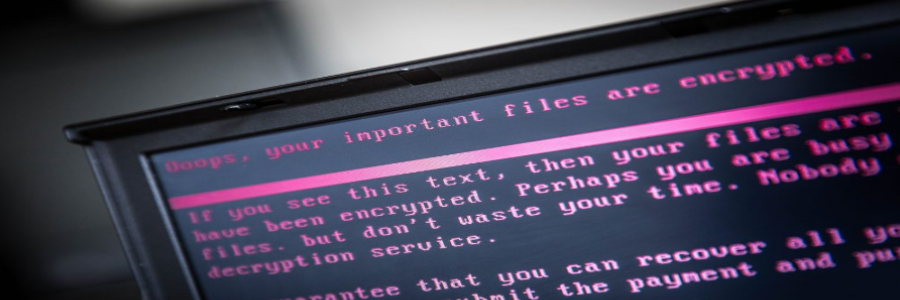
Europe woke up Tuesday to massive attacks on both governments and some of the world’s largest brands. While the story is sure to develop, here’s what we’ve learned so far, and what enterprises need to take into account whether they have been affected or are trying to protect their organizations from becoming the next victim.

  1. Currently, most victim companies are in Russia and the Ukraine with some much smaller volumes observed in Western Europe. Unless the malware has some form of geo fencing, this will likely change throughout the day as the rest of world wakes up and logs on to their systems.
  2. This malware only has passing resemblance to the historic Petya malware and thus should NOT be considered the same. This is much more sophisticated than both Petya and the recent Wannacry.
  3. The campaign is using multiple propagation vectors:
  4. Email (multiple PDF and Word attachment samples have been collected)
  5. The EternalBlue exploit used by Wannacry
  6. Harvesting of credentials via a custom capability against the lsass process and subsequent use of WMIC to move laterally
  7. An attack against the update process of a third-party Ukrainian software product called MEDoc
  8. Even a machine patched against the EternalBlue exploit is still vulnerable if a user clicks on the email vector. This malware is nastier than WannaCry because it can continue to propagate even in fully patched environments.
  9. The worst case for an organization is if a user with domain admin credentials is compromised as the entire network becomes at risk via WMIC and remote process execution (psexec).
  10. For non-admin victims, the files on the machine are encrypted using a standard AES routine (thus it is unlikely there will be an implementation bug found to allow for non-keyed decryption).
  11. For admin (local or domain) victims, the Master Boot Record (MBR) is encrypted (but not the files on disk). Thus, the machine seems bricked but is actually relatively easy to recover. However, this seems to go to a motive that this may actually be more of a disruption attack than a financially motivated crime.
  12. There was a single bitcoin account setup for ransom payments but it has already been taken down. Thus, there is currently no way for victims to get decryption keys even if they want to pay the ransom. Again, this hints at motive, in the sense there was  possibly never any real intention of collecting significant ransom or of providing a decryption pathway.
  13. Because of the attempt to move laterally, environments that have adopted Software-Defined Perimeterarchitectures to limit lateral movement are likely to see far reduced impact compared to traditional open enterprise networks.
  14. A number of next-gen AV systems are now detecting and stopping this.

[su_box title=”About Chris Day” style=”noise” box_color=”#336588″][short_info id=’102680′ desc=”true” all=”false”][/su_box]

Professor John Walker

John is the Principle at Shadow-Intelligence (Si), partnering with PALISCOPE, BreachAware and iStorage. He is a Visiting Professor at the School of Science and Technology, Nottingham, Trent University (NTU) and holds the appointment of Editor in Chief for the International Journal of Cyber Forensics and Advanced Threat Investigations (CFATI). For the last decade he has delivered training courses in the Middle, and Far East to Commercial, Industrial, the Financial Services Sector, and Military Agencies, including the UAE, US, Pakistan, Saudi Arabia, Malaysia (KL), Singapore, Argentina, and Sao Paulo

He served in the Royal Air Force 22 years’, specialising in Counterintelligence, working with UK Agencies such as GCHQ/CESG, and others in the fields of SIGINT, COMINT and Satellite Communications, holding appointments such as System ITSO for a CIA SCIF.

In the commercials sectors of IT/Cyber he has worked for/with Logica, Bae, T5, GM, Experian, Betfair, Palace of Westminster, House of Lords/Commons, TSol (Treasury Solicitors) and provided Consultancy to the Saudi Arabian MOD, TRA (Telecommunications Authority (Dubai) and the Military Academy of Malaysia (KL) on SOC, CSIRT, Digital Forensics and OSINT. Within the last 5 years he has focused on Geopolitics, with global expertise around the UAE and Russia, Anti-Terrorist Operations (ATO), Cyber-Warfare, Dezinformatsiya (Disinformation) and Maskirovka (Military Deception).

  • Professor John Walker
    China Threat Recap: A Deeper Insight
  • Professor John Walker
    Missing The Point In The Current Age Of Cyber
  • Professor John Walker
    Part 1: Historic To 2022 – The APT And Logical Threats
  • Professor John Walker
    A Hairs Breadth

The opinions expressed in this post belong to the individual contributors and do not necessarily reflect the views of Information Security Buzz.

Share. Facebook Twitter LinkedIn Email Copy Link

Related Posts

Roundcube RCE Vulnerability Disclosed Early Amid Active Exploitation

June 10, 20255 Mins Read

Fake Indian Government Portal Used to Spread Cross-Platform Malware in Suspected APT36 Campaign

May 13, 20253 Mins Read

New Federal Alert Warns U.S. Businesses of Medusa Ransomware Surge

March 13, 20254 Mins Read
ISB-Bora-Side-Bar

No se ha podido establecer conexión. Error 429

 
ISB-Bora-Side-Bar
Black ISB Logo

Information Security Buzz is an independent resource that provides the experts’ comments, analysis, and opinion on the latest Cybersecurity news and topics

X (Twitter) LinkedIn Facebook RSS

Working With Us

  • About Us
  • Advertise With Us
  • Contact Us

Write For Us

  • How To Contribute

The Pages

  • Privacy Policy
  • Cookie Policy
  • AI Policy
  • Terms & Conditions
  • Copyright Notice

Information Security Buzz and all its contents are copyright © 2014-2025. All rights reserved. All third-party trademarks are recognized.

Type above and press Enter to search. Press Esc to cancel.

Manage Consent
To provide the best experiences, we use technologies like cookies to store and/or access device information. Consenting to these technologies will allow us to process data such as browsing behavior or unique IDs on this site. Not consenting or withdrawing consent, may adversely affect certain features and functions.
Functional Always active
The technical storage or access is strictly necessary for the legitimate purpose of enabling the use of a specific service explicitly requested by the subscriber or user, or for the sole purpose of carrying out the transmission of a communication over an electronic communications network.
Preferences
The technical storage or access is necessary for the legitimate purpose of storing preferences that are not requested by the subscriber or user.
Statistics
The technical storage or access that is used exclusively for statistical purposes. The technical storage or access that is used exclusively for anonymous statistical purposes. Without a subpoena, voluntary compliance on the part of your Internet Service Provider, or additional records from a third party, information stored or retrieved for this purpose alone cannot usually be used to identify you.
Marketing
The technical storage or access is required to create user profiles to send advertising, or to track the user on a website or across several websites for similar marketing purposes.
  • Manage options
  • Manage services
  • Manage {vendor_count} vendors
  • Read more about these purposes
View preferences
  • {title}
  • {title}
  • {title}