


I wake to the sound of my smartphone, which has assessed the correct time for me to start my day by monitoring my circadian rhythm. I then jump in my smart shower, which already knows the water temperature I like, and can also sense when I’m washing my hair, to ensure the correct water pressure comes out. Once out of the shower, I put on my smartwatch which instantly starts to count each beat my heart makes. I walk downstairs to my kitchen feeling perfectly warm because my smart thermostat has memorised the room temperature I feel most comfortable with. Finally, I pick up a freshly brewed coffee from my smart coffee machine, which knows exactly when to turn on, based on when I wake up.
The Era of Smart Technology is Just Beginning…
We have entered the realm of omnipresent smart technology. Currently we occupy a fascinating period of time, where the scenario described above will either excite or scare you – and I hadn’t even begun to describe what happens after I leave my smart home to travel in my smart vehicle, through the smart city, to my smart office!
At Xirrus, we have explored how technology may be viewed as an extension of self. This predicts that “our psychological propensity to reach beyond our physical capacity, while also manipulating and interacting with our environment, looks set to spur the next wave of technology ownership”. Indeed, the notions of ‘ownership’ and ‘self’ remain important constructs to explain the refined convergence of smart technology with our own instinctive capabilities. The line between technology and us is blurring as we navigate our way through a personal neural layer that will overlay the Internet of Things (IoT).
Wearables, Nearables, Hearables: The Explosion of IoT
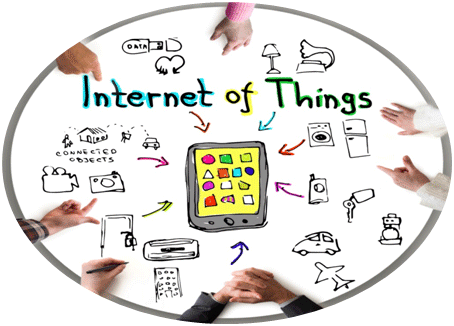
The Internet of Things is a well-known term that describes the trend of embedding physical objects with technology that allows them to collect and exchange data via Wi-Fi. The IoT is pegged to consist of a staggering 50 billion devices by the year 2020, bringing an ambient intelligence to our personal and professional lives.
In this exciting era of smart innovation, one that endeavours to remove any task that can be automated from our consciousness, how well do you know your IoT wave terminology?
-
Wearables
The most commonly known and adopted form of IoT, wearable devices such as smartwatches are becoming a mainstream form of technology. This is thanks to the popularity of fitness bands and complementing gamification possibilities. In this category also lies the ‘shockables’, where my Fitbit shocks me if it detects I’m slowing down for a doughnut!
-
Nearables
‘Nearables’ are all about location, location, location. These are low-powered smart objects that trigger actions in nearby devices, such as those using iBeacon to perform tasks based upon proximity.
-
Hearables
Sound is such an important part of our lives and drives a huge proportion of our smartphone usage, thanks to voice and video apps. So why is it that wired earbuds or headphones are the only technology that have gained social acceptance and are actively present in this category? Now, hearable technology seems set to change the way users perceive and utilise devices worn in and around the ear. Some believe this is the next big area of IoT growth due to massive disruptive innovation, and that we’ll be spending over $5 billion on hearables by 2018.
-
Rideables
We’re starting to see this technology break into the mainstream with the advent of the latest ‘mini Segway’ or ‘hoverboard’. This term can also refer to any technology that is affixed to a mode of transportation.
-
Embeddables
Here, the line between technology and humans is even more blurred. Predicted to be the next step after wearables, embeddables would let humans essentially upgrade themselves with microscopic computers inserted beneath the skin. The evolution towards embeddables would take us from wearables that can report what we’re doing, to ones that inform us how we’re doing it.
-
Ingestibles
Similar to embeddables, these technologies are designed to enter the human body. It may seem sci-fi – but the smart pill market is expected to reach $965 million by 2017. Development in this area is focused on healthcare applications used to monitor patients and deliver diagnostic imaging.
-
Awareables
This is the notion that technology will start to take into account its surrounding context in order to perform certain actions.
-
There-ables
Maybe we’re not meant to take technology with us; perhaps it should be positioned around us. There-ables describes the smart thermostats, coffee machines, mirrors, taps, showers, tables, and other appliances we’ll soon be adding to our homes and offices. Many believe this is one of the most sustainable smart technology concepts, and that ‘there-ables’ will survive well past the novelty phase of IoT.
Do You Have Wave-Envy?
How well do you know your IoT wave terminology, on a scale from zero to tsunami? With the current explosion of smart devices and wearables coming into the market, it seems that once the novelty becomes normalised for the critical mass of users, the potential for nearables, hearables, there-ables and the rest to be widely adopted will become a reality. Are you prepared to embrace the prolific adoption of smart technology? Even if you’re not, your Wi-Fi network needs to be.
The increasing expectation, usage of, and demand for omnipresent smart technology is becoming relentless, inevitable, and uncompromising. Smart homes, offices, hospitals, hotels, stadiums, and indeed cities depend on a wireless infrastructure that can provide a seamless, uninterrupted, and consistent user experience. WLAN infrastructure is a crucial business and personal enablement tool, one that is meant to go unnoticed for all the right reasons. That’s because a subpar experience immediately shines the spotlight on the Wi-Fi itself, which can instil a permanently negative perception of your business or brand.
[su_box title=”About Xirrus” style=”noise” box_color=”#336588″] Xirrus is the leading provider of high-performance wireless networks. Xirrus solutions perform under the most demanding circumstances, offering consistent “wired-like” performance with superior coverage and security. Xirrus currently manufactures multiple radio Wi-Fi Arrays that combine a WLAN switch and APs into a single device. The company also produces a low cost two-radio access point with omni-directional antennas. Xirrus provides wireless infrastructure for general enterprise, education, public venues, healthcare, retail, government, hospitality, and manufacturing. As of 2013 Xirrus has over 4000 customers, with products and services sold internationally.[/su_box]

The opinions expressed in this post belong to the individual contributors and do not necessarily reflect the views of Information Security Buzz.