


Close Menu
  • Home
  • Articles
    • Attacks
      • BEC
      • Data Breach
      • DDoS
      • Evasion Attacks
      • Injection
      • Malware
      • MITM
      • Phishing
      • Ransomware
      • RCE
      • Social Engineering
      • Spoofing
      • Spyware
    • Business and Policy
      • BCP and DRP
      • GRC
      • Regulations
    • Data Protection
      • DLP
      • DRM
      • Encryption
      • IAM
    • Future, Trends and Insight
      • AI
      • Events & Community
      • Emerging Tech
      • Expert Panel
      • Interviews With Experts
      • Insights
      • Study & Research
    • Resources
      • Guides
      • Tools
      • Training & Education
    • Security
      • API
      • Apps
      • Cloud
      • Critical Infrastructure
      • Endpoint
      • Hardware
      • IoT
      • Mobile
      • Network
      • OT
      • Port Security
      • Security Architecture
      • Software Development
      • Supply Chain
      • Zero Trust
    • Threats and Vulnerabilities
      • Emerging Threats
      • Insider Threats
      • Risk Management
      • Threat Intelligence
      • Zero Day
  • News and Exclusives
    • Latest News
    • ISB Exclusive
    • Positive News
  • Who We Are
    • About Us
    • Information Security Buzz Expert Panel​
    • Write for Us
    • Media Pack
  • Contact Us
  • Newsletter
Facebook X (Twitter) LinkedIn
Information Security BuzzInformation Security Buzz
  • Home
  • Articles
    • Attacks
      • BEC
      • Data Breach
      • DDoS
      • Evasion Attacks
      • Injection
      • Malware
      • MITM
      • Phishing
      • Ransomware
      • RCE
      • Social Engineering
      • Spoofing
      • Spyware
    • Business and Policy
      • BCP and DRP
      • GRC
      • Regulations
    • Data Protection
      • DLP
      • DRM
      • Encryption
      • IAM
    • Future, Trends and Insight
      • AI
      • Events & Community
      • Emerging Tech
      • Expert Panel
      • Interviews With Experts
      • Insights
      • Study & Research
    • Resources
      • Guides
      • Tools
      • Training & Education
    • Security
      • API
      • Apps
      • Cloud
      • Critical Infrastructure
      • Endpoint
      • Hardware
      • IoT
      • Mobile
      • Network
      • OT
      • Port Security
      • Security Architecture
      • Software Development
      • Supply Chain
      • Zero Trust
    • Threats and Vulnerabilities
      • Emerging Threats
      • Insider Threats
      • Risk Management
      • Threat Intelligence
      • Zero Day
  • News and Exclusives
    • Latest News
    • ISB Exclusive
    • Positive News
  • Who We Are
    • About Us
    • Information Security Buzz Expert Panel​
    • Write for Us
    • Media Pack
  • Contact Us
  • Newsletter
Subscribe
Information Security BuzzInformation Security Buzz
Home - Articles - UK and US Companies are Hit by Mass Phishing Campaign
Articles

UK and US Companies are Hit by Mass Phishing Campaign

ISBuzz TeamBy ISBuzz TeamAugust 7, 2015Updated:August 7, 20152 Mins Read
Share LinkedIn Twitter Facebook Copy Link Email
Mass Phishing Campaign
Share
Facebook Twitter LinkedIn Email Copy Link
Quick AI Summary
ChatGPTClaudeGeminiGrokPerplexityDeepSeekCopilot

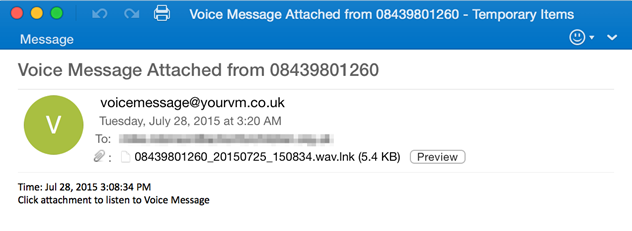
Researchers from Proofpoint have detected a campaign of millions of messages directed at organizations in the US and UK. The campaign employs a straightforward voice message lure with a LNK attachment – an unusual but not unheard of method of malware delivery.
missing-lnk-1_0

The use of LNK files to deliver malware in phishing emails is unusual but not unheard of [1], and this campaign caught the eye of at least one other security researcher [2]. In some versions of Windows the “wav.lnk” file was represented with a Windows audio file (WAV) icon, while in others a generic file icon was displayed.

missing-lnk-2

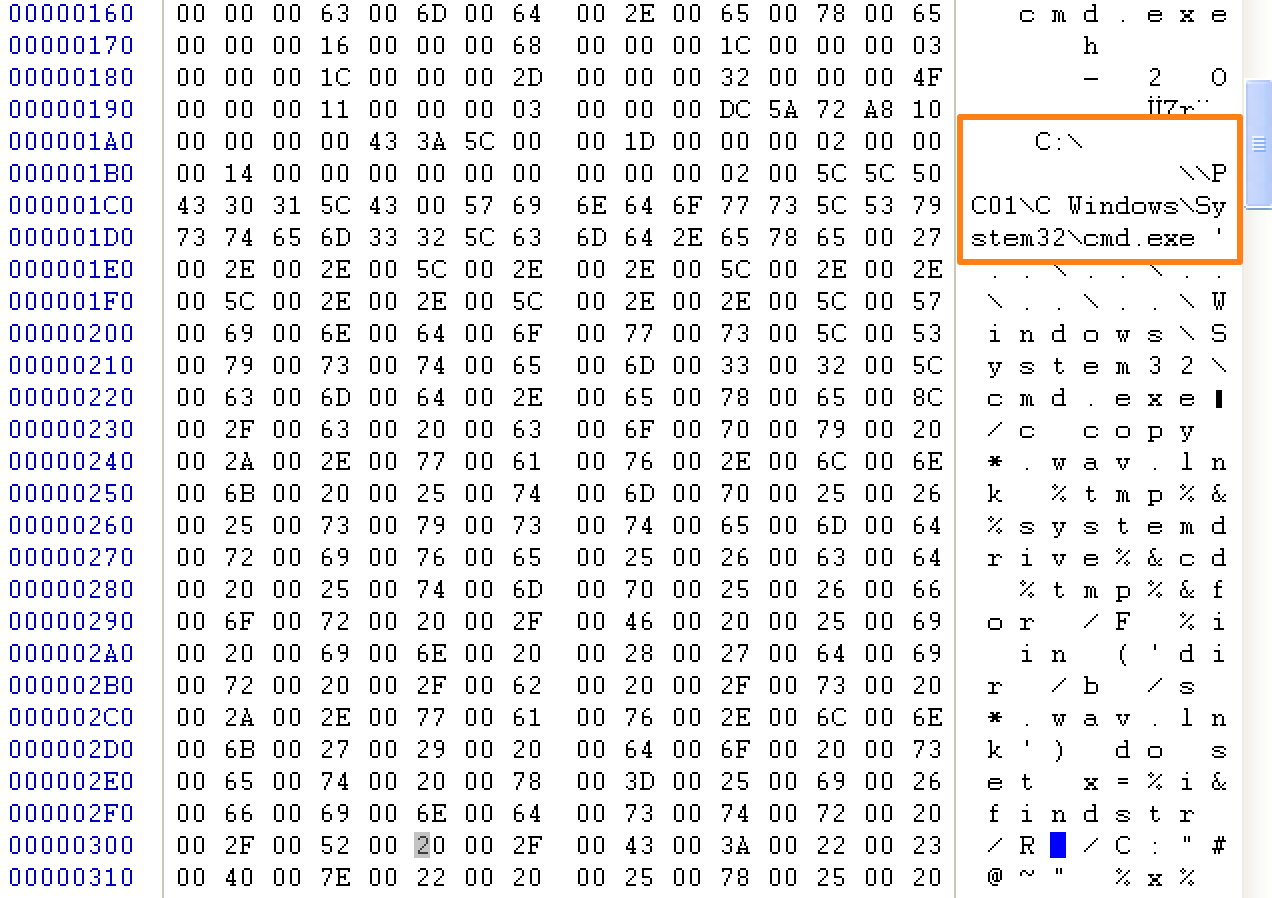
Double-clicking the attachment calls “cmd.exe” to run a series of shell commands.
missing-lnk-3

This copies the LNK file to a temporary directory and extracts out a VBE file from the LNK file, writes it to disk, then executes it.

missing-lnk-4

The dynamically generated script file then downloads and executes the Dridex botnet #220 binary from this URL: hxxp://laurance-primeurs[.]fr/345/wrw.exe.

Despite the size of the campaign, the technique itself was used in a relatively limited manner: only one unique file (i.e., hash) was detected in this campaign, and errors in the scripting resulted a general failure to execute on target systems. (Another recent innovation in the current wave of malicious document attachment campaigns – the use of MIME/OLE formatted documents – began with similar misfires but then went on to become a predominant masking technique [3] [4].) Moreover, some versions of mail client did not display the attachment, replacing it with a warning message that the file was potentially unsafe, and organizations following email security best practices commonly treat LNK files similar to executables (EXE) and strip them from messages before delivery.

Despite these constraints, this campaign showed that the LNK format remains a potentially effective technique, and as a whole demonstrates that threat actors are continuing to innovate and experiment with new delivery and masking techniques in order to stay ahead of adapting defenses.[su_box title=”About Proofpoint” style=”noise” box_color=”#336588″]proofpoint_logoProofpoint Inc. (NASDAQ:PFPT) is a leading security-as-a-service provider that focuses on cloud-based solutions for threat protection, compliance, archiving & governance, and secure communications. Organizations around the world depend on Proofpoint’s expertise, patented technologies and on-demand delivery system to protect against phishing, malware and spam, safeguard privacy, encrypt sensitive information, and archive and govern messages and critical enterprise information.[/su_box]

ISBuzz Team
  • ISBuzz Team
    Air Canada Data Breach: BianLian Extortion Group Claims A Massive Heist Contrary To Airline’s Earlier Statement
  • ISBuzz Team
    Unprecedented DDoS Attack Rocks The Web: Tech Giants Reveal A Digital Tsunami
  • ISBuzz Team
    CISA Flags High-Severity Adobe Acrobat Reader Flaw Amid Active Exploits
  • ISBuzz Team
    Curl Security Alert: Patching A Critical Bug Averting Potential Cyber Catastrophe

The opinions expressed in this post belong to the individual contributors and do not necessarily reflect the views of Information Security Buzz.

Share. Facebook Twitter LinkedIn Email Copy Link

Related Posts

New Phishing Kit Starkiller Defeats Multi-Factor Authentication

February 23, 20264 Mins Read

ReliaQuest Uncovers Social Media Phishing Campaign Built on Trusted Tools

January 22, 20266 Mins Read

What Happens after a Phishing Email Lands in Your Inbox?

January 5, 20266 Mins Read
ISB-Bora-Side-Bar

 
ISB-Bora-Side-Bar
Black ISB Logo

Information Security Buzz is an independent resource that provides the experts’ comments, analysis, and opinion on the latest Cybersecurity news and topics

X (Twitter) LinkedIn Facebook RSS

Working With Us

  • About Us
  • Advertise With Us
  • Contact Us

Write For Us

  • How To Contribute

The Pages

  • Privacy Policy
  • Cookie Policy
  • AI Policy
  • Terms & Conditions
  • Copyright Notice

Information Security Buzz and all its contents are copyright © 2014-2025. All rights reserved. All third-party trademarks are recognized.

Type above and press Enter to search. Press Esc to cancel.

Manage Consent
To provide the best experiences, we use technologies like cookies to store and/or access device information. Consenting to these technologies will allow us to process data such as browsing behavior or unique IDs on this site. Not consenting or withdrawing consent, may adversely affect certain features and functions.
Functional Always active
The technical storage or access is strictly necessary for the legitimate purpose of enabling the use of a specific service explicitly requested by the subscriber or user, or for the sole purpose of carrying out the transmission of a communication over an electronic communications network.
Preferences
The technical storage or access is necessary for the legitimate purpose of storing preferences that are not requested by the subscriber or user.
Statistics
The technical storage or access that is used exclusively for statistical purposes. The technical storage or access that is used exclusively for anonymous statistical purposes. Without a subpoena, voluntary compliance on the part of your Internet Service Provider, or additional records from a third party, information stored or retrieved for this purpose alone cannot usually be used to identify you.
Marketing
The technical storage or access is required to create user profiles to send advertising, or to track the user on a website or across several websites for similar marketing purposes.
  • Manage options
  • Manage services
  • Manage {vendor_count} vendors
  • Read more about these purposes
View preferences
  • {title}
  • {title}
  • {title}