


Close Menu
  • Home
  • Articles
    • Attacks
      • BEC
      • Data Breach
      • DDoS
      • Evasion Attacks
      • Injection
      • Malware
      • MITM
      • Phishing
      • Ransomware
      • RCE
      • Social Engineering
      • Spoofing
      • Spyware
    • Business and Policy
      • BCP and DRP
      • GRC
      • Regulations
    • Data Protection
      • DLP
      • DRM
      • Encryption
      • IAM
    • Future, Trends and Insight
      • AI
      • Events & Community
      • Emerging Tech
      • Expert Panel
      • Interviews With Experts
      • Insights
      • Study & Research
    • Resources
      • Guides
      • Tools
      • Training & Education
    • Security
      • API
      • Apps
      • Cloud
      • Critical Infrastructure
      • Endpoint
      • Hardware
      • IoT
      • Mobile
      • Network
      • OT
      • Port Security
      • Security Architecture
      • Software Development
      • Supply Chain
      • Zero Trust
    • Threats and Vulnerabilities
      • Emerging Threats
      • Insider Threats
      • Risk Management
      • Threat Intelligence
      • Zero Day
  • News and Exclusives
    • Latest News
    • ISB Exclusive
    • Positive News
  • Who We Are
    • About Us
    • Information Security Buzz Expert Panel​
    • Write for Us
    • Media Pack
  • Contact Us
  • Newsletter
Facebook X (Twitter) LinkedIn
Information Security BuzzInformation Security Buzz
  • Home
  • Articles
    • Attacks
      • BEC
      • Data Breach
      • DDoS
      • Evasion Attacks
      • Injection
      • Malware
      • MITM
      • Phishing
      • Ransomware
      • RCE
      • Social Engineering
      • Spoofing
      • Spyware
    • Business and Policy
      • BCP and DRP
      • GRC
      • Regulations
    • Data Protection
      • DLP
      • DRM
      • Encryption
      • IAM
    • Future, Trends and Insight
      • AI
      • Events & Community
      • Emerging Tech
      • Expert Panel
      • Interviews With Experts
      • Insights
      • Study & Research
    • Resources
      • Guides
      • Tools
      • Training & Education
    • Security
      • API
      • Apps
      • Cloud
      • Critical Infrastructure
      • Endpoint
      • Hardware
      • IoT
      • Mobile
      • Network
      • OT
      • Port Security
      • Security Architecture
      • Software Development
      • Supply Chain
      • Zero Trust
    • Threats and Vulnerabilities
      • Emerging Threats
      • Insider Threats
      • Risk Management
      • Threat Intelligence
      • Zero Day
  • News and Exclusives
    • Latest News
    • ISB Exclusive
    • Positive News
  • Who We Are
    • About Us
    • Information Security Buzz Expert Panel​
    • Write for Us
    • Media Pack
  • Contact Us
  • Newsletter
Subscribe
Information Security BuzzInformation Security Buzz
Home - Articles - 4 Ways Bots Can Affect Your Online Media And Publishing Business
Articles

4 Ways Bots Can Affect Your Online Media And Publishing Business

ISBuzz TeamBy ISBuzz TeamFebruary 6, 2017Updated:February 7, 20173 Mins Read
Share LinkedIn Twitter Facebook Copy Link Email
bots
Share
Facebook Twitter LinkedIn Email Copy Link
Quick AI Summary
ChatGPTClaudeGeminiGrokPerplexityDeepSeekCopilot

Automated programs known as bots are used for doing repetitive tasks, at exceptional speed, which are impossible for humans to think of. Most bots are created for malicious purposes and has negative impact on your business. A malicious bot is programmed to extract web data illegally from various websites.  The data may very well include a diverse range of information from various business verticals including, but not limited to, online media and publishing.

So, how can bots affect your online media and publishing sites?

Content replicated on other websites – Malicious scraper bots are programmed to lift off original content from websites. Content driven businesses like news, product reviews, blog posts, opinion pieces, product prices, classifieds listings are hugely affected by scraping. The primary goal of the scraper bot is to steal the original content from your website and publish it elsewhere in a matter of minutes. This illegal replication of your content on a few websites will eventually degrade your SEO and outrank you on search engine listings.

Unwanted spam in web forms and forums – Malicious bots spam your forums by hijacking the thread away from current discussion . The bots become a nuisance by posting unwanted advertisements, promotions and malicious links. This frustrates the users when it comes between genuine user conversations and will instantly create a bad impression in the minds of your users. In some cases, when a user accidentally clicks on a link and the link redirects to a phishing website, the user may end up losing confidential data (like credit card number, or PIN). This would make the user not to visit your website again.

sticky

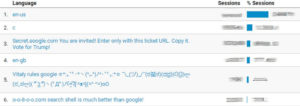
Website analytics skewed by bots – Analytics is important to measure metrics such as site traffic, user demographics, bounce rates, campaign performance, and so on. A few businesses like real estate and eCommerce rely on analytics. They use it to track the leads, keep an eye on the marketing activities, inventory management and business strategies. Take an eCommerce business for instance. The bots would bloat the traffic which would result in bogus metrics. This can trick you into believing that the traffic is from genuine prospects. The bots even add products to the cart and abandon them at a later stage. When you see conversion rates plummeting you realise you’re losing your competitive edge. Malicious bots contribute to referral spam and generates  fake traffic on your website. They skew the metrics, which may negatively influence your decision making process.This also impacts media and publishing websites as the decision maker can inadvertently increase the marketing expenditure, only to realize decreased ROIs.
language

Infrastructure and monetary loss – Almost 50% of the traffic hitting your website can be from bots, and unfortunately, most of them are malicious. When thousands of bots hit your website, the load on your server increases. You end up spending for your precious server and bandwidth resources from unwanted bot traffic. Also, this hinders genuine user experience on the portal as the page load times will be impacted by unchecked bot activity.

Manually preventing malicious bots without affecting the genuine user traffic is just going to get harder. Online businesses have much to lose if they don’t address the bot problems head on. It is important to have a real-time automated bot prevention solution to safeguard your online business, so that you can focus on other high-priority tasks required to grow your business.

[su_box title=”About Manikantan R.” style=”noise” box_color=”#336588″][short_info id=’100641′ desc=”true” all=”false”][/su_box]

ISBuzz Team
  • ISBuzz Team
    Air Canada Data Breach: BianLian Extortion Group Claims A Massive Heist Contrary To Airline’s Earlier Statement
  • ISBuzz Team
    Unprecedented DDoS Attack Rocks The Web: Tech Giants Reveal A Digital Tsunami
  • ISBuzz Team
    CISA Flags High-Severity Adobe Acrobat Reader Flaw Amid Active Exploits
  • ISBuzz Team
    Curl Security Alert: Patching A Critical Bug Averting Potential Cyber Catastrophe

The opinions expressed in this post belong to the individual contributors and do not necessarily reflect the views of Information Security Buzz.

Share. Facebook Twitter LinkedIn Email Copy Link

Related Posts

New Phishing Kit Starkiller Defeats Multi-Factor Authentication

February 23, 20264 Mins Read

ReliaQuest Uncovers Social Media Phishing Campaign Built on Trusted Tools

January 22, 20266 Mins Read

What Happens after a Phishing Email Lands in Your Inbox?

January 5, 20266 Mins Read
ISB-Bora-Side-Bar

No se ha podido establecer conexión. Error 429

 
ISB-Bora-Side-Bar
Black ISB Logo

Information Security Buzz is an independent resource that provides the experts’ comments, analysis, and opinion on the latest Cybersecurity news and topics

X (Twitter) LinkedIn Facebook RSS

Working With Us

  • About Us
  • Advertise With Us
  • Contact Us

Write For Us

  • How To Contribute

The Pages

  • Privacy Policy
  • Cookie Policy
  • AI Policy
  • Terms & Conditions
  • Copyright Notice

Information Security Buzz and all its contents are copyright © 2014-2025. All rights reserved. All third-party trademarks are recognized.

Type above and press Enter to search. Press Esc to cancel.

Manage Consent
To provide the best experiences, we use technologies like cookies to store and/or access device information. Consenting to these technologies will allow us to process data such as browsing behavior or unique IDs on this site. Not consenting or withdrawing consent, may adversely affect certain features and functions.
Functional Always active
The technical storage or access is strictly necessary for the legitimate purpose of enabling the use of a specific service explicitly requested by the subscriber or user, or for the sole purpose of carrying out the transmission of a communication over an electronic communications network.
Preferences
The technical storage or access is necessary for the legitimate purpose of storing preferences that are not requested by the subscriber or user.
Statistics
The technical storage or access that is used exclusively for statistical purposes. The technical storage or access that is used exclusively for anonymous statistical purposes. Without a subpoena, voluntary compliance on the part of your Internet Service Provider, or additional records from a third party, information stored or retrieved for this purpose alone cannot usually be used to identify you.
Marketing
The technical storage or access is required to create user profiles to send advertising, or to track the user on a website or across several websites for similar marketing purposes.
  • Manage options
  • Manage services
  • Manage {vendor_count} vendors
  • Read more about these purposes
View preferences
  • {title}
  • {title}
  • {title}