


Close Menu
  • Home
  • Articles
    • Attacks
      • BEC
      • Data Breach
      • DDoS
      • Evasion Attacks
      • Injection
      • Malware
      • MITM
      • Phishing
      • Ransomware
      • RCE
      • Social Engineering
      • Spoofing
      • Spyware
    • Business and Policy
      • BCP and DRP
      • GRC
      • Regulations
    • Data Protection
      • DLP
      • DRM
      • Encryption
      • IAM
    • Future, Trends and Insight
      • AI
      • Events & Community
      • Emerging Tech
      • Expert Panel
      • Interviews With Experts
      • Insights
      • Study & Research
    • Resources
      • Guides
      • Tools
      • Training & Education
    • Security
      • API
      • Apps
      • Cloud
      • Critical Infrastructure
      • Endpoint
      • Hardware
      • IoT
      • Mobile
      • Network
      • OT
      • Port Security
      • Security Architecture
      • Software Development
      • Supply Chain
      • Zero Trust
    • Threats and Vulnerabilities
      • Emerging Threats
      • Insider Threats
      • Risk Management
      • Threat Intelligence
      • Zero Day
  • News and Exclusives
    • Latest News
    • ISB Exclusive
    • Positive News
  • Who We Are
    • About Us
    • Information Security Buzz Expert Panel​
    • Write for Us
    • Media Pack
  • Contact Us
  • Newsletter
Facebook X (Twitter) LinkedIn
Information Security BuzzInformation Security Buzz
  • Home
  • Articles
    • Attacks
      • BEC
      • Data Breach
      • DDoS
      • Evasion Attacks
      • Injection
      • Malware
      • MITM
      • Phishing
      • Ransomware
      • RCE
      • Social Engineering
      • Spoofing
      • Spyware
    • Business and Policy
      • BCP and DRP
      • GRC
      • Regulations
    • Data Protection
      • DLP
      • DRM
      • Encryption
      • IAM
    • Future, Trends and Insight
      • AI
      • Events & Community
      • Emerging Tech
      • Expert Panel
      • Interviews With Experts
      • Insights
      • Study & Research
    • Resources
      • Guides
      • Tools
      • Training & Education
    • Security
      • API
      • Apps
      • Cloud
      • Critical Infrastructure
      • Endpoint
      • Hardware
      • IoT
      • Mobile
      • Network
      • OT
      • Port Security
      • Security Architecture
      • Software Development
      • Supply Chain
      • Zero Trust
    • Threats and Vulnerabilities
      • Emerging Threats
      • Insider Threats
      • Risk Management
      • Threat Intelligence
      • Zero Day
  • News and Exclusives
    • Latest News
    • ISB Exclusive
    • Positive News
  • Who We Are
    • About Us
    • Information Security Buzz Expert Panel​
    • Write for Us
    • Media Pack
  • Contact Us
  • Newsletter
Subscribe
Information Security BuzzInformation Security Buzz
Home - News & Analysis - Fake Cryptocurrency Trading Apps On Google Play Caught Harvesting Credentials
News & Analysis

Fake Cryptocurrency Trading Apps On Google Play Caught Harvesting Credentials

ISBuzz TeamBy ISBuzz TeamOctober 25, 2017Updated:July 15, 20245 Mins Read
Share LinkedIn Twitter Facebook Copy Link Email
Share
Facebook Twitter LinkedIn Email Copy Link
Quick AI Summary
ChatGPTClaudeGeminiGrokPerplexityDeepSeekCopilot

Users of the popular cryptocurrency exchange Poloniex have been the target of two credential stealing apps, discovered on Google Play disguised as legitimate mobile apps of the exchange.  Apart from harvesting Poloniex login credentials, the crooks behind the fake apps have also tried to trick victims into granting them access to their Gmail accounts.

Poloniex is one of the world’s leading cryptocurrency exchanges with more than 100 cryptocurrencies to buy and trade in. That alone makes it an attractive target for fraudsters of all kinds, but in this case, it was its lack of official mobile app that the criminals took advantage of.

With all the hype around cryptocurrencies, cybercriminals are trying to grasp whatever new opportunity they can – be it hijacking common users’ computing power to mine cryptocurrencies via browsers or by infecting unpatched machines, or various scam schemes utilizing fake phishing websites and apps.

The malicious apps

The first of the malicious apps sneaked into Google Play using the name “POLONIEX”, brought by the developer “Poloniex”. Between 28 August and 19 September, the app was installed by up to 5000 users, even despite mixed ratings and bad written reviews.

The second app, “POLONIEX EXCHANGE” by the developer “POLONIEX COMPANY”, appeared on Google Play on 15 October and reached up to 500 installs before being removed from the store upon ESET’s notification.

Apart from notifying Google, we also informed Poloniex of the malicious imposters.
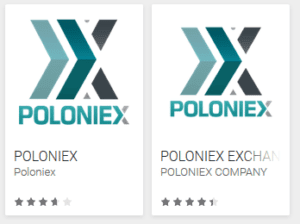
Figure 1 – The fake apps as discovered on Google Play
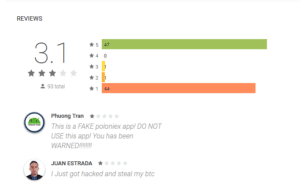
Figure 2 – Google Play reviews for one of the apps

How do they operate?

To successfully take over a Poloniex account using one of the malicious apps, the attackers first need to obtain credentials for the account. Afterwards, they need to gain access to the email account associated with the compromised Poloniex account to control notifications about unauthorized logins and transactions. Finally, the attackers need to make their app appear functional to lower any suspicion they might have raised in the process.

Both apps use the same method to achieve this.

The credential stealing takes place right after the user launches one of the apps. The malicious app displays a bogus screen requesting Poloniex login credentials (Figure 3). If the user enters the credentials and clicks on “sign in”, the credentials are sent to the attackers.

In case the user doesn’t have 2-factor authentication (2FA) enabled on their Poloniex account, attackers now have access to that account. This means the attackers can carry out transactions on the user’s behalf, change their settings, or even lock them out of their account by changing their password.

If the user does use 2FA, their account is safe from the intruders. This is because Poloniex offers its users 2FA via Google Authenticator, which generates random login codes that are sent to users via text, voice call, or the Google Authenticator app – none of which can be accessed by the attackers.
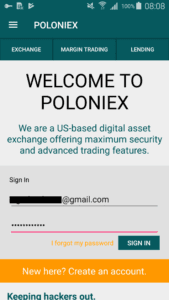
Figure 3 – Bogus login form harvesting Poloniex credentials

If the crooks were successful, they start working on accessing the user’s Gmail account. The user sees an activity seemingly on behalf of Google, asking them to sign in with their Google account “for two-step security check” (Figure 4). After the user clicks on “sign in”, the malicious app asks for a permission to view user’s email messages and settings and basic profile info (Figure 5). If the user grants the permissions, the app gains access to their inbox.

With access to the user’s Poloniex account as well as associated Gmail account, the attackers can make transactions on the user’s behalf and erase any notifications about unauthorized login and transactions from their inbox.
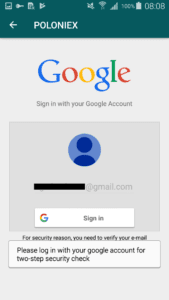
Figure 4 – Activity impersonating Google requesting the user to sign in to Gmail
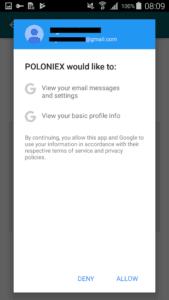
Figure 5 – The malicious app requesting access to emails

Finally, to make their app appear functional, the malicious app directs the user to the mobile version of the legitimate Poloniex website, which requests the user to sign in (Figure 6). After the user logs in, they can begin using the legitimate Poloniex website. From then on, the app will only open the legitimate website each time it’s launched.
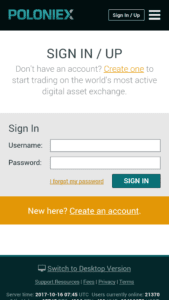
Figure 6 –Mobile version of the legitimate Poloniex website opened by the malicious app

Another way in which the attackers try to go unnoticed – in this case, by security analysts – is by masking the domains to which stolen credentials are sent using Unicode character tricks. As a result, the domains hxxp://połoniex.com and hxxp://poloniėx.com/ might appear like legitimate Poloniex domains when manually reviewed.

How to protect yourself?

If you’re a Poloniex user and have installed any of these malicious apps on your device, start with uninstalling them. Make sure to change both your Poloniex and Gmail password and consider enabling 2-factor-authentication wherever possible.

Here’s what you can do to avoid falling victim to fraudsters in the future:

  • Make sure the service you’re using really offers a mobile app – if that’s the case, the app should be linked on the service’s official website
  • Pay attention to app ratings and reviews
  • Be cautious of third party apps triggering alerts and windows appearing to be connected to Google – misusing users’ trust towards Google is a popular trick among cybercriminals
  • Use 2FA for an additional (and often crucial) layer of security
  • Use a reliable mobile security solution; ESET detects the credential stealers as Android/FakeApp.GV

IoCs

Package Name Hash
com.poloniex.exchange 89BE9AF09BB3B2CAD9EAF88FE0EF175E5F150044
com.poloniexap.poloniex 427CBAFD6E28C50708E26A481A9C8665C3315BCD
ISBuzz Team
  • ISBuzz Team
    Air Canada Data Breach: BianLian Extortion Group Claims A Massive Heist Contrary To Airline’s Earlier Statement
  • ISBuzz Team
    Unprecedented DDoS Attack Rocks The Web: Tech Giants Reveal A Digital Tsunami
  • ISBuzz Team
    CISA Flags High-Severity Adobe Acrobat Reader Flaw Amid Active Exploits
  • ISBuzz Team
    Curl Security Alert: Patching A Critical Bug Averting Potential Cyber Catastrophe

The opinions expressed in this post belong to the individual contributors and do not necessarily reflect the views of Information Security Buzz.

Share. Facebook Twitter LinkedIn Email Copy Link

Related Posts

New Phishing Kit Starkiller Defeats Multi-Factor Authentication

February 23, 20264 Mins Read

ReliaQuest Uncovers Social Media Phishing Campaign Built on Trusted Tools

January 22, 20266 Mins Read

What Happens after a Phishing Email Lands in Your Inbox?

January 5, 20266 Mins Read
ISB-Bora-Side-Bar

No se ha podido establecer conexión. Error 429

 
ISB-Bora-Side-Bar
Black ISB Logo

Information Security Buzz is an independent resource that provides the experts’ comments, analysis, and opinion on the latest Cybersecurity news and topics

X (Twitter) LinkedIn Facebook RSS

Working With Us

  • About Us
  • Advertise With Us
  • Contact Us

Write For Us

  • How To Contribute

The Pages

  • Privacy Policy
  • Cookie Policy
  • AI Policy
  • Terms & Conditions
  • Copyright Notice

Information Security Buzz and all its contents are copyright © 2014-2025. All rights reserved. All third-party trademarks are recognized.

Type above and press Enter to search. Press Esc to cancel.

Manage Consent
To provide the best experiences, we use technologies like cookies to store and/or access device information. Consenting to these technologies will allow us to process data such as browsing behavior or unique IDs on this site. Not consenting or withdrawing consent, may adversely affect certain features and functions.
Functional Always active
The technical storage or access is strictly necessary for the legitimate purpose of enabling the use of a specific service explicitly requested by the subscriber or user, or for the sole purpose of carrying out the transmission of a communication over an electronic communications network.
Preferences
The technical storage or access is necessary for the legitimate purpose of storing preferences that are not requested by the subscriber or user.
Statistics
The technical storage or access that is used exclusively for statistical purposes. The technical storage or access that is used exclusively for anonymous statistical purposes. Without a subpoena, voluntary compliance on the part of your Internet Service Provider, or additional records from a third party, information stored or retrieved for this purpose alone cannot usually be used to identify you.
Marketing
The technical storage or access is required to create user profiles to send advertising, or to track the user on a website or across several websites for similar marketing purposes.
  • Manage options
  • Manage services
  • Manage {vendor_count} vendors
  • Read more about these purposes
View preferences
  • {title}
  • {title}
  • {title}